
Atlantic Southwest Europe (256–267 CE): Regional Stability, …
Years: 256 - 267
Atlantic Southwest Europe (256–267 CE): Regional Stability, Economic Adjustment, and Strengthened Local Autonomy Amid the Imperial Crisis
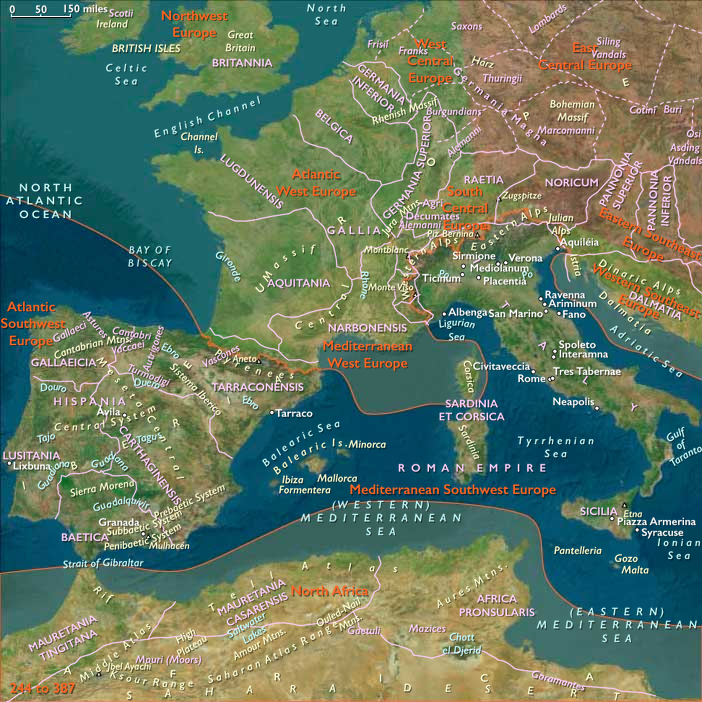
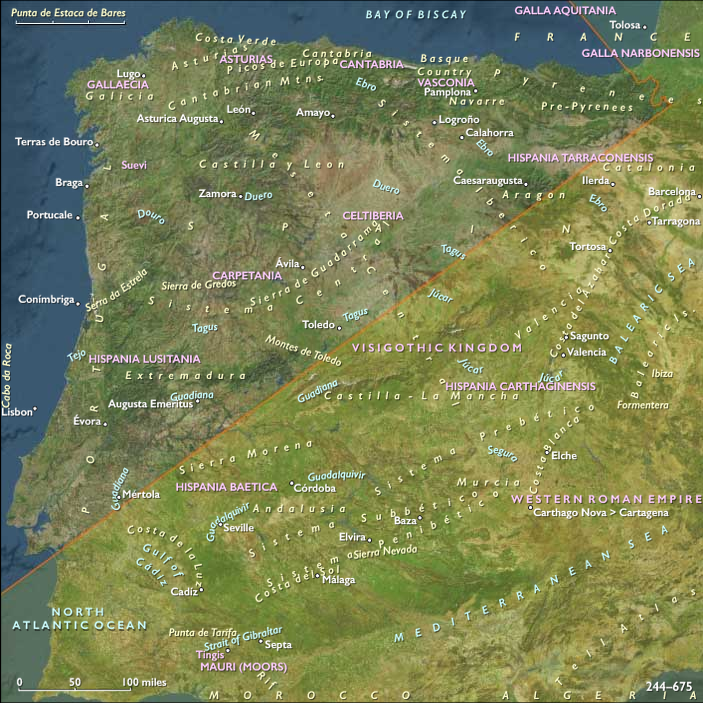
Between 256 and 267 CE, Atlantic Southwest Europe—comprising northern and central Portugal, Galicia, Asturias, Cantabria, and northern Spain south of the Franco-Spanish border (43.05548° N, 1.22924° W)—continued to navigate the ongoing Crisis of the Third Century, a time of profound instability across the Roman Empire. Despite widespread imperial turmoil marked by rapid leadership changes, economic uncertainty, and weakened central authority, this region maintained a notable degree of stability, regional autonomy, and cultural resilience. Effective local governance, adaptive economic strategies, and enduring cultural traditions allowed Atlantic Southwest Europe to manage external disruptions and internal pressures successfully.
Political and Military Developments
Effective Local Governance and Increasing Autonomy
-
As central imperial authority weakened, local civic elites in Atlantic Southwest Europe further asserted regional autonomy, managing administrative responsibilities traditionally held by central Roman authorities. Local bureaucracies, municipal councils, and urban governments maintained internal peace, administrative continuity, and economic functionality despite distant imperial instability.
-
The established Roman administrative framework—fortified settlements, local military garrisons, and civic institutions—continued providing stability, allowing the region to manage external uncertainties independently.
Continued Integration of Northern Tribes
-
Northern tribal communities, including the Gallaeci, Astures, and Cantabri, remained peaceful, prosperous, and fully integrated within provincial governance. These tribes sustained stability by actively participating in local administration and cooperating effectively with provincial authorities.
-
The Vascones maintained their autonomy, territorial integrity, diplomatic neutrality, and cultural distinctiveness, contributing significantly to regional stability.
Economic and Technological Developments
Economic Adaptation and Regional Self-Sufficiency
-
The broader imperial economic disruption led Atlantic Southwest Europe to adjust its economy toward greater regional self-sufficiency. Although Mediterranean trade persisted at reduced levels, local production—especially in agriculture, livestock, metal extraction, textiles, and pottery—increased to compensate for declining external imports and exports.
-
Provincial elites adapted effectively to economic challenges, maintaining relative prosperity and local economic stability through strengthened internal economic networks.
Persistent but Reduced Reliance on Slave Labor
-
Slavery remained integral to regional economic structures, primarily in agriculture, mining, domestic services, and artisanal production. Yet, declining slave availability and reduced external trade gradually lessened the scope of the slave economy, prompting shifts toward more reliance on local free and semi-free labor systems.
Infrastructure Maintenance and Technological Innovation
-
Existing infrastructure—including roads, aqueducts, urban amenities, temples, and fortifications—continued receiving essential maintenance, even as ambitious new projects slowed due to reduced imperial investment.
-
Technological innovations in metallurgy, agriculture, and local craftsmanship sustained productivity and resourcefulness, enabling regional economies to adapt effectively to new economic realities.
Cultural and Religious Developments
Resilient Cultural Traditions and Local Identities
-
Indigenous cultural traditions remained vibrant, blending Iberian, Celtic, and Roman influences dynamically. Material culture—characterized by intricate metalwork, jewelry, high-quality pottery, and ceremonial artifacts—continued highlighting resilient regional identities and enduring cultural vitality.
-
Communities—including the Lusitanians, Gallaeci, Astures, Cantabri, and Vascones—persisted robustly, reinforcing local identities and traditions despite external pressures.
Ritual Continuity and Religious Adaptations
-
Ritual and religious traditions persisted actively, integrating indigenous Iberian, Celtic, and Roman religious practices. Sacred landscapes, temples, ritual centers, and communal ceremonies remained significant sources of social cohesion, regional identity, and cultural resilience.
-
Traditional ancestral rites, warrior ceremonies, and regional festivals continued strongly, providing critical social stability amidst the broader uncertainties of the third-century crisis.
Civic Identity and Increasing Regionalism
-
Universal Roman citizenship had been long-established since Caracalla’s Constitutio Antoniniana (212 CE). However, as central authority weakened, local civic identities and regionalism became increasingly prominent, reinforcing distinct regional characteristics within an enduring Roman provincial framework.
Notable Tribal Groups and Settlements
-
Lusitanians: Continued economic and cultural prosperity, adapting effectively to increased regional autonomy and economic shifts.
-
Vettones and Vaccaei: Sustained regional stability and local autonomy, adapting effectively to changing economic circumstances through strong civic participation.
-
Gallaeci, Astures, Cantabri: Maintained peaceful integration, actively preserving local cultural identities and economic stability amidst growing external uncertainties.
-
Vascones: Successfully maintained diplomatic neutrality, territorial autonomy, and internal stability, reinforcing regional resilience.
Long-Term Significance and Legacy
Between 256 and 267 CE, Atlantic Southwest Europe:
-
Maintained notable provincial stability, effective local governance, and autonomy, effectively managing regional affairs amid broader imperial crises.
-
Successfully adapted economically toward greater self-sufficiency, adjusting to reduced external trade volumes and shifting labor dynamics.
-
Demonstrated enduring cultural resilience and vibrant local identities, integrating indigenous traditions with continued Roman influences, even amidst weakening central authority.
This era reinforced Atlantic Southwest Europe's enduring capacity for regional autonomy, economic adaptation, and cultural continuity, establishing critical foundations for its resilience in the face of ongoing imperial instability throughout the remainder of the third century.
Groups
- Polytheism (“paganism”)
- Vascones
- Lusitanians, or Lusitani
- Vettones
- Astures (Celtic tribe)
- Gallaeci
- Vaccaei
- Cantabri (Celtic tribe)
- Hispania Tarraconensis (Roman province)
- Lusitania (Roman province)
- Hispania Baetica (Roman province)
- Roman Empire (Rome): Non-dynastic
Topics
Commodoties
- Oils, gums, resins, and waxes
- Grains and produce
- Textiles
- Ceramics
- Strategic metals
- Salt
- Slaves
- Beer, wine, and spirits
- Lumber
Subjects
Regions
Subregions
Related Events
Showing 10 events out of 60348 total
Years: 256 - 267
Groups
- Polytheism (“paganism”)
- Vascones
- Lusitanians, or Lusitani
- Vettones
- Astures (Celtic tribe)
- Gallaeci
- Vaccaei
- Cantabri (Celtic tribe)
- Hispania Tarraconensis (Roman province)
- Lusitania (Roman province)
- Hispania Baetica (Roman province)
- Roman Empire (Rome): Non-dynastic
Topics
Commodoties
- Oils, gums, resins, and waxes
- Grains and produce
- Textiles
- Ceramics
- Strategic metals
- Salt
- Slaves
- Beer, wine, and spirits
- Lumber
Subjects
Regions
Subregions