
Atlantic Southwest Europe (1948–1959): Authoritarian Stability, Gradual …
Years: 1948 - 1959
Atlantic Southwest Europe (1948–1959): Authoritarian Stability, Gradual Modernization, and Emerging Resistance
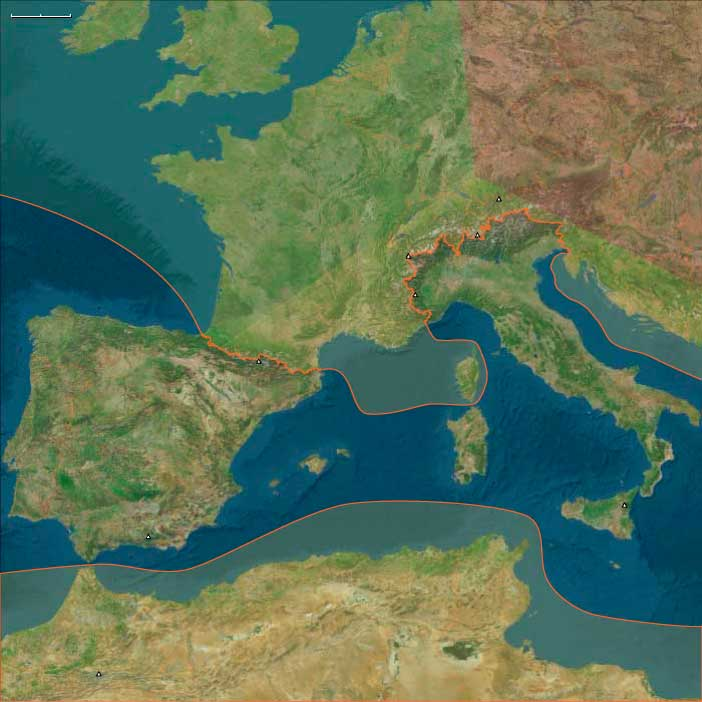
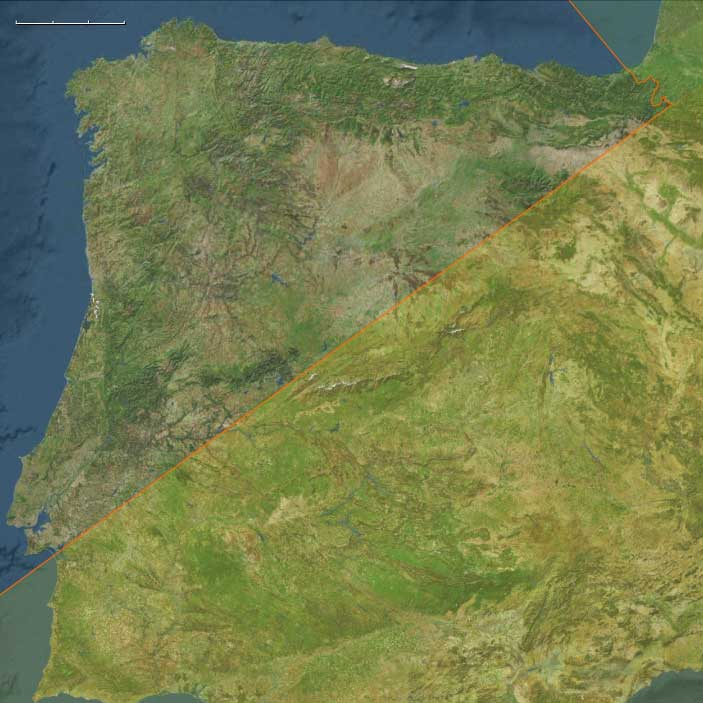
From 1948 to 1959, Atlantic Southwest Europe—including northern and central Portugal, Galicia, Asturias, Cantabria, northern León and Castile, northern Navarre, northern Rioja, and the Basque Country—experienced political continuity under authoritarian regimes, gradual economic modernization, and early signs of cultural and political resistance. Franco’s Spain and Salazar’s Portugal pursued policies of cautious industrial growth, rigid social control, and cultural conservatism, even as regional dissatisfaction and underground resistance movements subtly intensified.
Political and Military Developments
Francoist Consolidation and International Integration
-
Under Francisco Franco (r. 1939–1975), northern Spain continued its authoritarian rule, reinforced by strong central government control, military oversight, and rigid censorship. Basque and Galician nationalist movements faced persistent repression, fueling underground activism.
-
Internationally, Spain began cautiously reintegrating into Western Europe, joining international bodies like the United Nations (1955), and signing the Madrid Pact (1953) with the United States, securing economic aid in exchange for military bases, indirectly benefiting northern Spanish ports like Santander and Bilbao.
Portugal’s Estado Novo under Salazar
-
Portugal maintained political stability through Salazar’s tightly controlled Estado Novo. Northern Portugal, particularly Porto and Braga, benefited modestly from stable governance, but remained subject to stringent political oversight and suppression of dissent.
-
Salazar’s government prioritized colonial consolidation, notably in Africa, creating an economic dependency that would profoundly shape Portugal’s future.
Economic Developments: Gradual Growth and Industrialization
Spain’s Economic Autarky and Early Liberalization
-
Franco’s rigid autarkic economic policies persisted into the early 1950s, hindering rapid economic growth in Galicia, Asturias, and the Basque Country. However, by the late 1950s, these policies gradually relaxed, paving the way for limited foreign investment and industrial modernization, notably benefiting Bilbao’s steel production and Santander’s maritime commerce.
-
Early infrastructure improvements, such as roads and electricity networks, initiated modest economic recovery and growth, laying the groundwork for future industrialization.
Portugal: Controlled Economic Modernization
-
Portugal experienced moderate economic growth under Salazar’s cautious policies, emphasizing fiscal conservatism, agricultural development, and gradual industrial expansion, particularly visible in Porto’s textile, wine, and manufacturing sectors.
-
Infrastructure improvements—roads, bridges, electricity—strengthened economic linkages between northern cities (Porto, Braga, Coimbra) and rural areas, yet significant rural poverty and emigration persisted, notably toward Brazil and France.
Social and Urban Developments
Controlled Urbanization and Social Stability in Spain
-
Northern Spanish cities like Bilbao, Santander, and Gijón underwent controlled urban expansion, driven by industrialization and improved infrastructure. Yet rural Galicia, Asturias, and Castilian regions continued facing economic stagnation, prompting migration toward urban centers or abroad.
-
Despite social stability enforced through strict censorship and security apparatus, underground political resistance and workers’ movements gradually increased, particularly in Basque industrial towns.
Portugal: Social Stability amid Rural Poverty
-
Portugal’s Estado Novo maintained social stability through conservative policies and limited urban growth. Porto, Braga, and Coimbra experienced controlled modernization, but rural northern Portugal suffered persistent poverty, driving continued emigration to Brazil, France, and later Germany.
-
Urban centers became focal points for modest social mobility, with middle-class expansion in commerce and industry cautiously managed under tight state oversight.
Cultural and Religious Developments
Franco’s National Catholicism and Regional Repression
-
Spain under Franco continued promoting Catholic nationalism as a core ideology, strongly influencing education, social policy, and cultural life across northern regions. The Church remained a powerful institution, reinforcing conservative values and regime legitimacy.
-
Despite official suppression, Basque and Galician cultural expressions subtly persisted underground, preserving regional languages, folklore, and nationalist sentiments, laying groundwork for later resurgence.
Portuguese Cultural Conservatism and Quiet Regional Identity
-
Under Salazar, Portugal reinforced conservative Catholic values through strict control over education and media. However, northern Portuguese universities—Coimbra, Porto, and Braga—served as quiet intellectual hubs, cautiously maintaining regional cultural identity and scholarly independence.
-
Regional folklore, literature, and artistic traditions subtly flourished in rural northern areas, balancing regime-approved conservatism with quiet assertions of local identity.
Emerging Resistance and Regional Identity
-
In northern Spain, particularly in the Basque Country, Galicia, and Asturias, underground political movements and labor activism quietly gained strength, challenging Francoist repression and advocating regional autonomy and democratic reform.
-
The Basque nationalist movement began reorganizing clandestinely, laying foundations for more assertive resistance in the subsequent decades. Similarly, Galicia experienced a subtle cultural revival, driven by intellectual circles quietly advocating regional identity.
Legacy and Significance
Between 1948 and 1959, Atlantic Southwest Europe witnessed stable authoritarian governance, modest economic modernization, and early emergence of regional resistance movements. Franco’s Spain and Salazar’s Portugal maintained political control and social stability through strict governance, economic caution, and cultural conservatism. Yet beneath this stability, subtle shifts toward economic liberalization and growing regional discontent foreshadowed future transformations. This era thus represented a critical transitional period, gradually setting the stage for the region’s subsequent economic modernization, political liberalization, and cultural revitalization in the decades ahead.
People
Groups
Topics
Commodoties
- Glass
- Domestic animals
- Grains and produce
- Textiles
- Fibers
- Ceramics
- Strategic metals
- Beer, wine, and spirits
- Fuels, lubricants and sealants
- Manufactured goods
Subjects
Regions
Subregions
Years: 1948 - 1959
People
Groups
Topics
Commodoties
- Glass
- Domestic animals
- Grains and produce
- Textiles
- Fibers
- Ceramics
- Strategic metals
- Beer, wine, and spirits
- Fuels, lubricants and sealants
- Manufactured goods
Subjects
Regions
Subregions