
Atlantic Southwest Europe (1936–1947): Civil War, Neutrality, …
Years: 1936 - 1947
Atlantic Southwest Europe (1936–1947): Civil War, Neutrality, and Authoritarian Consolidation
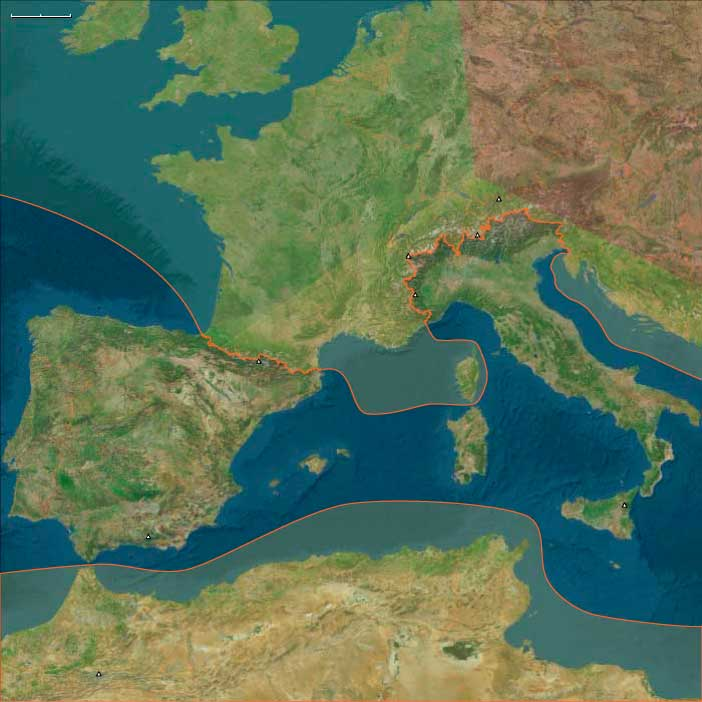
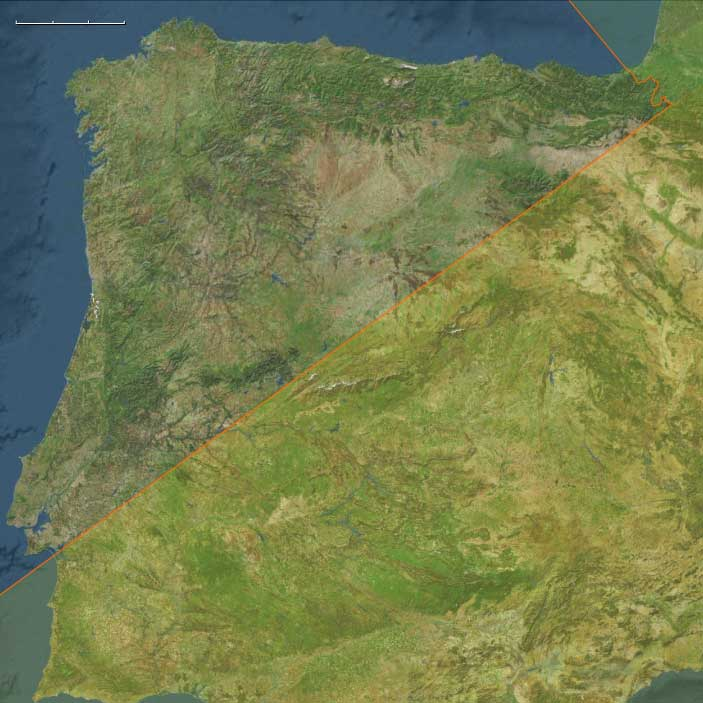
From 1936 to 1947, Atlantic Southwest Europe—including northern and central Portugal, Galicia, Asturias, Cantabria, northern León and Castile, northern Navarre, northern Rioja, and the Basque Country—experienced the dramatic upheaval of the Spanish Civil War, Portugal’s carefully maintained neutrality during World War II, and the consolidation of authoritarian regimes under Franco in Spain and Salazar in Portugal. The era fundamentally reshaped the region's political landscape, intensified ideological divisions, and deeply influenced economic, social, and cultural developments.
Political and Military Developments
The Spanish Civil War (1936–1939)
-
The Spanish Civil War erupted following General Francisco Franco’s military uprising against the democratic Second Republic in July 1936. Atlantic Southwest Europe became a strategic battleground:
-
The Basque Country and Asturias saw intense fighting. Bilbao and Gijón endured heavy bombardment, while Basque and Asturian militias fiercely resisted Franco's Nationalist forces.
-
In 1937, the bombing of Guernica by Nazi Germany’s Condor Legion symbolized wartime atrocities and civilian suffering, profoundly affecting international perceptions of the conflict.
-
Galicia, northern León, Navarre, and Rioja fell quickly under Franco’s control, serving as bases for Nationalist offensives, supported significantly by conservative sectors and the Catholic Church.
-
-
Franco’s victory in 1939 established a repressive authoritarian regime that systematically dismantled regional autonomy, especially targeting Basque and Galician nationalism.
Portugal’s Neutrality under Salazar
-
Portugal, governed by Salazar’s authoritarian Estado Novo, maintained strategic neutrality during World War II (1939–1945), carefully balancing relations with both Allied and Axis powers.
-
Northern Portuguese ports—particularly Porto—became essential for trade, intelligence gathering, and refugee movements, while Salazar leveraged neutrality to strengthen internal political stability and economic conditions.
Economic Developments: War and Reconstruction
Wartime Destruction and Francoist Autarky in Spain
-
The Civil War devastated northern Spain’s industrial infrastructure, notably the steel mills, shipyards, and coal mines in Asturias, Cantabria, and the Basque Country. The port cities of Bilbao, Santander, and Gijón suffered extensive physical destruction.
-
Franco imposed an autarkic (self-sufficient) economic policy to rebuild Spain’s economy, severely restricting foreign trade and imports. This policy led to prolonged economic hardship, shortages, and stagnation, deeply affecting daily life in Atlantic Southwest Spain.
Portugal: Economic Stability and Moderate Growth
-
Portugal’s wartime neutrality allowed for moderate economic benefits, particularly through trade with both Allied and Axis nations, promoting stability and modest growth in industries like textiles, wine production, and agriculture in northern regions, especially around Porto.
-
Salazar’s conservative fiscal policies and limited industrial investment sustained social stability but restricted broader industrial expansion, maintaining significant rural poverty.
Social and Urban Developments
Repression, Emigration, and Social Control in Franco’s Spain
-
Franco’s regime implemented severe political repression, including widespread imprisonment, executions, and forced labor camps, notably affecting the Basque Country, Asturias, and Galicia. This repression prompted significant emigration, particularly to Latin America and France.
-
Franco promoted traditional social hierarchies, enforced strict censorship, and tightly controlled labor movements, suppressing political dissent and regional identities to reinforce a unified Spanish nationalism.
Portugal: Controlled Stability and Emigration
-
Under Salazar’s Estado Novo, social stability persisted through strict political control and censorship. Despite improved economic conditions, northern Portugal experienced significant emigration, notably to Brazil, Angola, and later to other European countries, driven by rural poverty and limited economic opportunities.
-
Porto and northern urban centers expanded cautiously, with controlled urban growth, improved infrastructure, and moderate economic modernization under strict governmental oversight.
Cultural and Religious Developments
Catholic Nationalism and Cultural Control
-
Franco’s Spain heavily emphasized Catholic nationalism, promoting the Church’s role in education, social policy, and public morality. This significantly shaped cultural life, particularly strong in Galicia, Navarre, and rural areas of northern León and Castile.
-
Basque and Galician languages and cultures faced severe repression under Franco, with Basque institutions, cultural organizations, and media systematically suppressed, fueling underground nationalist resistance.
Portugal: Conservative Catholicism and Cultural Expression
-
Salazar reinforced conservative Catholic values, fostering close collaboration between state and Church. Cultural expression, especially in education and media, adhered strictly to regime-approved themes emphasizing nationalism, religious values, and social order.
-
However, northern universities (Coimbra, Porto, Braga) maintained intellectual vibrancy within limited frameworks, quietly nurturing regional cultural identities and scholarly activity despite political restrictions.
Legacy and Significance
Between 1936 and 1947, Atlantic Southwest Europe experienced profound trauma and transformation. The Spanish Civil War fundamentally reshaped northern Spain’s political and social landscape, resulting in severe economic disruption, brutal repression, and diminished regional autonomy. Franco’s regime solidified authoritarian control through enforced nationalism and Catholic orthodoxy, leaving lasting scars and resistance, especially in Basque and Galician regions. Portugal’s strategic neutrality and internal stability under Salazar allowed moderate economic benefits, though at significant social and political costs. This era thus set critical foundations for subsequent economic modernization, social transformations, and regional resistance movements in the post-war period, influencing Atlantic Southwest Europe’s historical trajectory deeply into the latter half of the 20th century.
People
Groups
Topics
Commodoties
- Glass
- Domestic animals
- Grains and produce
- Textiles
- Fibers
- Ceramics
- Strategic metals
- Beer, wine, and spirits
- Fuels, lubricants and sealants
- Manufactured goods
Subjects
Regions
Subregions
Years: 1936 - 1947
People
Groups
Topics
Commodoties
- Glass
- Domestic animals
- Grains and produce
- Textiles
- Fibers
- Ceramics
- Strategic metals
- Beer, wine, and spirits
- Fuels, lubricants and sealants
- Manufactured goods
Subjects
Regions
Subregions