
Atlantic Southwest Europe (1888–1899): Economic Expansion, Rising …
Years: 1888 - 1899
Atlantic Southwest Europe (1888–1899): Economic Expansion, Rising Nationalism, and Emerging Social Movements
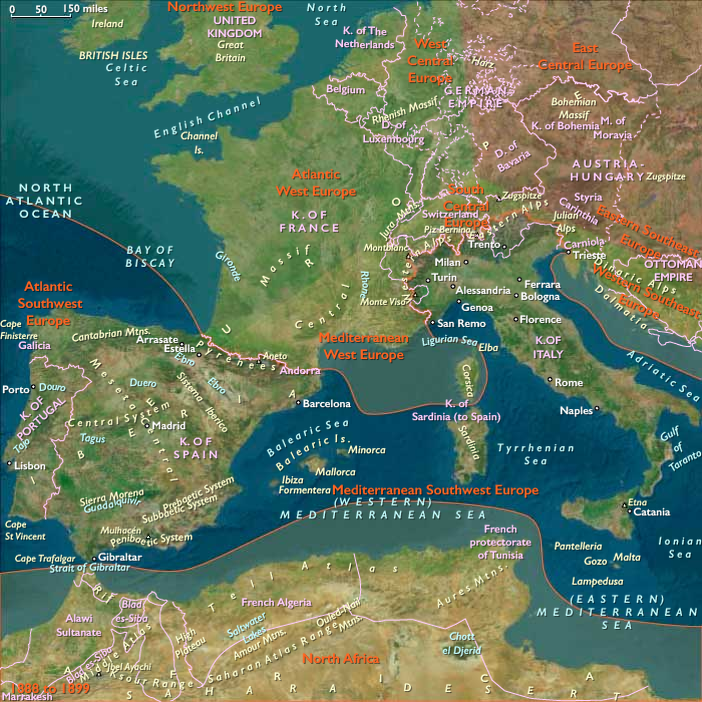
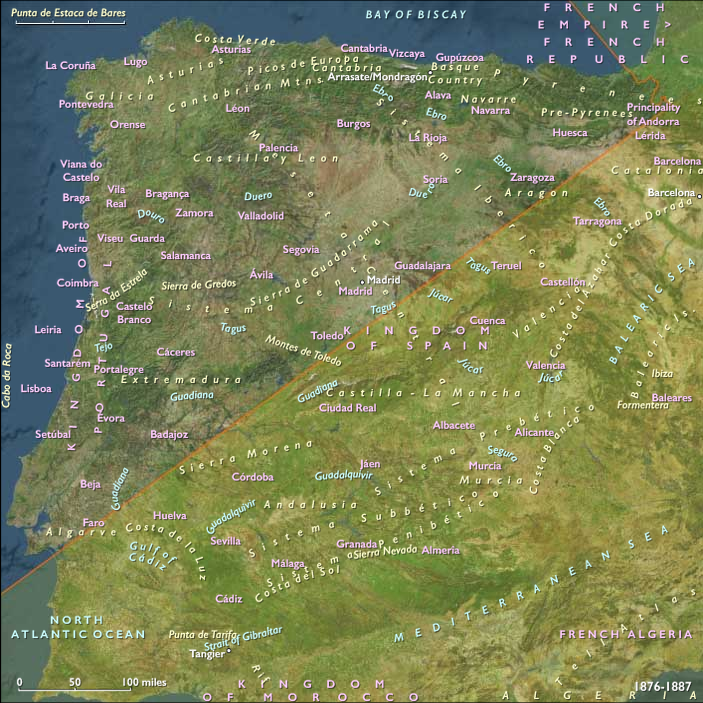
From 1888 to 1899, Atlantic Southwest Europe—including northern and central Portugal, Galicia, Asturias, Cantabria, northern León and Castile, northern Navarre, northern Rioja, and the Basque Country—continued to experience significant economic growth, intensified nationalist and regionalist movements, and expanding social activism. Economic modernization accelerated industrial development and urban expansion, particularly in coastal and industrial centers, while cultural and political life became increasingly defined by regional identities and tensions arising from labor unrest and emerging nationalist sentiments.
Political and Military Developments
Stability and Liberal Governance in Portugal
-
Portugal maintained political stability under the Regeneration and its successor governments, characterized by moderate liberal reforms, economic investment, and infrastructural improvements.
-
Northern cities like Porto and Braga benefitted from stable governance, supporting growing commerce, industry, and cultural institutions, although regional disparities persisted between urban and rural areas.
Spanish Politics and Regional Autonomy Tensions
-
Under the regency of María Cristina of Austria (1885–1902), Spain maintained political continuity with the Restoration monarchy and the two-party liberal-conservative rotation (Turno Pacífico), but underlying tensions intensified.
-
Growing nationalism, particularly in the Basque Country and Galicia, challenged Madrid’s centralizing tendencies, leading to heightened political mobilization around demands for autonomy and protection of regional languages and cultures.
Rise of Basque and Galician Nationalism
-
Sabino Arana founded the Basque Nationalist Party (PNV) in 1895, advocating strong cultural nationalism, political autonomy, and preservation of Basque traditions. Arana’s ideas rapidly gained traction, influencing subsequent political and cultural activism in the region.
-
In Galicia, the Galician regionalist movement matured, fostering increased awareness and celebration of Galician language, culture, and identity, though remaining more cultural and linguistic than explicitly political.
Economic Developments: Continued Industrial Growth and Modernization
Industrial Boom in the Basque Country and Northern Spain
-
The Basque industrial economy flourished dramatically, particularly around Bilbao, driven by rapid expansion in iron, steel, mining, and shipbuilding sectors. Bilbao became an essential European industrial center, exporting steel and iron internationally.
-
Industrialization spread further throughout Asturias and Cantabria, with cities like Gijón and Santandersignificantly expanding port facilities and industrial capacities, creating employment but also urban congestion and socio-economic tensions.
Portuguese Industrial and Commercial Expansion
-
Northern Portugal, especially around Porto and the Douro Valley, experienced continued growth through diversified manufacturing, increased exports of wine and textiles, and improved trade networks facilitated by railway expansion and port modernization.
-
Porto solidified its position as Portugal’s leading industrial and commercial city, driving national economic prosperity but also facing increased labor unrest amid industrial expansion.
Social and Urban Developments
Urban Expansion and Rising Social Tensions
-
Major cities—including Bilbao, Porto, Vigo, and Santander—expanded rapidly due to industrial growth, creating vibrant urban economies but also exacerbating poor living and working conditions. Urbanization prompted greater social stratification, sparking growing labor unrest and activism.
-
Worker movements, influenced by socialist and anarchist ideas spreading throughout Europe, intensified significantly. Strikes, notably in Bilbao’s ironworks and Porto’s textile factories, reflected deepening discontent among the working class and demands for labor rights.
Rural Decline and Ongoing Emigration
-
Rural areas in Galicia, Asturias, and northern Castile continued to experience severe poverty and demographic decline due to limited economic opportunities, prompting sustained emigration, primarily to the Americas. Emigration reshaped rural communities, creating demographic imbalances and economic dependence on remittances.
Cultural and Religious Developments
Flourishing Regional Cultural Identities
-
Regional cultural revival intensified further in Galicia and the Basque Country, supported by literary circles, cultural associations, and publications promoting regional languages, folklore, and traditions. Galician poets and intellectuals enhanced regional literary culture, while Basque nationalist intellectuals significantly contributed to local identity formation.
-
In northern Portugal, cultural expressions remained robust, characterized by significant literary and artistic output emphasizing national pride, regional identity, and historical consciousness, notably around Porto.
Continued Influence of the Catholic Church
-
The Catholic Church continued to exert significant social, educational, and cultural influence across northern Portugal and Spain. It maintained conservative influence, promoting social cohesion, but increasingly confronted challenges from secular ideologies and social movements demanding reform and liberalization.
Legacy and Significance
The period from 1888 to 1899 solidified Atlantic Southwest Europe's economic expansion, intensified regionalist and nationalist sentiments, and highlighted emerging socio-economic tensions driven by rapid urbanization and industrialization. The establishment of influential nationalist movements, notably the Basque Nationalist Party, laid foundations for significant twentieth-century political developments. Cultural vitality reinforced regional identities, while growing labor activism foreshadowed future social and political conflicts. These dynamics, encompassing economic progress and intensified regional consciousness, critically shaped subsequent historical trajectories into the early twentieth century.
People
Groups
- Portugal, Bragança Kingdom of
- Spain, Regency of
- Spain, Savoyard Kingdom of
- Spain, Bourbon Kingdom (second restoration) of
Topics
Commodoties
- Glass
- Domestic animals
- Grains and produce
- Textiles
- Fibers
- Ceramics
- Strategic metals
- Beer, wine, and spirits
- Fuels, lubricants and sealants
- Manufactured goods
Subjects
Regions
Subregions
Years: 1888 - 1899
People
Groups
- Portugal, Bragança Kingdom of
- Spain, Regency of
- Spain, Savoyard Kingdom of
- Spain, Bourbon Kingdom (second restoration) of
Topics
Commodoties
- Glass
- Domestic animals
- Grains and produce
- Textiles
- Fibers
- Ceramics
- Strategic metals
- Beer, wine, and spirits
- Fuels, lubricants and sealants
- Manufactured goods
Subjects
Regions
Subregions