
Atlantic Southwest Europe (1876–1887): Stability Restored, Economic …
Years: 1876 - 1887
Atlantic Southwest Europe (1876–1887): Stability Restored, Economic Modernization, and Rising Regional Consciousness
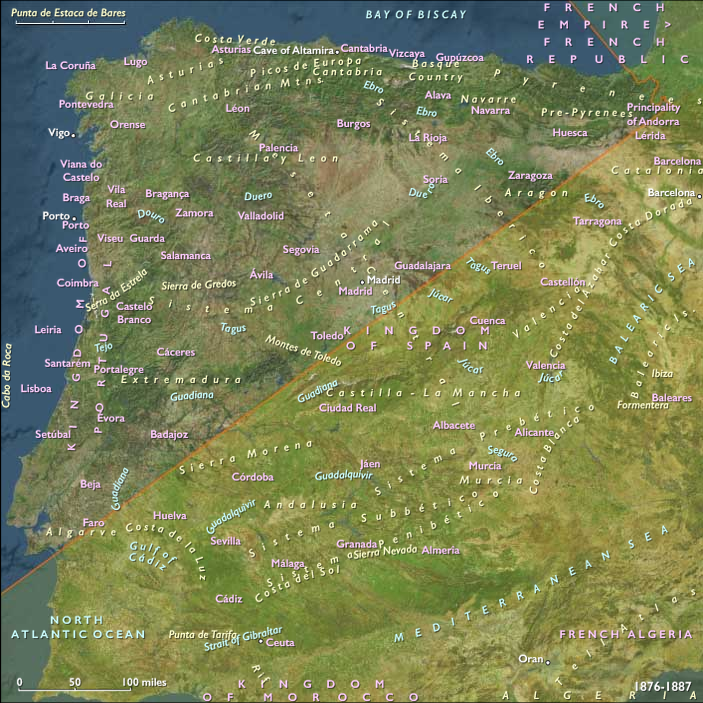
From 1876 to 1887, Atlantic Southwest Europe—including northern and central Portugal, Galicia, Asturias, Cantabria, northern León and Castile, northern Navarre, northern Rioja, and the Basque Country—experienced relative political stability, vigorous economic modernization, and intensified regional cultural expressions. Following Spain’s Bourbon Restoration, the region saw renewed economic growth and infrastructural advancements, while Portugal continued moderate liberal reforms and commercial expansion. Simultaneously, regionalist and nationalist movements gained strength, significantly influencing cultural and social dynamics.
Political and Military Developments
Spain: The Bourbon Restoration
-
Under Alfonso XII (r. 1874–1885) and later regency of María Cristina of Austria (from 1885), Spain stabilized politically after decades of turbulence. The 1876 Constitution established a liberal-conservative alternation (Turno Pacífico), restoring centralized parliamentary monarchy.
-
The defeat of the Carlist movement in 1876 ended decades of intermittent warfare, integrating Basque and Navarrese territories fully into centralized Spanish governance while granting limited preservation of traditional fueros (regional rights).
Portugal: Continuing Regeneration Stability
-
Portugal remained stable politically under the ongoing Regeneration period, guided primarily by Prime Minister Fontes Pereira de Melo and moderate liberals. Economic development and infrastructural investments remained prioritized, fostering national cohesion and stability.
-
Northern Portuguese cities, notably Porto and Braga, enjoyed sustained urban and economic growth, facilitated by liberal governance focused on trade, commerce, and industrialization.
Economic Developments: Industrial Growth and Infrastructural Modernization
Expansion of Industrial and Maritime Economies
-
Bilbao’s industrial boom accelerated further, consolidating the Basque Country as Spain’s economic powerhouse. The iron and steel industries experienced rapid expansion, driven by growing demand from Britain, France, and the Americas.
-
Santander in Cantabria and Gijón in Asturias significantly expanded port facilities, enhancing maritime trade connections to Britain, Northern Europe, and the Americas, stimulating regional economic prosperity.
Portuguese Economic Diversification
-
Northern Portugal, especially Porto, Braga, and Guimarães, saw further diversification in textiles, ceramics, glass production, and port wine exports. Enhanced railway infrastructure connected northern Portugal efficiently with Lisbon and the Atlantic trade routes, greatly benefiting regional commerce.
-
Growth in Porto’s manufacturing and maritime sectors bolstered economic prosperity, reinforcing the city’s importance as a dynamic commercial hub.
Social and Urban Developments
Urbanization, Labor Activism, and Social Reform
-
Urban growth surged in major cities including Bilbao, Porto, Vigo, and Santander, reflecting significant economic opportunities but exacerbating socio-economic disparities and poor working conditions.
-
Labor movements intensified their advocacy efforts, particularly among steelworkers in Bilbao and textile workers in Porto. Workers' associations and trade unions increasingly organized strikes and demanded improved wages and conditions, influencing broader social policies.
Rural Distress and Emigration
-
Rural regions, notably Galicia, Asturias, and inland northern Castile-León, remained economically disadvantaged. Persistent poverty and limited agricultural productivity drove continued mass emigration, primarily toward Latin America (Argentina, Brazil, Cuba) and the United States, deeply reshaping regional demographics.
Cultural and Religious Developments
Regionalist Movements and Cultural Revival
-
Regionalist and nationalist sentiments strengthened further, particularly within Galicia and the Basque Country. Galician literature, folklore, and cultural institutions promoted distinctive regional identity, emphasizing linguistic and cultural uniqueness.
-
The Basque nationalist movement expanded under figures like Sabino Arana, who emerged prominently during this period, advocating political autonomy and cultural revival. Basque language schools, literature, and cultural associations flourished, significantly influencing regional identity politics.
Cultural Flourishing in Northern Portugal
-
Northern Portugal experienced sustained cultural vitality, particularly in Porto and Braga, characterized by growing literary and artistic output emphasizing Portuguese nationalism and regional pride.
-
Cultural institutions and educational reforms promoted a strong sense of Portuguese identity, enriched by historical consciousness, literary Romanticism, and emerging regionalist discourse.
Continued Influence of the Catholic Church
-
The Catholic Church maintained its influential role in social and educational domains throughout northern Portugal and Spain, acting as a stabilizing force in urban and rural communities alike. The Church’s conservative influence provided continuity and social cohesion, counterbalancing the secular liberalizing trends emerging in major urban centers.
Legacy and Significance
The years 1876–1887 marked a crucial period of political stability, economic modernization, and burgeoning regional consciousness in Atlantic Southwest Europe. Spain’s Bourbon Restoration provided essential stability following decades of conflict, while Portugal sustained moderate liberal governance and economic expansion. Urbanization and industrial growth reshaped social dynamics, fostering intensified labor movements and social reform efforts. Concurrently, heightened regionalist sentiments and cultural revivals, particularly pronounced in Galicia and the Basque Country, significantly influenced future nationalist movements and cultural identities. These developments set important foundations for continued regional autonomy struggles, socio-economic transformations, and enduring cultural distinctiveness into the twentieth century.
People
Groups
- Portugal, Bragança Kingdom of
- Spain, Regency of
- Spain, Savoyard Kingdom of
- Spain, Bourbon Kingdom (second restoration) of
Topics
Commodoties
- Glass
- Domestic animals
- Grains and produce
- Textiles
- Fibers
- Ceramics
- Strategic metals
- Beer, wine, and spirits
- Fuels, lubricants and sealants
- Manufactured goods
Subjects
Regions
Subregions
Related Events
Showing 10 events out of 12322 total
Years: 1876 - 1887
People
Groups
- Portugal, Bragança Kingdom of
- Spain, Regency of
- Spain, Savoyard Kingdom of
- Spain, Bourbon Kingdom (second restoration) of
Topics
Commodoties
- Glass
- Domestic animals
- Grains and produce
- Textiles
- Fibers
- Ceramics
- Strategic metals
- Beer, wine, and spirits
- Fuels, lubricants and sealants
- Manufactured goods
Subjects
Regions
Subregions