
Atlantic Southwest Europe (1864–1875): Liberal Revolutions, Industrial …
Years: 1864 - 1875
Atlantic Southwest Europe (1864–1875): Liberal Revolutions, Industrial Expansion, and Regional Turmoil
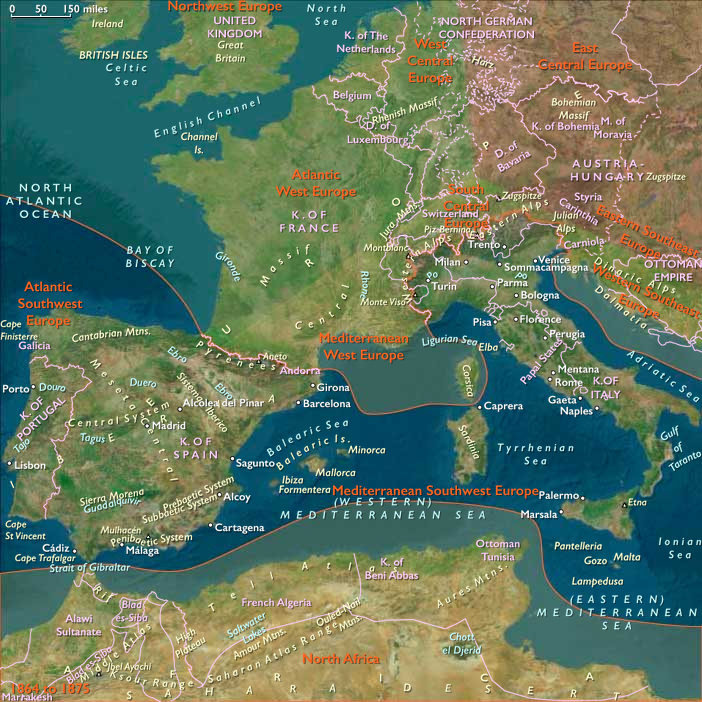
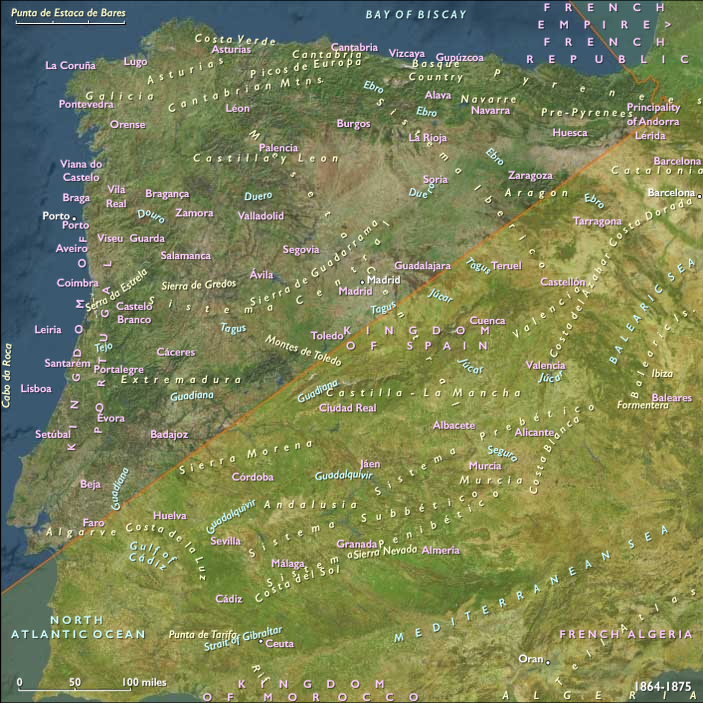
Between 1864 and 1875, Atlantic Southwest Europe—including northern and central Portugal, Galicia, Asturias, Cantabria, northern León and Castile, northern Navarre, northern Rioja, and the Basque Country—experienced renewed political upheaval, significant economic transformation, and growing regional tensions. This period was shaped by revolutionary changes in Spain culminating in the short-lived First Spanish Republic, continuing industrial expansion, increased labor activism, and intensified regional cultural movements, reflecting the era's broader European liberal trends.
Political and Military Developments
Spain: Revolution, Republic, and Restoration
-
In 1868, the Glorious Revolution overthrew Queen Isabella II, ushering in a period of intense political experimentation and instability.
-
Following the brief reign of Amadeo I (1870–1873), Spain established its First Republic in 1873, characterized by political turmoil and decentralized federalist aspirations, influencing regional politics significantly.
-
Persistent instability, Carlist insurrections in the Basque Country and Navarre (Third Carlist War, 1872–1876), and republican factionalism led to the Republic’s collapse in 1874, leading to the Bourbon Restoration under Alfonso XII (1874–1885).
Portugal: Stability Amidst Regionalism
-
Portugal maintained relative political stability under the ongoing Regeneration period led by Prime Minister Fontes Pereira de Melo. Moderate liberal governments continued infrastructural modernization and economic reforms.
-
Northern Portuguese regions, notably Porto, Braga, and Coimbra, experienced limited political unrest compared to Spain, benefiting from sustained economic and infrastructural improvements.
Economic Developments: Industrialization and Trade Expansion
Industrial Growth in Northern Spain
-
Economic expansion continued robustly, particularly in the Basque Country. Bilbao became Spain’s primary industrial center for iron mining and steel production, significantly modernizing its industries and infrastructure.
-
Cantabria, particularly Santander, flourished through maritime trade and commerce, increasingly connecting with British and European markets.
Portuguese Economic Diversification and Maritime Growth
-
Northern Portugal, especially Porto, Braga, and Guimarães, diversified economically through expanded textile manufacturing, wine exports (Port wine), and emerging industries like glass and ceramics production.
-
Railways expanded further, integrating Porto and Lisbon closely with international trading networks, strengthening Portugal’s economic stability and growth.
Social and Urban Developments
Urbanization and Social Inequalities
-
Industrial and commercial growth accelerated urbanization dramatically in Bilbao, Porto, Santander, and Vigo. This rapid expansion intensified socioeconomic disparities, creating pronounced working-class neighborhoods characterized by poverty and overcrowding.
-
Labor movements became increasingly visible, with workers in Bilbao’s steel industries, Vigo’s maritime trade, and Porto’s textile factories advocating labor rights, fair wages, and improved working conditions, resulting in numerous strikes and protests.
Rural Poverty and Emigration
-
Persistent rural stagnation, especially in Galicia, Asturias, and northern Castile-León, continued driving substantial emigration to the Americas, notably Brazil, Argentina, Mexico, and Cuba, reshaping demographic structures and regional economies significantly.
Cultural and Religious Developments
Regional Cultural Revivals and Autonomy Movements
-
Regional cultural identities strengthened substantially. Galician cultural movements flourished through literature, language revival, and folklore, promoting a distinctive Galician identity.
-
Basque nationalism and cultural revival intensified, particularly influenced by political instability and Carlist wars. Cultural organizations actively promoted Basque language preservation (Euskara), literature, and folklore, laying foundations for later political nationalism.
-
Northern Portuguese cultural institutions continued promoting Romantic nationalism, emphasizing historical heritage, Portuguese identity, and literary traditions prominently in cities like Porto and Coimbra.
Persistent Influence of Catholicism
-
Catholicism maintained a central social and cultural role across northern Spain and Portugal, providing stability amidst political turmoil. The Church remained influential in educational and social institutions, particularly in rural regions, sustaining traditional values and community cohesion.
Legacy and Significance
The years 1864–1875 were pivotal for Atlantic Southwest Europe, characterized by political upheaval, rapid industrial expansion, intensified labor movements, and burgeoning regional identities. Spain's revolutionary turmoil and the brief republican experiment profoundly impacted regional politics, while Portugal maintained relative stability, experiencing continued modernization and economic diversification. Increased urbanization, labor activism, and significant cultural revival movements in Galicia, the Basque Country, and northern Portugal underscored deepening regional identities, significantly shaping the region's subsequent political, economic, and cultural trajectories.
People
Groups
- Portugal, Bragança Kingdom of
- Spain, Regency of
- Spain, Savoyard Kingdom of
- Spain, Bourbon Kingdom (second restoration) of
Topics
Commodoties
- Domestic animals
- Grains and produce
- Textiles
- Fibers
- Strategic metals
- Beer, wine, and spirits
- Fuels, lubricants and sealants
- Manufactured goods
Subjects
Regions
Subregions
Years: 1864 - 1875
People
Groups
- Portugal, Bragança Kingdom of
- Spain, Regency of
- Spain, Savoyard Kingdom of
- Spain, Bourbon Kingdom (second restoration) of
Topics
Commodoties
- Domestic animals
- Grains and produce
- Textiles
- Fibers
- Strategic metals
- Beer, wine, and spirits
- Fuels, lubricants and sealants
- Manufactured goods
Subjects
Regions
Subregions