
Atlantic Southwest Europe (1852–1863): Stability, Economic Expansion, …
Years: 1852 - 1863
Atlantic Southwest Europe (1852–1863): Stability, Economic Expansion, and Growing Regionalism
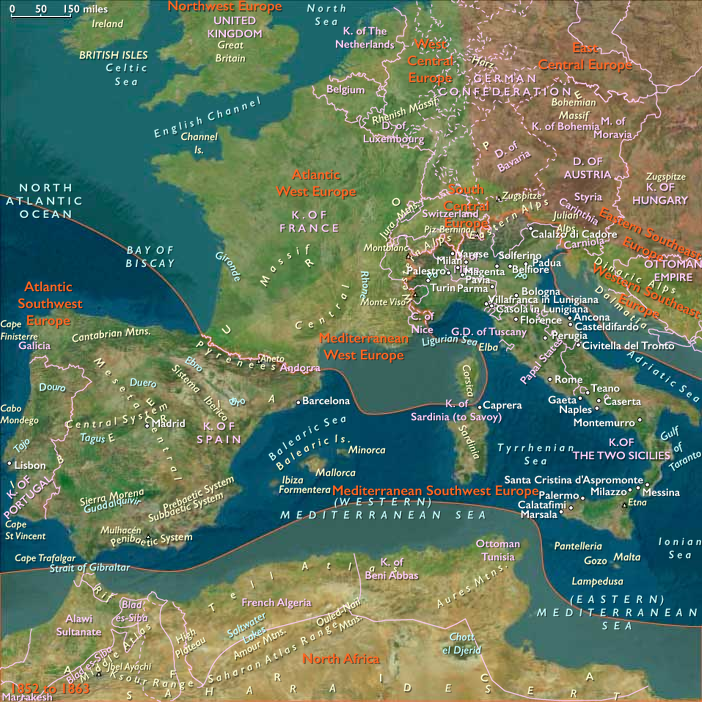
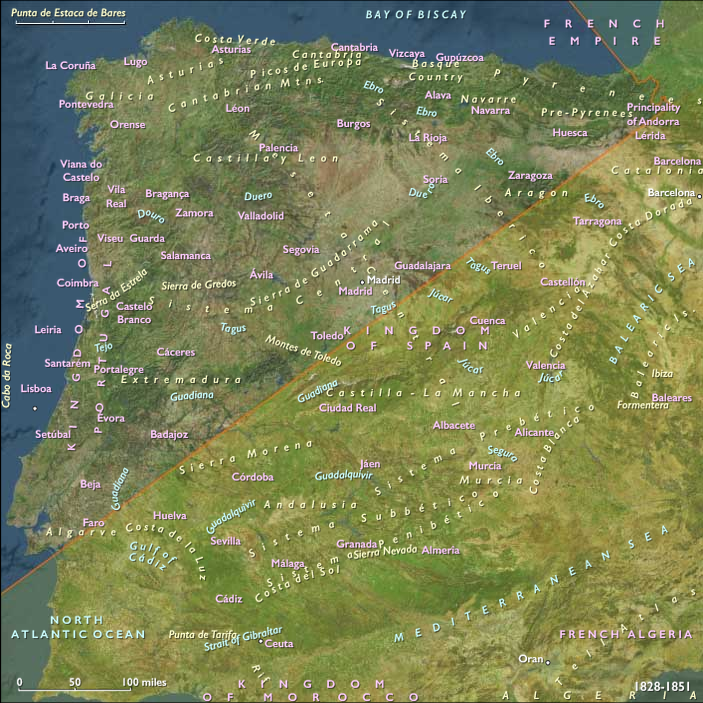
Between 1852 and 1863, Atlantic Southwest Europe—including northern and central Portugal, Galicia, Asturias, Cantabria, northern León and Castile, northern Navarre, northern Rioja, and the Basque Country—experienced relative political stability, significant economic expansion, and a rise in regional identities. While liberal governments in Portugal and Spain sought political moderation, economic growth accelerated through industrialization, infrastructural improvements, and increased international trade. Simultaneously, regional autonomy movements, notably in the Basque territories and Galicia, deepened, shaping political discourse and cultural development.
Political and Military Developments
Portugal: Regeneration Era and Moderate Liberalism
-
Portugal entered the Regeneration Era (Regeneração), a period of stable government and moderate liberal reforms initiated by Prime Minister Fontes Pereira de Melo (from 1851 onward).
-
This era was marked by political pragmatism, infrastructural improvements (railways, roads, ports), and administrative modernization, reducing tensions after the Patuleia Revolt.
-
Northern Portugal, especially around Porto, benefited significantly from these reforms, fostering economic prosperity and social stability.
Spain: Moderate Liberalism and Ongoing Carlism
-
Under Queen Isabella II (1833–1868), Spain achieved relative stability through moderate liberal governments (Moderados). Prime Ministers like Leopoldo O'Donnell (1856–1863) promoted centralized governance, economic development, and infrastructure improvements, notably railways.
-
However, Carlism continued as a potent political and cultural force in the Basque Country, northern Navarre, and rural areas of northern Castile and León. Despite military suppression of prior rebellions, Carlist ideals—regional autonomy, traditional monarchy, and Catholic conservatism—remained influential.
Economic Developments: Expansion and Industrialization
Portuguese Economic Prosperity and Infrastructure
-
Portugal's economic growth accelerated through improved infrastructure, notably rail connections linking Porto and Lisbon, significantly enhancing commercial trade.
-
Northern cities like Porto, Braga, and Guimarães experienced robust industrial growth, particularly in textiles, leather goods, and wine exports (Port wine), increasingly integrated into British and northern European markets.
Northern Spanish Industrial and Commercial Boom
-
The Basque Country experienced notable industrial growth, centered around iron extraction, steel production, shipbuilding, and heavy industry, especially in Bilbao, reinforcing its role as a critical economic hub.
-
Cantabria, notably Santander, flourished through maritime commerce and shipbuilding, further integrated into international trading networks.
-
Galicia continued expanding maritime commerce and fishing industries, particularly in Vigo and A Coruña, benefiting from improved ports and transport connections.
Social and Urban Developments
Urbanization, Industrial Labor, and Social Tensions
-
Major urban centers—Porto, Bilbao, Santander, and Vigo—expanded rapidly, drawing rural migrants seeking industrial employment. Population growth and increased urban density amplified social inequalities and tensions between working-class laborers and emerging industrial elites.
-
Industrial conditions prompted early labor activism, with strikes and protests periodically occurring in Bilbao’s iron industry, Porto’s textile factories, and Galicia’s maritime sectors, advocating for improved working conditions, wages, and political representation.
Rural Stagnation and Increased Emigration
-
Rural Galicia, Asturias, and northern Castile and León continued facing poverty, agricultural stagnation, and demographic pressure, prompting intensified emigration to Brazil, Argentina, Cuba, and other parts of Latin America, reshaping regional demographics and economic structures.
Cultural and Religious Developments
Strengthening Regional Identities and Cultural Movements
-
Cultural and linguistic movements expanded significantly. Galician literature and folklore flourished through regional publications promoting Galician identity and language revitalization.
-
In the Basque territories, literary and linguistic activism increasingly asserted Basque cultural distinctiveness, emphasizing local traditions, folklore, and language revival efforts.
-
Northern Portugal experienced a vibrant Romantic literary scene, especially in Porto, characterized by cultural pride and renewed interest in historical narratives highlighting Portuguese identity.
Continued Influence of Catholicism
-
Catholicism retained strong influence throughout the region, particularly among rural populations in Galicia, Asturias, northern Castile, and the Basque Country, reinforcing conservative values amid liberal reforms.
-
Despite secular trends in education and urban middle-class culture, religious institutions remained socially influential, shaping community rituals, festivals, and moral values.
Legacy and Significance
The years 1852–1863 represented a period of relative stability, significant economic expansion, and cultural flourishing for Atlantic Southwest Europe. Portugal’s Regeneration Era and Spain’s moderate liberalism fostered political pragmatism, infrastructural improvement, and economic prosperity. Yet, increased urbanization and industrial growth also intensified social inequalities, fueling early labor movements. Meanwhile, regional cultural identities, notably in Galicia and the Basque Country, deepened significantly, asserting local autonomy and distinctiveness. These developments profoundly influenced subsequent political, social, and cultural trajectories throughout the region.
People
Groups
Commodoties
- Domestic animals
- Grains and produce
- Textiles
- Fibers
- Strategic metals
- Beer, wine, and spirits
- Fuels, lubricants and sealants
- Manufactured goods
Subjects
Regions
Subregions
Related Events
Showing 10 events out of 16184 total
Years: 1852 - 1863
People
Groups
Commodoties
- Domestic animals
- Grains and produce
- Textiles
- Fibers
- Strategic metals
- Beer, wine, and spirits
- Fuels, lubricants and sealants
- Manufactured goods
Subjects
Regions
Subregions