
Atlantic Southwest Europe (1840–1851): Liberal Conflicts, Regional …
Years: 1840 - 1851
Atlantic Southwest Europe (1840–1851): Liberal Conflicts, Regional Unrest, and Early Industrialization
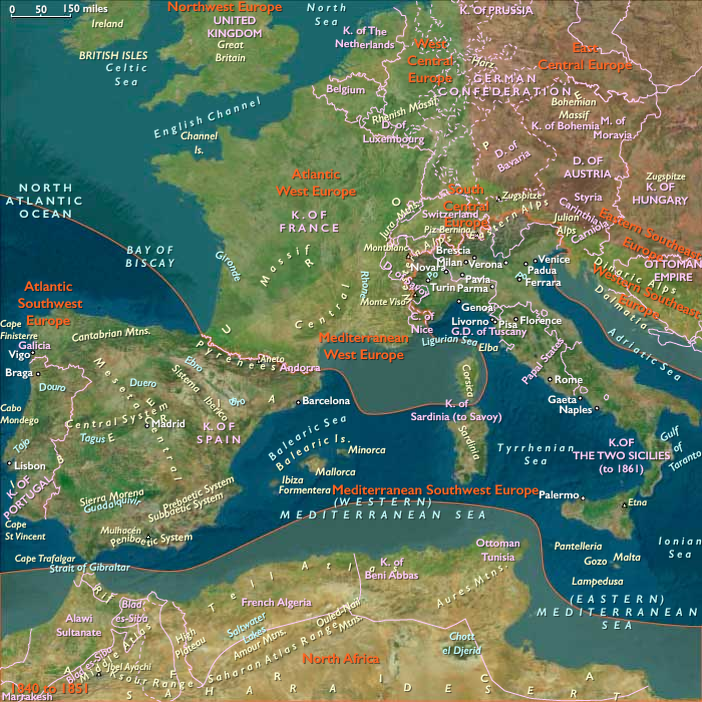
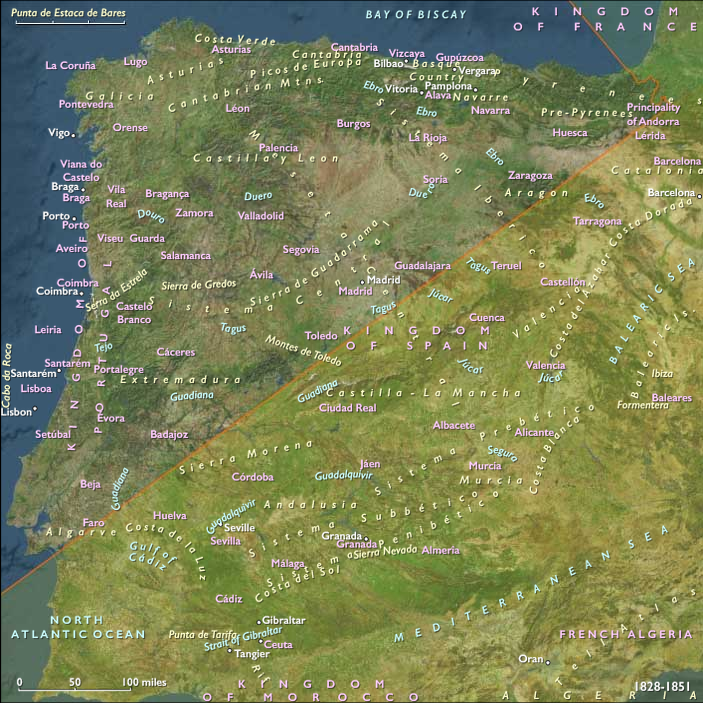
Between 1840 and 1851, Atlantic Southwest Europe—including northern and central Portugal, Galicia, Asturias, Cantabria, northern León and Castile, northern Navarre, northern Rioja, and the Basque Country—experienced intense liberal conflicts, social and economic transformations, and regional tensions. This era saw the climax and resolution of the Patuleia Revolt in Portugal, continuing economic change through early industrialization, and deepening struggles over governance, liberal reform, and local autonomy in both Spain and Portugal.
Political and Military Developments
Portugal: Patuleia and its Aftermath (1846–1847)
-
The Patuleia Revolt (1846–1847), a popular uprising particularly intense around Porto and northern regions, erupted against Prime Minister Costa Cabral's authoritarian centralization, taxation, and disregard for regional interests.
-
With Porto as their stronghold, rebels formed an alternative liberal government, provoking significant military engagements.
-
The conflict was resolved through international mediation by Britain and Spain with the Convention of Gramido (June 1847), restoring relative political balance, forcing Cabral’s resignation, and tempering central authority.
Spain: Moderates, Progressives, and Carlism
-
Spain faced ongoing struggles between Moderate Liberals (Moderados) favoring centralized constitutional monarchy and the Progressive Liberals (Progresistas) seeking broader democratic reforms. Political instability resulted in frequent changes of government.
-
Northern Spain—especially the Basque Country, Navarre, and parts of Catalonia—continued as sites of Carlism, whose supporters promoted traditional monarchy, the Church, and regional fueros (autonomy privileges). Despite military defeat in the earlier First Carlist War (1833–1840), Carlism remained politically active and influential, especially in Navarre, the Basque provinces, and rural areas of northern Castile and León.
Economic Developments: Early Industrialization and Maritime Growth
Portugal’s Maritime and Commercial Activity
-
Porto expanded significantly through increased export of Port wine and textiles, primarily to British markets. Improved port facilities and infrastructure facilitated increased maritime commerce.
-
Industrialization slowly advanced, especially in northern Portuguese cities like Braga and Guimarães, where textile manufacturing industries modernized production methods, increasing economic prosperity and urban employment.
Northern Spain’s Industrialization
-
The Basque Country (Bilbao) and Cantabria (Santander) saw sustained industrial growth driven by iron production, shipbuilding, and expanding trade links with Britain and France.
-
Galicia strengthened its maritime economy through fisheries, shipping, and trade expansion, notably from ports such as Vigo and A Coruña. Improved communication routes supported modest industrial growth in Galicia, Asturias, and northern León.
Social and Urban Developments
Urban Expansion and Social Tensions
-
Major urban centers (Porto, Bilbao, Santander, Braga, Vigo) continued rapid growth, reflecting industrial employment opportunities and rural migration. Social inequalities became increasingly pronounced, fueling tensions between industrial elites and working classes.
-
Social unrest in cities like Porto, Vigo, and Bilbao highlighted urban inequalities, leading to periodic labor strikes and demonstrations demanding improved working conditions, wages, and political representation.
Rural Hardships and Emigration
-
Galicia, Asturias, and northern Castile faced persistent rural poverty, agricultural stagnation, and population pressures. These conditions spurred significant emigration to the Americas (especially Brazil, Argentina, and Cuba), marking early stages of mass Iberian emigration.
Cultural and Religious Developments
Liberalism, Education, and Secularization
-
Liberal ideals continued reshaping education and intellectual life. Universities in Coimbra and Porto (Portugal), Santiago de Compostela (Galicia), and Salamanca (Castile) emphasized liberal education, secular studies, and scientific innovation, influencing educated elites and urban middle classes.
-
Despite secularization trends, Catholicism remained socially dominant, with the Church strongly influencing rural populations, especially evident in the Basque Country, Navarre, and northern Portugal.
Cultural Flourishing and Regional Identities
-
Regional literature, arts, and language revival movements flourished. Galicia saw renewed interest in Galician language and folklore; northern Portugal embraced literary Romanticism; the Basque Country nurtured distinct cultural pride through language and traditions.
-
Artistic patronage in cities such as Porto, Bilbao, and Santiago de Compostela supported growing cultural identity and reinforced local autonomy movements.
Legacy and Significance
The years 1840–1851 in Atlantic Southwest Europe marked critical transitions toward greater regional autonomy, moderate liberal reforms, and early stages of industrialization. Portugal’s Patuleia Revolt underscored tensions between centralization and regional interests, while Spain’s ongoing liberal-Carlist conflicts reflected deeper ideological divides. Economic growth and urbanization brought prosperity but heightened social inequalities and prompted rural emigration. Cultural developments reinforced regional identities, laying critical foundations for future political and social transformations across the region.
People
Groups
Topics
- Spanish Civil War of 1840-43
- Portuguese Moderates Coup
- Septembrists Revolt in Portugal
- Portuguese Regenerators Revolt
Commodoties
- Domestic animals
- Grains and produce
- Textiles
- Fibers
- Strategic metals
- Beer, wine, and spirits
- Fuels, lubricants and sealants
- Manufactured goods
Subjects
Regions
Subregions
Related Events
Showing 10 events out of 18028 total
Years: 1840 - 1851
People
Groups
Topics
- Spanish Civil War of 1840-43
- Portuguese Moderates Coup
- Septembrists Revolt in Portugal
- Portuguese Regenerators Revolt
Commodoties
- Domestic animals
- Grains and produce
- Textiles
- Fibers
- Strategic metals
- Beer, wine, and spirits
- Fuels, lubricants and sealants
- Manufactured goods
Subjects
Regions
Subregions