
Atlantic Southwest Europe (1792–1803): Revolutionary Echoes, Political …
Years: 1792 - 1803
Atlantic Southwest Europe (1792–1803): Revolutionary Echoes, Political Upheaval, and Regional Struggles
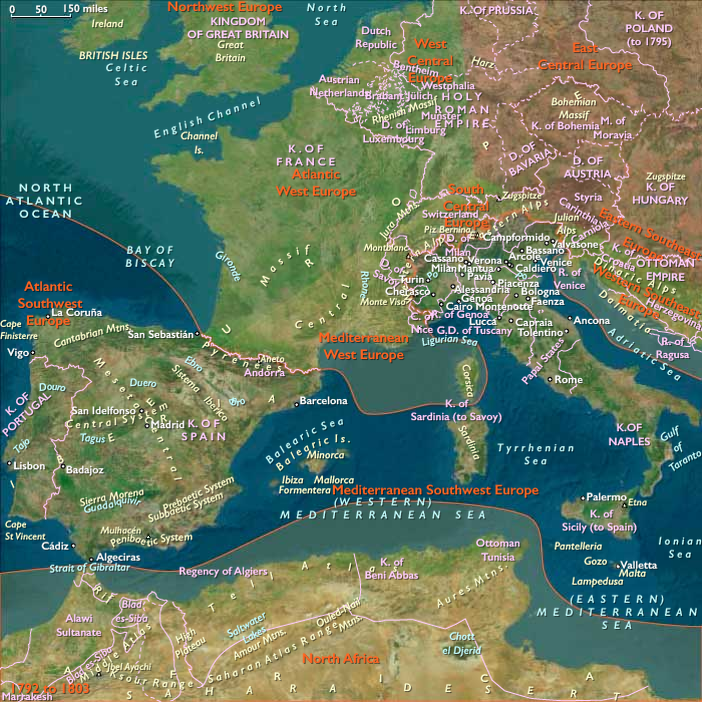
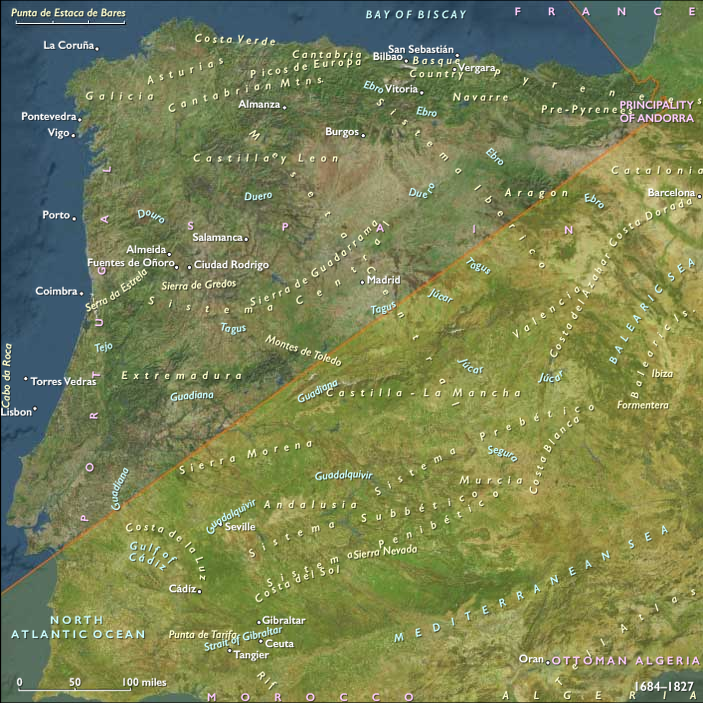
Between 1792 and 1803, Atlantic Southwest Europe—including northern and central Portugal (Lisbon), Galicia, Asturias, Cantabria, northern León and Castile, northern Navarre, northern Rioja, and the Basque Country—faced dramatic challenges stemming from the French Revolution’s ideological impact, internal political tensions, and shifting international alliances. Revolutionary fervor, growing social unrest, and economic strains reshaped regional dynamics, paving the way for profound political and social transformations in the early nineteenth century.
Political and Military Developments
Influence of Revolutionary France
-
Revolutionary ideas, particularly notions of liberty, equality, and constitutional government emanating from France, spread among intellectual and middle-class circles in Lisbon, Porto, Bilbao, and Valladolid, fueling political debate and demands for reform.
-
Spanish authorities in Galicia, Asturias, and the Basque Country reacted strongly against revolutionary sentiments, intensifying censorship and surveillance while preparing defenses against potential French military incursions.
Portugal’s Political Instability
-
In Portugal, Queen Maria I’s deteriorating mental health after 1792 weakened political stability, creating a power vacuum partly filled by her son, João VI, who governed as regent from 1799.
-
Portuguese authorities grew increasingly wary of French revolutionary influence, tightening censorship, arresting suspected revolutionaries, and aligning closely with Britain to safeguard against French aggression.
Spain: Declining Bourbon Authority
-
Under King Charles IV and his influential minister, Manuel de Godoy, Spain struggled politically and militarily amid growing internal dissatisfaction, particularly pronounced in northern regions that opposed centralizing policies and resented heavy taxation.
-
The Basque Country and northern Navarre, fiercely protective of their fueros, resisted Madrid’s increased demands, asserting regional autonomy and exacerbating tensions between central and regional authorities.
Economic Developments: Maritime Struggles and Fiscal Strain
Trade Disruption and Maritime Challenges
-
Northern Portuguese and Spanish ports—Lisbon, Porto, Bilbao, Santander, and Vigo—suffered trade disruptions due to the Napoleonic Wars (beginning in 1799), naval blockades, and increased piracy, resulting in significant economic hardship.
-
The region’s merchant classes, particularly in Porto and Bilbao, faced declining profitability from disrupted trade with Britain, France, and overseas colonies, compounding local economic struggles.
Inflation and Financial Hardship
-
Inflation, driven by wartime disruptions and fiscal mismanagement, severely impacted local economies in Galicia, Asturias, and northern Castile and León, exacerbating rural poverty and fueling migration to urban areas.
-
Heavy taxation imposed by Madrid and Lisbon to finance military preparedness heightened social tensions, prompting protests and occasional riots in urban areas, notably Bilbao, Lisbon, and Porto.
Religious and Cultural Developments
Continued Catholic Dominance amid Revolutionary Ideas
-
The Catholic Church maintained significant influence in northern Spain and Portugal, reinforcing orthodox beliefs and actively opposing revolutionary secularism, using pulpits and educational institutions to preach against French revolutionary ideals.
-
Church authorities strengthened their alliance with political power, emphasizing loyalty to the monarchy and condemning revolutionary sympathizers, thus deepening societal divisions.
Enlightenment Intellectual Tensions
-
Despite official opposition, intellectual elites in Lisbon, Porto, Valladolid, and Bilbao secretly embraced Enlightenment thought and revolutionary principles, advocating constitutional reforms, representative government, and liberal economic ideas.
-
Universities, particularly Coimbra in Portugal and Valladolid in Spain, became clandestine centers for intellectual debate and reformist ideas, influencing younger generations toward liberalism.
Social and Urban Developments
Social Unrest and Urban Tensions
-
Urban centers like Lisbon, Porto, Bilbao, and Santander experienced growing unrest driven by economic hardship, rising unemployment, and opposition to heavy taxation, reflecting broader discontent with monarchical governance and social inequality.
-
Rising revolutionary sentiments led authorities to increase repression, censorship, and surveillance in urban areas, exacerbating political tensions and alienating middle-class reformers and intellectuals.
Rural Strain and Demographic Pressures
-
Galicia, Asturias, northern León, and Castile faced worsening rural economic conditions due to declining agricultural productivity, forcing significant migration to urban areas or overseas, particularly to the Americas.
-
Rural discontent contributed indirectly to urban instability, as migrants sought relief in crowded cities ill-equipped to manage increased populations, heightening urban poverty and social stress.
Legacy and Significance
The period from 1792 to 1803 profoundly altered Atlantic Southwest Europe's political, economic, and social landscape. Revolutionary ideas from France intensified internal debates and fueled demands for reform, setting the stage for future liberal movements. Economic hardships, coupled with political repression, deepened regional discontent, particularly in Portugal and northern Spain. Heightened tensions between centralized authority and regional autonomy laid groundwork for significant political upheavals, including forthcoming invasions and revolutions that would fundamentally reshape the region throughout the nineteenth century.
People
Groups
- Portuguese people
- Basque people
- Christians, Roman Catholic
- Galicians
- Asturias, Principality of
- Portuguese Empire
- Ottoman Empire
- Portuguese Gold Coast
- Inquisition, Spanish
- Christians, New
- Marranos
- Portuguese Mozambique
- Portuguese Malacca
- Spaniards (Latins)
- Spain, Habsburg Kingdom of
- Protestantism
- Inquisition, Portuguese
- Brazil, Colonial
- Spain, Habsburg Kingdom of
- France, (Bourbon) Kingdom of
- Portugal, Bragança Kingdom of
- England, (Orange and Stewart) Kingdom of
- England, (Stuart) Kingdom of
- Britain, Kingdom of Great
Topics
- Colonization of the Americas, Portuguese
- Colonization of the Americas, Spanish
- Colonization of Asia, Spanish
- Colonization of Asia, Portuguese
- French Revolution
- Napoleonic Wars
Commodoties
- Domestic animals
- Grains and produce
- Fibers
- Textiles
- Strategic metals
- Sweeteners
- Beer, wine, and spirits
- Manufactured goods
- Spices
Subjects
Regions
Subregions
Related Events
Showing 10 events out of 23942 total
Years: 1792 - 1803
People
Groups
- Portuguese people
- Basque people
- Christians, Roman Catholic
- Galicians
- Asturias, Principality of
- Portuguese Empire
- Ottoman Empire
- Portuguese Gold Coast
- Inquisition, Spanish
- Christians, New
- Marranos
- Portuguese Mozambique
- Portuguese Malacca
- Spaniards (Latins)
- Spain, Habsburg Kingdom of
- Protestantism
- Inquisition, Portuguese
- Brazil, Colonial
- Spain, Habsburg Kingdom of
- France, (Bourbon) Kingdom of
- Portugal, Bragança Kingdom of
- England, (Orange and Stewart) Kingdom of
- England, (Stuart) Kingdom of
- Britain, Kingdom of Great
Topics
- Colonization of the Americas, Portuguese
- Colonization of the Americas, Spanish
- Colonization of Asia, Spanish
- Colonization of Asia, Portuguese
- French Revolution
- Napoleonic Wars
Commodoties
- Domestic animals
- Grains and produce
- Fibers
- Textiles
- Strategic metals
- Sweeteners
- Beer, wine, and spirits
- Manufactured goods
- Spices
Subjects
Regions
Subregions