
Atlantic Southwest Europe (1720–1731 CE): Economic Prosperity, …
Years: 1720 - 1731
Atlantic Southwest Europe (1720–1731 CE): Economic Prosperity, Political Stability, and Cultural Vitality
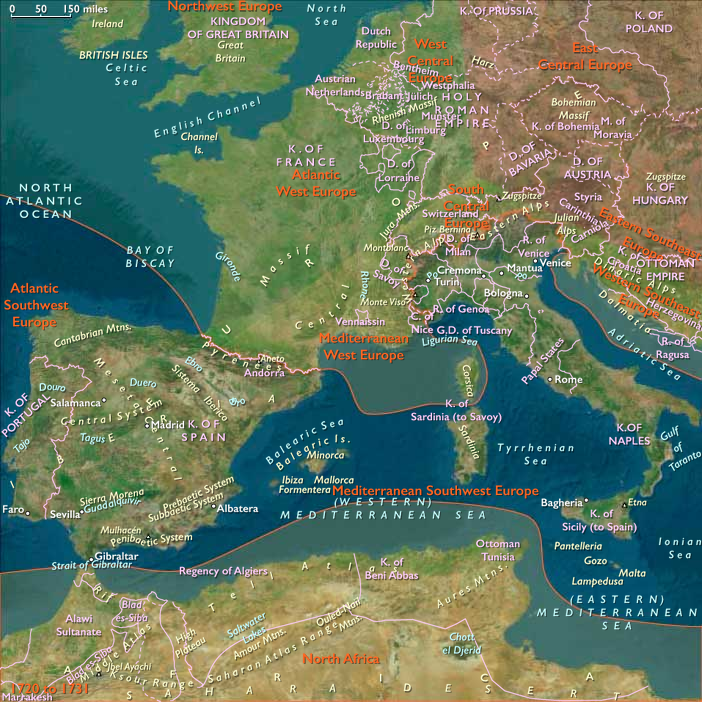
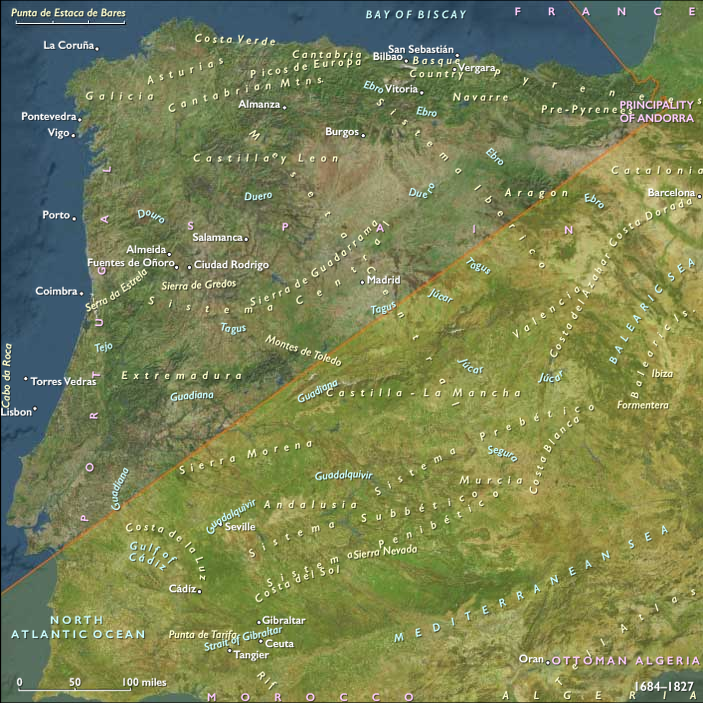
Between 1720 and 1731, Atlantic Southwest Europe—including northern and central Portugal (Lisbon and Porto), Galicia, Asturias, Cantabria, northern León and Castile, northern Navarre, northern Rioja, and the Basque Country—experienced a decade marked by sustained economic prosperity, reinforced political stability, and significant cultural flourishing. The period solidified the region’s position as an economically dynamic, politically resilient, and culturally vibrant area, strongly influenced by maritime commerce, regional autonomy, and the ongoing expansion of Baroque culture.
Political and Military Developments
Consolidation of Bourbon Power in Spain
Under King Philip V of Spain (r. 1700–1746), efforts to centralize political control continued, although resistance from northern territories—particularly the Basque Country and Navarre—resulted in compromises that preserved significant regional autonomy and local governance through their fiercely defended fueros.
Portuguese Stability and Diplomatic Strength
In Portugal, King João V (r. 1706–1750) presided over a stable and prosperous period, reinforcing Portugal’s diplomatic ties, especially with Britain. Portugal remained largely insulated from European military conflicts during this decade, enabling further economic growth and urban development in Lisbon and Porto.
Regional Autonomy and Governance
Throughout northern Spain, local authorities effectively leveraged their privileges (fueros) to negotiate favorable terms with Madrid, maintaining regional stability and autonomy. This fostered stable governance and encouraged local economic initiatives, especially in Cantabria, Galicia, Asturias, and the Basque provinces.
Economic Developments: Maritime Expansion and Industrial Growth
Portuguese Maritime and Commercial Growth
Portuguese maritime commerce thrived, driven by the robust trade of luxury goods, particularly Port wine exported from Porto and Brazil's colonial products through Lisbon. Lisbon and Porto became vital European trading hubs, significantly enhancing Portugal’s wealth and international prestige.
Industrial and Commercial Prosperity in Northern Spain
Economic growth accelerated in northern Spanish ports such as Bilbao, Santander, Vigo, and A Coruña. Industries including shipbuilding, ironworking, and fisheries expanded markedly, stimulated by growing trade connections with Britain, France, and the Netherlands, further integrating Atlantic Southwest Europe into broader European commercial networks.
Agricultural and Rural Stability
Improved agricultural methods and favorable economic conditions benefited rural areas in Galicia, Asturias, and northern Castile-León. Increased productivity supported urban growth by supplying expanding cities with essential foodstuffs, stabilizing the rural economy, and reducing chronic poverty.
Religious and Cultural Developments
Baroque Cultural Flourishing
The period witnessed continued investment in elaborate Baroque artistic and architectural projects, enhancing urban landscapes in cities such as Lisbon, Porto, Braga, Santiago de Compostela, Pamplona, and Bilbao. Churches, monasteries, and public buildings exhibited rich ornamentation, reflecting regional wealth and religious devotion.
Strengthening Catholic Identity
Counter-Reformation Catholicism maintained its central role in regional life, upheld through influential educational and religious institutions, notably in Coimbra, Braga, and Valladolid. Religious festivities, processions, and pilgrimages—particularly the pilgrimage route to Santiago de Compostela—reinforced cultural cohesion and regional identity.
Social and Urban Developments
Urban Expansion and Social Mobility
Cities such as Lisbon, Porto, Bilbao, and Santander experienced significant growth due to maritime prosperity, attracting migrants seeking economic opportunities. Growing urban populations supported a dynamic merchant and artisan class, contributing to increased social mobility and vibrant civic life.
Reinforcement of Regional Autonomy and Identity
Local governance structures—particularly the Basque and Navarrese fueros—continued to provide a framework for regional self-governance, contributing significantly to social stability and local identity. Galicia, Asturias, and northern Portuguese regions similarly reinforced their distinct regional characteristics through cultural and linguistic traditions.
Notable Regional Groups and Settlements
-
Portuguese (Lisbon and Porto): Achieved substantial economic prosperity from maritime trade, consolidating national and international commercial influence.
-
Basques and Navarrese: Maintained robust autonomy and economic prosperity through strategic defense of fueros, fostering local industries and maritime commerce.
-
Galicians and Asturians: Benefited from stable agricultural productivity and renewed maritime trade, reinforcing regional economies and identities.
-
Cantabrians and Northern Castilians: Experienced economic growth and urban development, notably in Santander and inland cities like Burgos, contributing to regional prosperity.
Long-Term Significance and Legacy
Between 1720 and 1731, Atlantic Southwest Europe:
-
Consolidated its economic and political stability, effectively balancing centralized authority with strong regional autonomy, particularly through sustained protection of traditional fueros.
-
Expanded maritime commerce and industrial growth, significantly integrating regional economies into broader European trade networks.
-
Enhanced urban development and social mobility, reinforcing the vitality and prosperity of key regional cities.
-
Fostered vibrant cultural and religious life, deeply rooted in Counter-Reformation traditions and Baroque artistic expression, strengthening regional identities and cohesion.
This decade of sustained growth and stability laid the groundwork for continued prosperity and distinct regional character in Atlantic Southwest Europe, shaping its historical trajectory significantly in subsequent decades.
People
Groups
- Portuguese people
- Basque people
- Christians, Roman Catholic
- Galicians
- Asturias, Principality of
- Portuguese Empire
- Ottoman Empire
- Portuguese Gold Coast
- Inquisition, Spanish
- Christians, New
- Marranos
- Portuguese Mozambique
- Portuguese Malacca
- Spain, Habsburg Kingdom of
- Spaniards (Latins)
- Protestantism
- Inquisition, Portuguese
- Brazil, Colonial
- Spain, Habsburg Kingdom of
- Portugal, Bragança Kingdom of
- England, (Orange and Stewart) Kingdom of
- England, (Stuart) Kingdom of
- Britain, Kingdom of Great
Topics
- Colonization of the Americas, Portuguese
- Colonization of the Americas, Spanish
- Colonization of Asia, Spanish
- Colonization of Asia, Portuguese
Commodoties
- Domestic animals
- Grains and produce
- Fibers
- Textiles
- Strategic metals
- Sweeteners
- Beer, wine, and spirits
- Manufactured goods
- Spices
Subjects
Regions
Subregions
Related Events
Showing 10 events out of 28131 total
Years: 1720 - 1731
People
Groups
- Portuguese people
- Basque people
- Christians, Roman Catholic
- Galicians
- Asturias, Principality of
- Portuguese Empire
- Ottoman Empire
- Portuguese Gold Coast
- Inquisition, Spanish
- Christians, New
- Marranos
- Portuguese Mozambique
- Portuguese Malacca
- Spain, Habsburg Kingdom of
- Spaniards (Latins)
- Protestantism
- Inquisition, Portuguese
- Brazil, Colonial
- Spain, Habsburg Kingdom of
- Portugal, Bragança Kingdom of
- England, (Orange and Stewart) Kingdom of
- England, (Stuart) Kingdom of
- Britain, Kingdom of Great
Topics
- Colonization of the Americas, Portuguese
- Colonization of the Americas, Spanish
- Colonization of Asia, Spanish
- Colonization of Asia, Portuguese
Commodoties
- Domestic animals
- Grains and produce
- Fibers
- Textiles
- Strategic metals
- Sweeteners
- Beer, wine, and spirits
- Manufactured goods
- Spices
Subjects
Regions
Subregions