
Atlantic Southwest Europe (1696–1707 CE): Dynastic Shifts, …
Years: 1696 - 1707
Atlantic Southwest Europe (1696–1707 CE): Dynastic Shifts, Economic Pressures, and Cultural Continuity
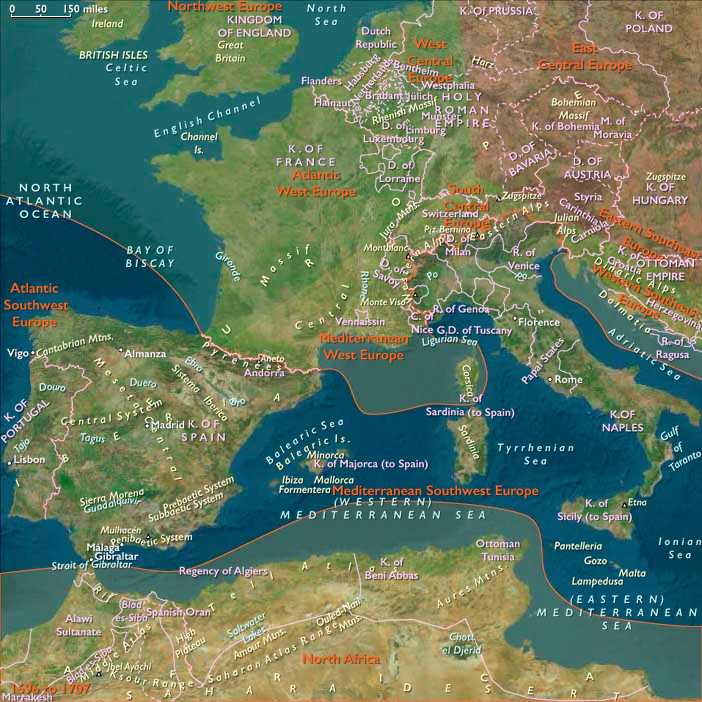
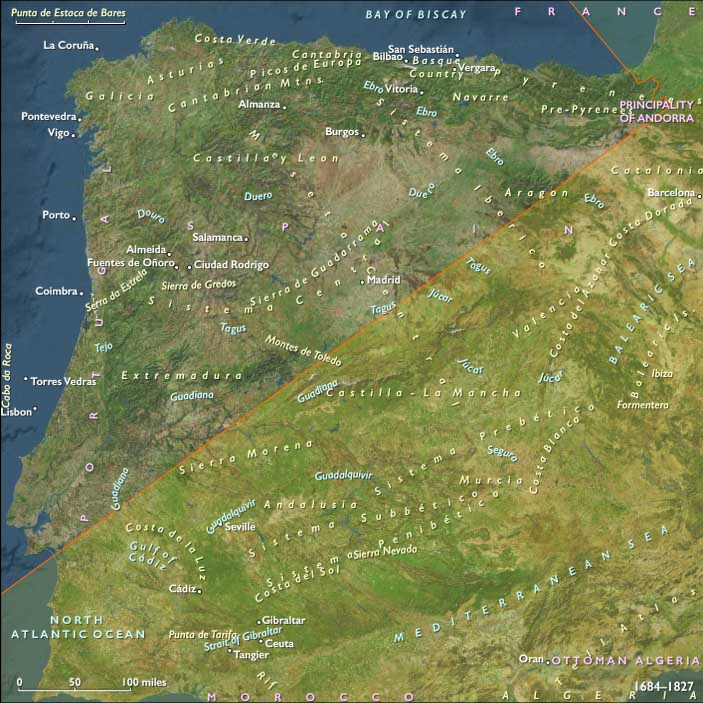
From 1696 to 1707, Atlantic Southwest Europe—including northern and central Portugal (Lisbon and Porto), Galicia, Asturias, Cantabria, northern León and Castile, northern Navarre, northern Rioja, and the Basque Country—experienced a critical period marked by significant political upheaval, economic strain from broader European conflicts, and ongoing regional resilience. The death of Spain’s last Habsburg monarch and subsequent War of the Spanish Succession reshaped political alignments, intensified local autonomy efforts, and challenged economic stability, while cultural and religious traditions persisted robustly despite external turmoil.
Political and Military Developments
Death of Charles II and Dynastic Crisis
The death of the childless Spanish king, Charles II, in 1700, triggered the War of the Spanish Succession (1701–1714). Atlantic Southwest Europe was drawn into the conflict, facing profound uncertainty as European powers vied to install their preferred successors—either Bourbon candidate Philip of Anjou or Archduke Charles of Austria—on the Spanish throne.
Impact on Northern Spanish Regions
The conflict significantly impacted northern Spain. The Basque Country, Navarre, and Galicia became strategically important territories due to their proximity to France and critical Atlantic trade routes. Regional leaders deftly negotiated their positions, seeking to maintain local autonomy and protecting their fueros amid centralizing pressures from Madrid under Bourbon rule.
Portugal's Strategic Realignment
Initially cautious, King Pedro II of Portugal (r. 1683–1706) and his successor João V (r. 1706–1750) eventually sided with the Grand Alliance (Britain, Austria, and the Netherlands) against Bourbon Spain and France. This alignment reinforced Portugal’s independence and secured valuable diplomatic and commercial support from Britain and other maritime powers, crucially benefiting Portuguese trade.
Economic Developments: Challenges and Resilience
Disruption from the War of Succession
The conflict severely disrupted regional trade networks, notably impacting maritime cities such as Bilbao, Santander, Porto, and Lisbon. Frequent naval engagements and privateering along Atlantic trade routes temporarily depressed commercial activities and strained local economies reliant on maritime trade.
Portuguese Economic Adaptation
Despite these disruptions, Portugal successfully adapted, strengthening trade partnerships with Britain and the Netherlands. Northern Portugal, especially Porto, continued to expand its international trade in Port wine, leveraging the Anglo-Portuguese alliance to mitigate wartime disruptions and maintain economic resilience.
Industrial and Commercial Stability in Northern Spain
The Basque Country and Cantabria sustained industrial output, particularly iron production in Bilbao and shipbuilding in Santander, despite increased demands from wartime pressures. Galicia maintained a robust fishing economy, partially offsetting disruptions caused by reduced maritime commerce during the war.
Religious and Cultural Developments
Continuation of Counter-Reformation Orthodoxy
Throughout the political and military upheaval, the Counter-Reformation remained influential. Ecclesiastical institutions in cities like Lisbon, Coimbra, Santiago de Compostela, and Pamplona reinforced religious orthodoxy and community cohesion, maintaining a sense of continuity and stability amid external uncertainties.
Flourishing Baroque Cultural Expression
Cultural and artistic activity continued to thrive, exemplified by rich Baroque architecture and artistic patronage throughout the region. Major construction and artistic projects persisted in Lisbon, Porto, Braga, Santiago de Compostela, and numerous Basque and Castilian cities, demonstrating sustained regional creativity and identity despite broader political challenges.
Social and Urban Developments
Urban Pressures and Regional Stability
Despite economic strains, urban centers such as Lisbon, Porto, Bilbao, and Santander remained resilient, leveraging stable governance and continued trade partnerships to sustain social stability. Urban populations continued to grow, bolstered by rural migration and local economic adaptation strategies.
Reinforcement of Local Autonomy
Amid broader centralizing pressures from the new Bourbon monarchy, the Basque territories, Navarre, and Galicia vigorously defended their fueros, maintaining a strong sense of regional identity and administrative autonomy. Local elites strategically negotiated with Madrid, preserving regional privileges and limiting central intervention.
Notable Regional Groups and Settlements
-
Portuguese (Northern and Central): Strengthened economic alliances with Britain, preserving maritime trade and political stability despite wartime disruptions.
-
Galicians and Asturians: Managed to sustain maritime economies and regional autonomy despite external military pressures.
-
Basques, Navarrese, and Cantabrians: Reinforced industrial and economic strength while fiercely defending traditional fueros against centralizing Bourbon policies.
-
Northern Castilians and Riojans: Maintained regional stability and local governance, carefully navigating political tensions resulting from the dynastic crisis.
Long-Term Significance and Legacy
Between 1696 and 1707, Atlantic Southwest Europe:
-
Endured significant political upheaval resulting from the Spanish dynastic crisis and War of Succession, shaping subsequent regional alignments.
-
Demonstrated economic resilience through strategic alliances and adaptation to wartime trade disruptions, notably benefiting northern Portugal.
-
Sustained vibrant cultural and religious life, with Baroque artistic flourishing and Counter-Reformation continuity providing regional stability.
-
Reinforced strong local autonomy through vigorous defense of regional privileges (fueros), profoundly influencing future regional governance structures.
This pivotal era set the stage for Atlantic Southwest Europe’s long-term trajectory, characterized by continued regional autonomy, resilient economies, and vibrant cultural expressions that shaped its enduring historical identity.
People
Groups
- Portuguese people
- Basque people
- Christians, Roman Catholic
- Galicians
- Asturias, Principality of
- Portuguese Empire
- Ottoman Empire
- Portuguese Gold Coast
- Inquisition, Spanish
- Christians, New
- Marranos
- Portuguese Mozambique
- Portuguese Malacca
- Spain, Habsburg Kingdom of
- Spaniards (Latins)
- Protestantism
- Inquisition, Portuguese
- Brazil, Colonial
- Spain, Habsburg Kingdom of
- Portugal, Bragança Kingdom of
- England, (Orange and Stewart) Kingdom of
- England, (Stuart) Kingdom of
- Britain, Kingdom of Great
Topics
- Colonization of the Americas, Portuguese
- Colonization of the Americas, Spanish
- Colonization of Asia, Spanish
- Colonization of Asia, Portuguese
- Spanish Succession, War of the
Commodoties
- Domestic animals
- Grains and produce
- Fibers
- Textiles
- Strategic metals
- Sweeteners
- Beer, wine, and spirits
- Manufactured goods
- Spices
Subjects
Regions
Subregions
Related Events
Showing 10 events out of 29101 total
Years: 1696 - 1707
People
Groups
- Portuguese people
- Basque people
- Christians, Roman Catholic
- Galicians
- Asturias, Principality of
- Portuguese Empire
- Ottoman Empire
- Portuguese Gold Coast
- Inquisition, Spanish
- Christians, New
- Marranos
- Portuguese Mozambique
- Portuguese Malacca
- Spain, Habsburg Kingdom of
- Spaniards (Latins)
- Protestantism
- Inquisition, Portuguese
- Brazil, Colonial
- Spain, Habsburg Kingdom of
- Portugal, Bragança Kingdom of
- England, (Orange and Stewart) Kingdom of
- England, (Stuart) Kingdom of
- Britain, Kingdom of Great
Topics
- Colonization of the Americas, Portuguese
- Colonization of the Americas, Spanish
- Colonization of Asia, Spanish
- Colonization of Asia, Portuguese
- Spanish Succession, War of the
Commodoties
- Domestic animals
- Grains and produce
- Fibers
- Textiles
- Strategic metals
- Sweeteners
- Beer, wine, and spirits
- Manufactured goods
- Spices
Subjects
Regions
Subregions