
Atlantic Southwest Europe (1672–1683 CE): Political Consolidation, …
Years: 1672 - 1683
Atlantic Southwest Europe (1672–1683 CE): Political Consolidation, Maritime Prosperity, and Cultural Renaissance
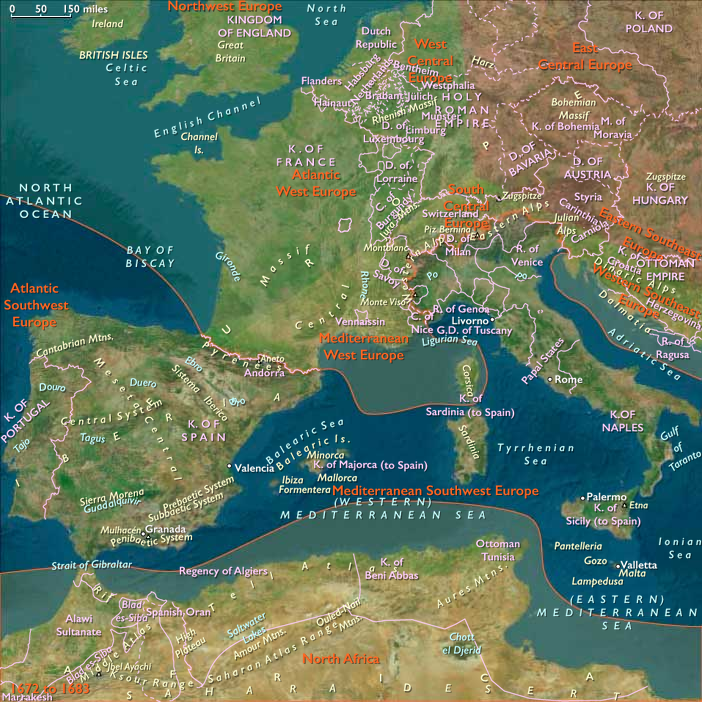
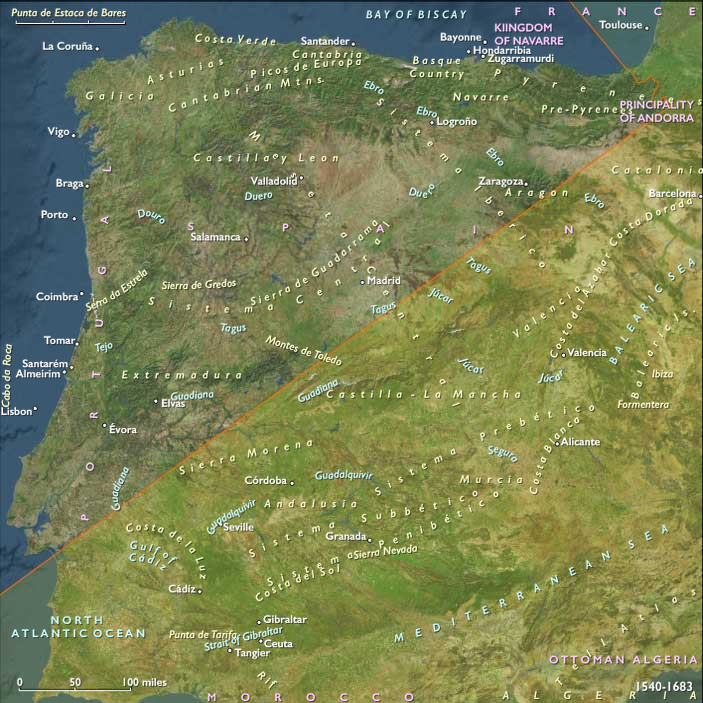
Between 1672 and 1683, Atlantic Southwest Europe—including northern and central Portugal (notably Lisbon and Porto), Galicia, Asturias, Cantabria, northern León and Castile, northern Navarre, northern Rioja, and the Basque Country—entered a dynamic period defined by sustained political stability, remarkable economic expansion through maritime commerce, and an artistic and cultural renaissance deeply influenced by the exuberant Baroque aesthetic. Regional identities flourished amid strengthened local governance, and enhanced economic ties with northern Europe reinforced the region's growing prominence within broader European networks.
Political and Military Developments
Portugal: Consolidating Independence under Pedro II
Under the capable regency and subsequent reign of Pedro II (r. 1667–1706), Portugal solidified its independence from Spain, enhancing administrative efficiency and ensuring domestic stability. Lisbon functioned as a vibrant political and diplomatic center, managing strengthened alliances with Britain and the Dutch Republic. Simultaneously, Porto emerged as a crucial economic and administrative hub, reflecting northern Portugal's growing prosperity and increasing regional autonomy.
Northern Spanish Territories: Stability and Autonomy under Charles II
Despite Spain’s ongoing imperial decline under Charles II (r. 1665–1700), northern Spanish territories enjoyed notable political stability, benefiting significantly from reaffirmed regional privileges (fueros). The Basque provinces, along with Navarre and northern regions of Castile and León, maintained strong local institutions that fostered autonomy, regional identity, and economic prosperity, successfully insulating them from broader imperial challenges.
Reduced Military Engagements
A relative absence of external military pressures during this period permitted territories such as Galicia, Asturias, Cantabria, and the Basque Country to prioritize economic investment over defense spending. The resulting peace enabled sustained regional economic development and improved local governance.
Economic Developments: Maritime Expansion and Industrial Growth
Portuguese Maritime Prosperity
Northern and central Portugal witnessed significant economic growth driven by robust maritime trade. Lisbon solidified its status as a leading Atlantic commercial port, profiting greatly from trade with Britain, the Dutch Republic, and colonial possessions in Africa, Brazil, and Asia. Likewise, Porto expanded dramatically as an international exporter, with Port wine exports from the Douro Valley surging and creating substantial wealth for regional merchants and landowners.
Shipbuilding flourished along the northern Portuguese coastline, notably at Viana do Castelo and other maritime centers, directly supporting expanding commerce and naval capabilities.
Basque and Cantabrian Industrial Expansion
In northern Spain, the Basque Country and Cantabria experienced a pronounced industrial upswing, particularly in shipbuilding and iron production. Bilbao became an essential center for iron exports, integrating deeply into European economic networks. The port city of Santander similarly enhanced its economic profile through maritime commerce and fisheries, facilitating stronger regional growth and prosperity.
Galician Maritime Revival
Galicia significantly improved its economic fortunes through expanded fishing and maritime trade. Coastal cities such as Vigo and A Coruña revitalized their commercial sectors, benefitting from stronger trade ties to northern European markets, notably England and the Netherlands, thus enhancing regional economic resilience.
Religious and Cultural Developments
Flourishing Baroque Art and Architecture
Across Atlantic Southwest Europe, cultural expression flourished dramatically under Baroque influences. In Portugal, impressive architectural and artistic projects adorned the cities of Lisbon, Porto, and Braga, with religious and secular buildings showcasing intricate Baroque styles reflecting Portuguese pride and identity.
Similarly, northern Spanish cities like Santiago de Compostela, Bilbao, Burgos, and Santander embraced Baroque aesthetics, significantly enhancing local cultural landscapes through new churches, palaces, and public buildings. Cultural institutions flourished, providing vital patronage to artists, architects, and scholars who collectively reinforced regional artistic and intellectual traditions.
Continued Dominance of Counter-Reformation Catholicism
The Catholic Church maintained considerable influence, reinforcing orthodoxy through institutions of education, religious festivals, and artistic patronage. Monastic communities and religious orders in cities such as Valladolid, Braga, and Pamplona continued shaping local religious life, strengthening communal bonds and reinforcing traditional practices and identities through vibrant festivals and regional pilgrimage traditions.
Social and Urban Developments
Urban Expansion and Merchant Class Ascendancy
Urban centers throughout Atlantic Southwest Europe experienced marked growth, driven by thriving maritime commerce and industrial prosperity. In Portugal, both Lisbon and Porto underwent significant demographic and infrastructural expansion, accommodating burgeoning merchant and artisan communities, enhancing urban life, and reflecting improved economic conditions.
In northern Spain, similar patterns emerged, with notable urban development occurring in Bilbao, Santander, Vitoria-Gasteiz, and Santiago de Compostela, where infrastructure improvements supported rising trade volumes and growing urban populations.
Reinforced Regional Autonomy and Identity
Across northern Spain, traditional fueros strongly supported local governance, economic autonomy, and regional identity. The Basque provinces, Navarre, Galicia, and northern parts of Castile and León continued affirming their distinctive traditions, resisting centralizing pressures from Madrid. These enduring institutions significantly enhanced regional cohesion, cultural pride, and political resilience.
Persistent Rural Challenges
Despite urban prosperity, rural communities—particularly in Galicia, Asturias, and northern Castile and León—continued facing economic stagnation and agricultural challenges. Persistent rural poverty prompted significant migration toward urban centers and overseas colonies, notably in the Americas, reshaping demographic dynamics and social structures.
Notable Regional Groups and Settlements
-
Portuguese (Central and Northern): Enjoyed political stability, economic prosperity, and cultural renaissance, notably in Lisbon, Porto, and Braga.
-
Galicians and Asturians: Benefited from maritime economic improvements, yet continued confronting rural hardship and migration pressures.
-
Cantabrians and Northern Castilians: Experienced robust maritime and industrial growth, maintaining cautious but effective autonomy from central governance.
-
Basques and Navarrese: Successfully preserved regional autonomy through fueros, strengthening political and economic resilience amid broader Spanish decline.
Long-Term Significance and Legacy
Between 1672 and 1683, Atlantic Southwest Europe:
-
Solidified political stability through robust regional autonomy in Spain and reinforced independence in Portugal, fostering significant economic growth.
-
Experienced remarkable maritime and industrial expansion, deeply integrating the region into broader European trade networks.
-
Cultivated vibrant cultural expressions, profoundly shaped by Baroque influences, enhancing local pride, identity, and social cohesion.
-
Strengthened enduring regional autonomy, preserving fueros and laying critical foundations for long-term political stability and regional resilience.
This pivotal period substantially advanced Atlantic Southwest Europe’s trajectory, embedding economic prosperity, cultural richness, and political autonomy as defining characteristics that would shape its subsequent historical evolution.
People
Groups
- Portuguese people
- Basque people
- Christians, Roman Catholic
- Galicians
- Portugal, Avizan (Joannine) Kingdom of
- Asturias, Principality of
- Portuguese Empire
- Ottoman Empire
- Portuguese Gold Coast
- Inquisition, Spanish
- England, (Tudor) Kingdom of
- Christians, New
- Marranos
- Portuguese Mozambique
- Portuguese Malacca
- Spaniards (Latins)
- Spain, Habsburg Kingdom of
- Protestantism
- Inquisition, Portuguese
- Morocco, Sa'di Sharifate of
- Brazil, Colonial
- Spain, Habsburg Kingdom of
- Iberian Union
Topics
- Colonization of the Americas, Portuguese
- Renaissance, Portuguese
- Renaissance, Spanish
- Colonization of the Americas, Spanish
- Colonization of Asia, Portuguese
- Colonization of Asia, Spanish
- Counter-Reformation (also Catholic Reformation or Catholic Revival)
- Eighty Years War (Netherlands, or Dutch, War of Independence)
- Thirty Years' War
- Franco-Spanish War of 1635-59
Commodoties
- Domestic animals
- Grains and produce
- Fibers
- Textiles
- Strategic metals
- Sweeteners
- Beer, wine, and spirits
- Manufactured goods
- Spices
Subjects
Regions
Subregions
Related Events
Showing 10 events out of 30765 total
Years: 1672 - 1683
People
Groups
- Portuguese people
- Basque people
- Christians, Roman Catholic
- Galicians
- Portugal, Avizan (Joannine) Kingdom of
- Asturias, Principality of
- Portuguese Empire
- Ottoman Empire
- Portuguese Gold Coast
- Inquisition, Spanish
- England, (Tudor) Kingdom of
- Christians, New
- Marranos
- Portuguese Mozambique
- Portuguese Malacca
- Spaniards (Latins)
- Spain, Habsburg Kingdom of
- Protestantism
- Inquisition, Portuguese
- Morocco, Sa'di Sharifate of
- Brazil, Colonial
- Spain, Habsburg Kingdom of
- Iberian Union
Topics
- Colonization of the Americas, Portuguese
- Renaissance, Portuguese
- Renaissance, Spanish
- Colonization of the Americas, Spanish
- Colonization of Asia, Portuguese
- Colonization of Asia, Spanish
- Counter-Reformation (also Catholic Reformation or Catholic Revival)
- Eighty Years War (Netherlands, or Dutch, War of Independence)
- Thirty Years' War
- Franco-Spanish War of 1635-59
Commodoties
- Domestic animals
- Grains and produce
- Fibers
- Textiles
- Strategic metals
- Sweeteners
- Beer, wine, and spirits
- Manufactured goods
- Spices
Subjects
Regions
Subregions