
Atlantic Southwest Europe (28–39 CE): Roman Provincial …
Years: 28 - 39
Atlantic Southwest Europe (28–39 CE): Roman Provincial Stability Amidst Growing Economic Prosperity
Between 28 and 39 CE, Atlantic Southwest Europe—covering northern and central Portugal, Galicia, Asturias, Cantabria, and northern Spain south of the Franco-Spanish border (43.05548° N, 1.22924° W)—continued to enjoy sustained peace, administrative efficiency, and economic prosperity under established Roman provincial governance. The region became fully embedded within Mediterranean trade networks, heavily reliant upon slave labor, and culturally enriched through an ongoing synthesis of Roman and indigenous traditions. Local tribal identities remained strong, dynamically adapting their cultural practices within an increasingly integrated Roman context.
Political and Military Developments
Continued Stability under Roman Administration
-
Under Emperor Tiberius and subsequently Caligula, Roman provincial governance maintained effective control and internal stability. The robust administrative system, supported by established urban centers, military garrisons, and expansive infrastructure, ensured peace and prosperity throughout the region.
-
Local tribal elites continued active collaboration with Roman authorities, facilitating smooth governance and enhancing regional stability.
Northern Tribal Integration and Stability
-
Northern tribes, including the Gallaeci, Astures, and Cantabri, fully transitioned into stable provincial integration, increasingly cooperating with Roman administration. Previous resistance had largely dissipated, replaced by productive diplomatic and economic engagement.
-
The Vascones maintained their effective diplomatic neutrality, successfully preserving territorial autonomy and cultural identity within the provincial administrative framework.
Economic and Technological Developments
Heightened Mediterranean Economic Integration
-
Atlantic Southwest Europe’s economy further intensified its integration within Roman Mediterranean trade networks. The region thrived through the exportation of metals (silver, copper, tin), salt, agricultural produce, timber, textiles, livestock products, and especially slaves. Imports of luxury items, fine ceramics, wine, olive oil, and sophisticated iron products further reinforced economic growth and regional prosperity.
-
Economic benefits accrued predominantly to provincial elites, reinforcing regional social stratification, economic specialization, and dependency on Roman commerce.
Persistent Centrality of Slave Labor
-
Slavery remained deeply embedded in the regional economic and social structure, extensively employed in mining operations, agricultural estates, domestic service, artisanal production, and urban construction projects. The slave trade flourished, further embedding slavery as a key economic and social institution.
Continued Technological and Infrastructural Advancements
-
Significant advances in metallurgy—particularly ironworking—continued to boost regional agricultural productivity, military capability, and artisanal craftsmanship. Local artisans produced sophisticated iron weapons, armor, agricultural tools, and decorative objects, blending indigenous skills with Roman-influenced technology.
-
Roman infrastructure, including extensive road systems, aqueducts, bridges, fortified settlements, and urban centers, further facilitated economic growth, regional prosperity, and provincial stability.
Cultural and Religious Developments
Cultural Integration and Artistic Expression
-
Regional material culture sustained a dynamic blend of indigenous Iberian, Celtic, and increasingly pervasive Roman artistic influences. Artistic production—including elaborate metalwork, decorative jewelry, pottery, ceremonial objects, and everyday artifacts—highlighted strong regional identities and cultural resilience.
-
Tribal cultures—particularly among the Lusitanians, Gallaeci, Astures, Cantabri, and Vascones—remained robust, adapting dynamically within the Roman provincial environment.
Ongoing Ritual Practices and Cultural Continuity
-
Ritual traditions persisted, incorporating indigenous Iberian, Celtic, and Roman religious elements. Sacred landscapes, sanctuaries, and communal ceremonies continued actively, supporting communal cohesion, cultural continuity, and local identities.
-
Traditional ancestral rites, warrior ceremonies, and local festivals continued to reinforce regional solidarity, identity, and resilience within the integrated Roman provincial structure.
Notable Tribal Groups and Settlements
-
Lusitanians: Fully integrated and prospering economically and culturally under stable Roman governance.
-
Vettones and Vaccaei: Maintained regional prosperity, territorial integrity, and autonomy through ongoing cooperation with Roman provincial authorities.
-
Gallaeci, Astures, Cantabri: Fully adapted into Roman governance structures, maintaining strong local identities and regional traditions.
-
Vascones: Continued diplomatic neutrality, effectively preserving territorial autonomy, cultural distinctiveness, and internal stability under provincial administration.
Long-Term Significance and Legacy
Between 28 and 39 CE, Atlantic Southwest Europe:
-
Reinforced enduring Roman provincial stability, ensuring political continuity, regional peace, and significant economic prosperity.
-
Achieved peak integration within Mediterranean trade networks, embedding slavery as an essential component of the regional economy and social hierarchy.
-
Demonstrated continued cultural resilience, effectively adapting indigenous traditions within the stable, integrated Roman provincial framework.
This period solidified Atlantic Southwest Europe’s position as a stable, prosperous, and culturally vibrant province of the Roman Empire, significantly shaping its long-term historical trajectory.
People
Groups
- Vascones
- Lusitanians, or Lusitani
- Vettones
- Vaccaei
- Cantabri (Celtic tribe)
- Astures (Celtic tribe)
- Gallaeci
- Hispania Ulterior (region of Hispania)
- Hispania Citerior (region of Hispania)
- Lusitania (Roman province)
- Hispania Tarraconensis (Roman province)
- Hispania Baetica (Roman province)
- Roman Empire (Rome): Julio-Claudian dynasty
Topics
Commodoties
- Weapons
- Domestic animals
- Oils, gums, resins, and waxes
- Grains and produce
- Textiles
- Fibers
- Ceramics
- Strategic metals
- Slaves
- Lumber
Subjects
Regions
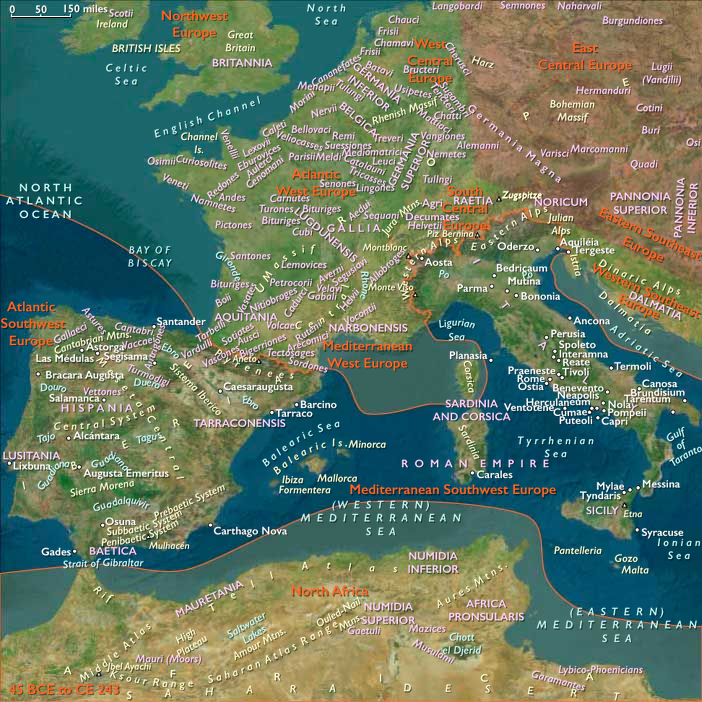
Subregions
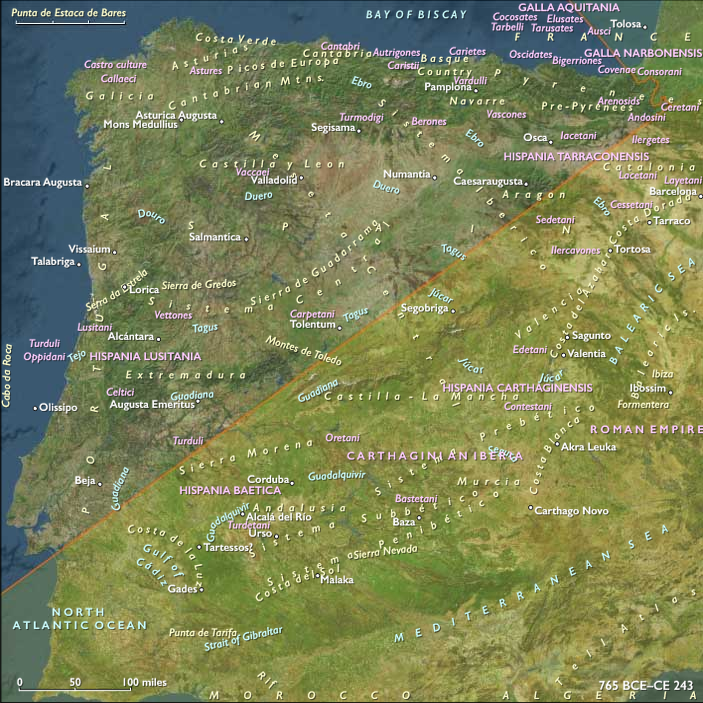
Related Events
Showing 10 events out of 61909 total
Years: 28 - 39
People
Groups
- Vascones
- Lusitanians, or Lusitani
- Vettones
- Vaccaei
- Cantabri (Celtic tribe)
- Astures (Celtic tribe)
- Gallaeci
- Hispania Ulterior (region of Hispania)
- Hispania Citerior (region of Hispania)
- Lusitania (Roman province)
- Hispania Tarraconensis (Roman province)
- Hispania Baetica (Roman province)
- Roman Empire (Rome): Julio-Claudian dynasty
Topics
Commodoties
- Weapons
- Domestic animals
- Oils, gums, resins, and waxes
- Grains and produce
- Textiles
- Fibers
- Ceramics
- Strategic metals
- Slaves
- Lumber
Subjects
Regions
Subregions