
Atlantic Southwest Europe (172–183 CE): Provincial Stability, …
Years: 172 - 183
Atlantic Southwest Europe (172–183 CE): Provincial Stability, Economic Vitality, and Cultural Continuity under Marcus Aurelius and Commodus
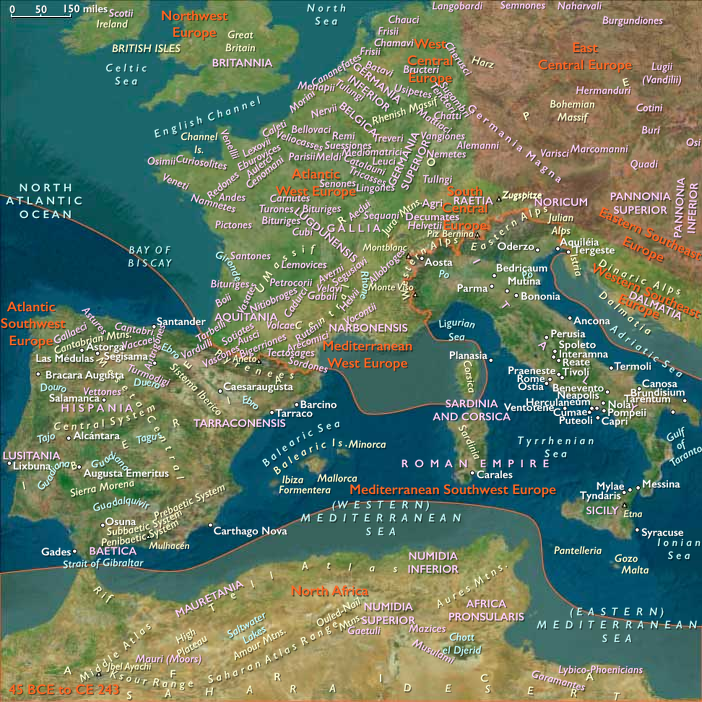
Between 172 and 183 CE, Atlantic Southwest Europe—covering northern and central Portugal, Galicia, Asturias, Cantabria, and northern Spain south of the Franco-Spanish border (43.05548° N, 1.22924° W)—continued to experience notable stability, economic prosperity, and cultural vitality under the final years of Marcus Aurelius’s rule (161–180 CE) and the early reign of Commodus (180–192 CE). Despite broader imperial challenges elsewhere, this province remained remarkably peaceful, economically dynamic, and culturally resilient. Indigenous identities persisted robustly, integrating dynamically within the established Roman provincial framework.
Political and Military Developments
Continued Stability Amidst Imperial Transitions
-
The provincial administration remained stable and effective throughout the transitional period from Marcus Aurelius to Commodus. Provincial governance provided internal peace and continuity, supported by well-established bureaucratic structures, permanent military presence, fortified settlements, and urbanized infrastructure.
-
Local elites continued integrating deeper into Roman civic and administrative structures, facilitating effective governance and contributing significantly to regional cohesion.
Northern Tribes: Ongoing Integration and Stability
-
Northern tribal regions—including the Gallaeci, Astures, and Cantabri—remained peaceful, economically prosperous, and thoroughly integrated within Roman provincial administration, actively participating in provincial development and civic institutions.
-
The Vascones continued successfully preserving territorial autonomy, diplomatic neutrality, cultural distinctiveness, and internal stability under stable provincial rule.
Economic and Technological Developments
Sustained Economic Prosperity and Mediterranean Integration
-
Atlantic Southwest Europe’s economy continued thriving, deeply integrated into Roman-controlled Mediterranean trade networks. Regional exports—valuable metals (silver, copper, tin), agricultural products, timber, salt, textiles, livestock products, and slaves—remained robust, while imports of luxury goods, fine ceramics, wine, olive oil, and sophisticated iron products further enriched local economies.
-
Provincial elites enjoyed ongoing prosperity, reinforcing regional economic specialization, social stratification, and reliance upon Roman trade and economic networks.
Persistent Reliance on Slave Labor
-
Slavery remained fundamental to regional economic activities, prominently utilized in mining, agriculture, domestic labor, artisanal crafts, and urban infrastructure. The active slave trade continued embedding slavery firmly within the regional economic and social structures.
Infrastructure Investment and Technological Advancement
-
Investments in provincial infrastructure continued under Marcus Aurelius and Commodus, including expanded roads, aqueducts, public baths, amphitheaters, temples, forums, bridges, and port facilities. Such developments significantly enhanced provincial connectivity, urban amenities, and economic efficiency.
-
Technological innovation, particularly in metallurgy, agriculture, and construction, continued enhancing agricultural productivity, artisanal craftsmanship, urbanization, and regional prosperity.
Cultural and Religious Developments
Cultural Resilience and Mature Artistic Expression
-
Material culture continued demonstrating a dynamic synthesis of indigenous Iberian traditions, Celtic motifs, and Roman artistic influences. Elaborate metalwork, sophisticated jewelry, fine pottery, ceremonial objects, and everyday household items showcased resilient regional identities and ongoing cultural vitality.
-
Indigenous communities—especially among Lusitanians, Gallaeci, Astures, Cantabri, and Vascones—remained culturally robust, creatively adapting their traditions and identities within the integrated Roman provincial context.
Ritual Continuity and Cultural Adaptation
-
Ritual and religious traditions persisted actively, blending indigenous Iberian, Celtic, and Roman elements. Sacred landscapes, temples, and communal ceremonies continued reinforcing regional identities, cultural continuity, and tribal cohesion.
-
Traditional ancestral rites, warrior ceremonies, and regional festivals continued robustly, strengthening regional solidarity, identity, and cultural resilience amidst stable Roman governance.
Continued Expansion of Roman Citizenship
-
Roman citizenship continued expanding gradually, extending beyond elites and military veterans to broader layers of society. Commodus’s reign supported ongoing civic integration, deepening identification with Roman institutions and setting the stage for universal citizenship under the Constitutio Antoniniana in 212 CE.
Notable Tribal Groups and Settlements
-
Lusitanians: Economically prosperous, culturally vibrant, and increasingly integrated into Roman civic and social structures.
-
Vettones and Vaccaei: Maintained regional stability, prosperity, and autonomy through ongoing diplomatic cooperation and deeper civic integration.
-
Gallaeci, Astures, Cantabri: Remained peaceful, prosperous, and culturally resilient under provincial administration, actively preserving local identities and traditions.
-
Vascones: Successfully preserved autonomy, territorial integrity, diplomatic neutrality, and cultural distinctiveness within the provincial system.
Long-Term Significance and Legacy
Between 172 and 183 CE, Atlantic Southwest Europe:
-
Maintained remarkable provincial stability, administrative continuity, and economic vitality despite broader imperial transitions.
-
Continued robust economic integration with Mediterranean trade networks, further embedding slavery as a critical economic institution.
-
Demonstrated enduring cultural resilience and mature artistic expression, dynamically preserving vibrant indigenous identities alongside expanded Roman civic identity and cultural influence.
This period significantly reinforced Atlantic Southwest Europe’s legacy as a stable, economically prosperous, culturally vibrant province within the Roman Empire, laying critical groundwork for broader citizenship integration and cultural evolution in the subsequent decades.
People
Groups
- Polytheism (“paganism”)
- Vascones
- Lusitanians, or Lusitani
- Vettones
- Astures (Celtic tribe)
- Gallaeci
- Vaccaei
- Cantabri (Celtic tribe)
- Hispania Tarraconensis (Roman province)
- Lusitania (Roman province)
- Hispania Baetica (Roman province)
- Roman Empire (Rome): Nerva-Antonine dynasty
Topics
Commodoties
- Oils, gums, resins, and waxes
- Grains and produce
- Textiles
- Ceramics
- Strategic metals
- Salt
- Slaves
- Beer, wine, and spirits
- Lumber
Subjects
Regions
Subregions

Years: 172 - 183
People
Groups
- Polytheism (“paganism”)
- Vascones
- Lusitanians, or Lusitani
- Vettones
- Astures (Celtic tribe)
- Gallaeci
- Vaccaei
- Cantabri (Celtic tribe)
- Hispania Tarraconensis (Roman province)
- Lusitania (Roman province)
- Hispania Baetica (Roman province)
- Roman Empire (Rome): Nerva-Antonine dynasty
Topics
Commodoties
- Oils, gums, resins, and waxes
- Grains and produce
- Textiles
- Ceramics
- Strategic metals
- Salt
- Slaves
- Beer, wine, and spirits
- Lumber
Subjects
Regions
Subregions