
Atlantic Southwest Europe (1492–1503 CE): Global Explorations, …
Years: 1492 - 1503
Atlantic Southwest Europe (1492–1503 CE): Global Explorations, Cultural Renaissance, and Iberian Unification under the Catholic Monarchs
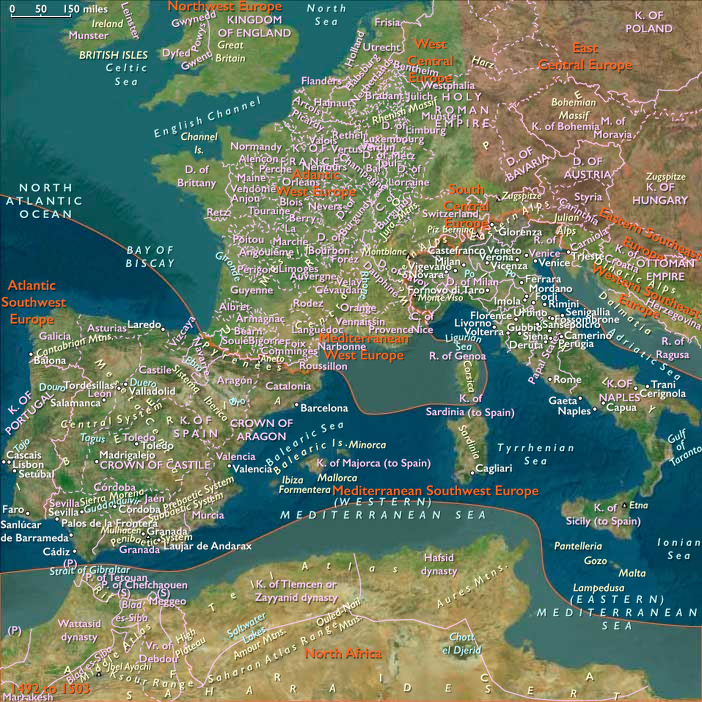
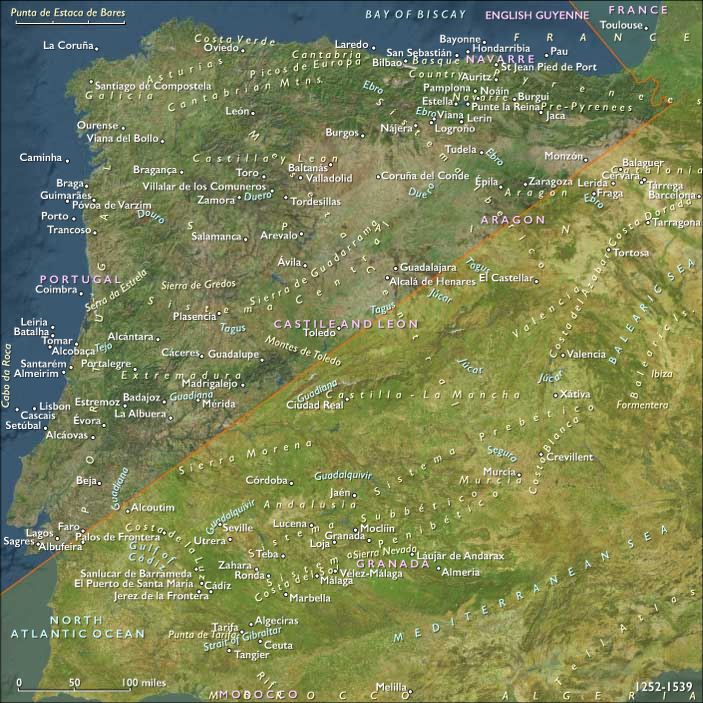
Between 1492 and 1503 CE, Atlantic Southwest Europe—including Galicia, northern and central Portugal, Asturias, Cantabria, and northern Spain south of the Franco-Spanish border (43.05548° N, 1.22924° W)—entered one of the most historically pivotal and culturally vibrant periods in Iberian history. Portugal reached unprecedented maritime prominence, epitomized by Vasco da Gama's voyage to India (1497–1499), while Castile and Aragón decisively unified under the Catholic Monarchs, Isabella and Ferdinand. The conquest of Granada (1492), Columbus’s first transatlantic voyages (beginning 1492), and increased humanist exchanges catalyzed profound transformations, decisively shaping regional identities, economic prosperity, and intellectual foundations of the Iberian Renaissance.
Political and Military Developments
Castilian-Aragonese Unification and Territorial Expansion
The Catholic Monarchs, Isabella I of Castile (1474–1504 CE) and Ferdinand II of Aragón (1479–1516 CE), decisively completed the Reconquista by capturing Granada in January 1492, marking the end of Islamic rule in Iberia. Their unified rule strengthened centralized governance, implemented administrative reforms, and enhanced judicial systems, decisively consolidating territorial integrity and political stability. The discovery of the Americas in 1492, under their patronage of Christopher Columbus, significantly expanded Castile's global ambitions and territorial claims.
Portugal’s Maritime Empire under João II and Manuel I
Following King João II’s (1481–1495 CE) ambitious reign, King Manuel I (1495–1521 CE) decisively advanced Portugal's maritime empire and global ambitions. The landmark voyage of Vasco da Gama (1497–1499) around Africa to India opened lucrative trade routes to Asia, significantly enhancing Portugal’s global economic and geopolitical influence. Manuel I’s reign marked a golden age of maritime exploration, empire-building, and robust cultural patronage.
Navarrese Diplomatic Prudence under Catherine I
Navarre, under Queen Catherine I (1483–1517 CE), decisively navigated increasingly complex diplomatic tensions amid Castilian and French interests. Catherine maintained Navarre’s territorial autonomy, regional stability, and diplomatic neutrality through careful governance, despite rising external pressures and competing dynastic claims.
Economic Developments
Agricultural Prosperity and Demographic Stability
Agricultural productivity decisively remained strong, supported by diversified crops—including grain, vineyards, olives, citrus fruits, almonds—and extensive livestock production. Regional mining of precious metals, notably gold and silver from Galicia and Asturias, significantly bolstered economic prosperity and demographic stability.
Portuguese Maritime Trade and Asian Expansion
Portugal decisively expanded global commerce under Manuel I, with Lisbon emerging as a major hub for maritime trade between Europe, Africa, and newly accessed Asian markets. Vasco da Gama’s voyages established vital spice and luxury trade networks, dramatically enhancing Portugal’s economic power and maritime dominance. Ports in Galicia, especially A Coruña, benefitted economically from increased maritime activity and global trade.
Castilian Economic Expansion and New World Resources
Following Columbus’s voyages, Castile decisively initiated economic expansion through the burgeoning trade and extraction of resources from newly discovered American territories. Gold, silver, and agricultural products significantly enhanced Castilian economic resilience and prosperity, fundamentally transforming the Iberian economy in subsequent decades.
Cultural and Religious Developments
Portuguese Renaissance under Manuel I
Under King Manuel I, Portugal decisively experienced a vibrant cultural renaissance. Increased humanist exchanges with Italy, northern Europe, and Asia significantly enriched Portuguese intellectual, artistic, literary, and scientific achievements. The lavish Manueline architectural style flourished, celebrating maritime themes and imperial grandeur. Portuguese culture thrived, profoundly influencing European Renaissance humanism through global maritime connections.
Castilian Renaissance Flourishing
Castilian culture decisively entered a period of robust Renaissance humanist scholarship under Isabella and Ferdinand. The publication of Antonio de Nebrija’s "Gramática Castellana" (1492) symbolized humanist linguistic refinement. Castilian intellectual life, enriched by interactions with Italian scholars, flourished through courtly patronage, educational reforms, literary revival, artistic innovation, and vibrant scientific exploration.
Galician Cultural Vitality and Ecclesiastical Patronage
Galicia decisively maintained cultural prominence, significantly reinforced by Santiago de Compostela’s ecclesiastical institutions and pilgrimage routes. Scholarly initiatives, manuscript preservation, artistic patronage, and extensive architectural projects continued, enhancing Galicia’s cultural identity, regional resilience, and international prominence.
Persistent Cultural Syncretism and Local Traditions
Orthodox Christianity consistently integrated indigenous Iberian and Celtic traditions, notably in rural Galicia and northern Portugal. Persistent cultural syncretism decisively reinforced regional identities, social cohesion, and cultural resilience amid global exploration and intellectual innovation.
Civic Identity and Governance
Portuguese Civic Unity and Global Ambitions
Portugal decisively reinforced civic unity, national identity, and governance stability under João II and Manuel I. Maritime exploration significantly shaped Portuguese collective ambitions, laying essential foundations for global empire-building, economic prosperity, and cultural flourishing.
Castilian Civic Identity and Administrative Consolidation
Under Isabella and Ferdinand, Castile decisively solidified civic identity, territorial integrity, and administrative coherence. Centralized governance, judicial reforms, and global exploration significantly shaped Castilian political stability, regional identity, and Renaissance cultural renewal.
Navarrese Regional Autonomy and Diplomatic Stability
Navarre decisively preserved regional autonomy, diplomatic neutrality, and internal coherence under Catherine I. Her pragmatic governance significantly maintained territorial integrity, regional stability, and northern Iberian geopolitical balance despite rising external pressures.
Notable Regional Groups and Settlements
-
Portuguese: Achieved decisive maritime expansion, global economic prosperity, and Renaissance cultural flourishing under João II and Manuel I, significantly shaping Portugal’s historical trajectory and global influence.
-
Castilians: Consolidated territorial integrity, political stability, cultural renewal, and global ambitions under Isabella and Ferdinand, significantly influencing Iberian political, intellectual, and cultural developments.
-
Galicians: Sustained vibrant economic prosperity, cultural vitality, and ecclesiastical prominence, significantly reinforced by pilgrimage activity and global maritime trade.
-
Basques (Navarre): Maintained regional autonomy, diplomatic neutrality, and stable governance under Catherine I, significantly influencing northern Iberian political coherence.
Long-Term Significance and Legacy
Between 1492 and 1503 CE, Atlantic Southwest Europe:
-
Achieved unprecedented Portuguese maritime dominance, global economic expansion, and vibrant Renaissance cultural flourishing, decisively establishing Portugal’s subsequent global empire and intellectual prominence.
-
Completed Castilian-Aragonese unification, territorial consolidation, and cultural revival under Isabella and Ferdinand, fundamentally transforming Iberian unity, governance structures, and Renaissance intellectual identity.
-
Navigated diplomatic complexities in Navarre, maintaining territorial autonomy, regional stability, and northern Iberian geopolitical coherence.
-
Experienced sustained agricultural prosperity, dramatically expanded global commerce, pilgrimage-driven economic vitality, and vibrant cultural innovation, significantly influencing regional historical trajectories.
This transformative era decisively shaped regional identities, governance structures, economic continuity, cultural resilience, and intellectual foundations, profoundly influencing Atlantic Southwest Europe’s trajectory toward global prominence and the mature Iberian Renaissance.
People
- Antonio de Nebrija
- Catherine of Navarre
- Christopher Columbus
- Ferdinand II of Aragon
- Isabella I of Castile
- John II of Portugal
- Manuel I of Portugal
- Vasco da Gama
Groups
- Navarre, Kingdom of
- Basque people
- Flanders, County of
- Normandy, Duchy of
- Brittanny, Duchy of
- Castillian people
- Christians, Roman Catholic
- Galicians
- Aragón, Kingdom of
- Portugal, Burgundian (Alfonsine) Kingdom of
- England, (Plantagenet, Angevin) Kingdom of
- Castile, Crown of
- France, (Valois) Kingdom of
Topics
- Reconquista, the
- Humanism, Renaissance
- Renaissance Architecture
- Age of Discovery
- Renaissance, Portuguese
- Granada War
- Granada, Fall of
- Renaissance, Spanish
Commodoties
Subjects
Regions
Subregions
Related Events
Showing 10 events out of 40412 total
Years: 1492 - 1503
People
- Antonio de Nebrija
- Catherine of Navarre
- Christopher Columbus
- Ferdinand II of Aragon
- Isabella I of Castile
- John II of Portugal
- Manuel I of Portugal
- Vasco da Gama
Groups
- Navarre, Kingdom of
- Basque people
- Flanders, County of
- Normandy, Duchy of
- Brittanny, Duchy of
- Castillian people
- Christians, Roman Catholic
- Galicians
- Aragón, Kingdom of
- Portugal, Burgundian (Alfonsine) Kingdom of
- England, (Plantagenet, Angevin) Kingdom of
- Castile, Crown of
- France, (Valois) Kingdom of
Topics
- Reconquista, the
- Humanism, Renaissance
- Renaissance Architecture
- Age of Discovery
- Renaissance, Portuguese
- Granada War
- Granada, Fall of
- Renaissance, Spanish
Commodoties
Subjects
Regions
Subregions