
Atlantic Southwest Europe (1480–1491 CE): Portugal’s Maritime …
Years: 1480 - 1491
Atlantic Southwest Europe (1480–1491 CE): Portugal’s Maritime Empire and Cultural Golden Age, Castilian Consolidation under Isabella and Ferdinand, and Navarrese Diplomatic Challenges
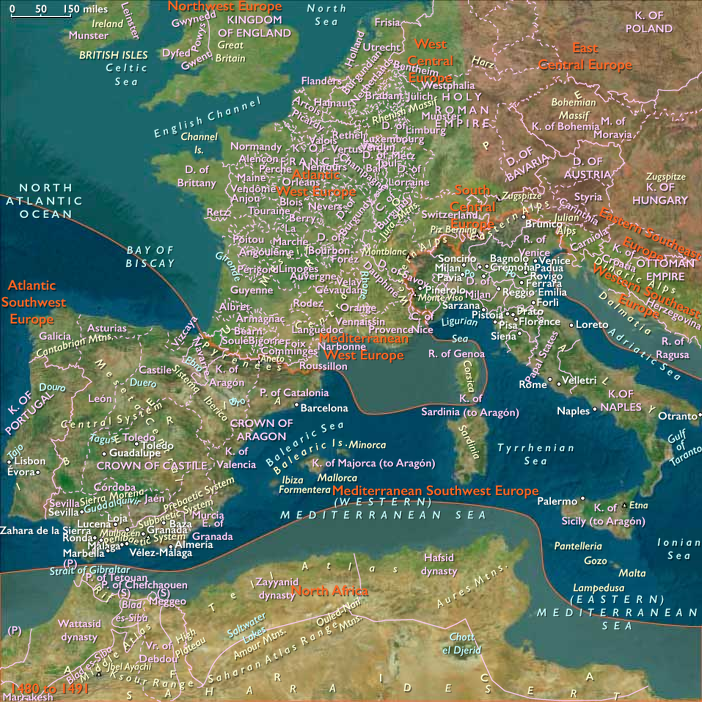
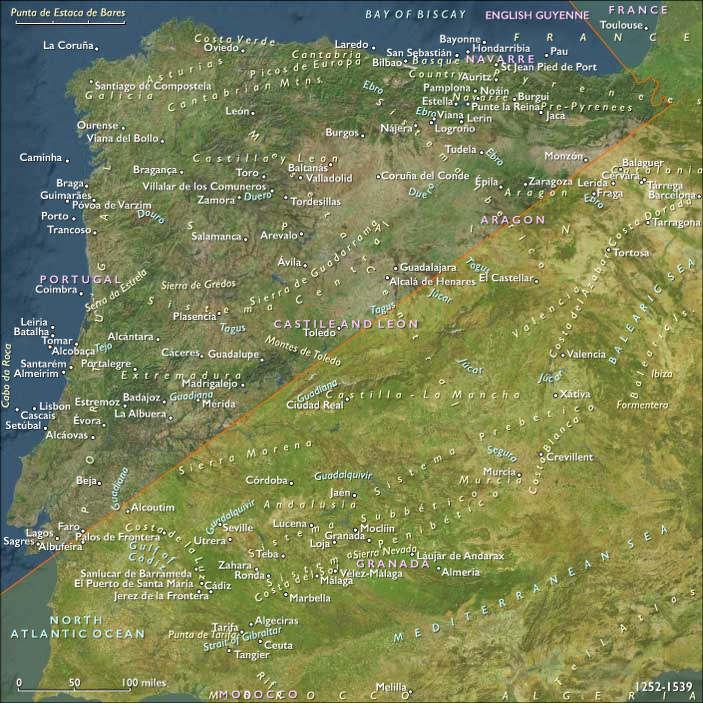
Between 1480 and 1491 CE, Atlantic Southwest Europe—including Galicia, northern and central Portugal, Asturias, Cantabria, and northern Spain south of the Franco-Spanish border (43.05548° N, 1.22924° W)—entered a period of remarkable transformation. Portugal, under King João II (1481–1495 CE), reached a golden age marked by extensive maritime exploration, global commerce, and Renaissance cultural flourishing. Castile, decisively governed by the Catholic Monarchs, Isabella I of Castile and Ferdinand II of Aragón, achieved political consolidation, administrative centralization, and cultural renewal. Navarre faced diplomatic challenges as it navigated tensions between France, Castile, and Aragón. Collectively, these developments significantly shaped regional identities, economic prosperity, and intellectual innovation, setting the stage for the Iberian Peninsula’s global prominence.
Political and Military Developments
Portugal’s Golden Age under João II
Following Afonso V’s reign, King João II (1481–1495 CE) decisively expanded Portugal’s maritime empire. João II intensified exploration, with Portuguese navigators, notably Diogo Cão (1482–1486) and Bartolomeu Dias (1487–1488), achieving landmark voyages—Dias famously rounding the Cape of Good Hope (1488). João II strengthened royal authority, curbing noble power, and established a centralized, efficient administration capable of managing a global maritime empire. These developments decisively set the stage for Portugal’s subsequent global ascendancy.
Castilian Consolidation under Isabella and Ferdinand
Castile experienced significant consolidation under the assertive rule of the Catholic Monarchs, Isabella I (1474–1504 CE) and Ferdinand II (1479–1516 CE). They decisively stabilized governance structures, curtailed noble factionalism, and reformed administrative and judicial systems. In 1481, they began the decisive final phase of the Reconquista, targeting the Emirate of Granada. Their reign profoundly reshaped Castilian political identity, administrative coherence, and civic stability.
Navarrese Diplomatic Challenges and Autonomy
Navarre, under Queen Catherine I (1483–1517 CE), faced diplomatic complexities amidst competing Castilian, Aragonese, and French interests. Despite internal tensions, Catherine maintained Navarrese territorial autonomy and diplomatic neutrality through pragmatic governance, cautious diplomacy, and strategic marriage alliances, preserving Navarre’s stability amid broader Iberian geopolitical upheavals.
Economic Developments
Agricultural Prosperity and Economic Stability
Agricultural productivity decisively remained strong, bolstered by diversified crops—including grains, vineyards, olives, citrus fruits, almonds—and robust livestock production. Regional mining of gold and silver (particularly in Galicia and Asturias) significantly supported economic resilience and demographic stability.
Expansion of Portuguese Maritime Trade and Global Commerce
Portuguese maritime commerce reached a golden era under João II, with Lisbon decisively becoming a pivotal European trading center. Expanded African trade, emerging trade routes toward India and Asia, and established Atlantic island commerce dramatically boosted Portuguese economic prosperity. Galicia’s ports, particularly A Coruña, benefited from increased maritime traffic and trade, enhancing regional economic resilience.
Pilgrimage Economy and Cultural Exchange in Galicia
Pilgrimage routes to Santiago de Compostela decisively supported sustained economic vitality, enhancing hospitality industries, artisanal commerce, infrastructure projects, and cultural exchanges. Persistent pilgrimage significantly reinforced Galicia’s economic resilience, cultural prominence, and international recognition.
Cultural and Religious Developments
Portuguese Renaissance Golden Age
Portugal decisively entered its cultural Renaissance golden age under João II. Influenced by humanist contacts with Italy and northern Europe, Portugal fostered significant advances in literature, cartography, navigational science, architecture, and education. Major intellectual figures and institutions flourished, with courtly patronage significantly boosting scholarly achievements and artistic creativity, profoundly shaping Portugal’s intellectual identity.
Castilian Cultural Renewal and Humanist Scholarship
Castilian culture flourished decisively under Isabella and Ferdinand, enriched by significant Renaissance humanist influences, notably from Italy. The monarchs patronized literature, educational reform, architecture, and art, encouraging early Renaissance intellectual revival. Castilian universities and literary circles benefited significantly from scholarly exchanges, decisively laying foundations for Spain’s mature Renaissance culture.
Galician Cultural Resilience and Ecclesiastical Patronage
Galicia decisively maintained cultural prominence, supported by Santiago de Compostela’s ecclesiastical institutions and monastic communities. Scholarship, manuscript preservation, artistic patronage, and significant architectural endeavors continued, reinforcing Galicia’s cultural identity and international reputation.
Persistent Cultural Syncretism and Local Traditions
Orthodox Christianity consistently integrated indigenous Iberian and Celtic traditions, particularly in rural Galicia and northern Portugal. Persistent cultural syncretism decisively reinforced regional identities, social cohesion, and cultural resilience during this transformative era.
Civic Identity and Governance
Portuguese Civic Unity and Global Ambitions
Portugal decisively reinforced civic unity, national identity, and governance stability under João II. Maritime exploration significantly shaped Portuguese collective ambitions, laying critical foundations for global empire-building, economic prosperity, and cultural prominence.
Castilian Civic Identity and Administrative Consolidation
Under Isabella and Ferdinand, Castile decisively consolidated civic identity, territorial integrity, and administrative reforms. Effective governance significantly shaped Castilian political stability, regional identity, and early Renaissance cultural renewal.
Navarrese Regional Autonomy and Diplomatic Stability
Navarre decisively preserved regional autonomy, diplomatic neutrality, and internal governance coherence under Catherine I. Her pragmatic diplomacy significantly maintained territorial integrity, regional stability, and northern Iberian geopolitical coherence.
Notable Regional Groups and Settlements
-
Portuguese: Experienced decisive maritime expansion, global economic prosperity, and Renaissance cultural flourishing under João II, significantly shaping Portugal’s historical trajectory and future global influence.
-
Castilians: Consolidated governance stability, territorial integrity, and cultural renewal under Isabella and Ferdinand, significantly influencing Iberian political, intellectual, and cultural developments.
-
Galicians: Sustained vibrant economic resilience, cultural vitality, and ecclesiastical prominence, significantly reinforced by pilgrimage activity and maritime commerce.
-
Basques (Navarre): Maintained regional autonomy, diplomatic neutrality, and stable governance under Catherine I, significantly shaping northern Iberian political coherence.
Long-Term Significance and Legacy
Between 1480 and 1491 CE, Atlantic Southwest Europe:
-
Reached the pinnacle of Portuguese maritime dominance, global economic expansion, and Renaissance cultural flourishing, decisively setting foundations for Portugal’s subsequent global empire and intellectual prominence.
-
Experienced significant Castilian political consolidation, administrative centralization, and cultural renewal under Isabella and Ferdinand, profoundly shaping Iberian unity and setting key foundations for the mature Spanish Renaissance.
-
Navigated diplomatic complexities in Navarre under Catherine I, significantly influencing northern Iberian geopolitical coherence and regional stability.
-
Maintained agricultural prosperity, expanded global maritime commerce, pilgrimage-driven economic stability, and vibrant cultural renewal, profoundly shaping regional historical trajectories.
This transformative era decisively shaped regional identities, governance structures, economic continuity, cultural resilience, and intellectual foundations, profoundly influencing Atlantic Southwest Europe’s trajectory toward the Iberian Renaissance and global prominence.
People
- Bartolomeu Dias
- Catherine of Navarre
- Diogo Cão
- Ferdinand II of Aragon
- Isabella I of Castile
- John II of Portugal
Groups
- Navarre, Kingdom of
- Basque people
- Flanders, County of
- Normandy, Duchy of
- Brittanny, Duchy of
- Castillian people
- Christians, Roman Catholic
- Galicians
- Aragón, Kingdom of
- Portugal, Burgundian (Alfonsine) Kingdom of
- England, (Plantagenet, Angevin) Kingdom of
- Castile, Crown of
- France, (Valois) Kingdom of
Topics
- Reconquista, the
- Humanism, Renaissance
- Age of Discovery
- Renaissance, Portuguese
- Castilian Succession, War of the
Commodoties
Subjects
Regions
Subregions
Years: 1480 - 1491
People
- Bartolomeu Dias
- Catherine of Navarre
- Diogo Cão
- Ferdinand II of Aragon
- Isabella I of Castile
- John II of Portugal
Groups
- Navarre, Kingdom of
- Basque people
- Flanders, County of
- Normandy, Duchy of
- Brittanny, Duchy of
- Castillian people
- Christians, Roman Catholic
- Galicians
- Aragón, Kingdom of
- Portugal, Burgundian (Alfonsine) Kingdom of
- England, (Plantagenet, Angevin) Kingdom of
- Castile, Crown of
- France, (Valois) Kingdom of
Topics
- Reconquista, the
- Humanism, Renaissance
- Age of Discovery
- Renaissance, Portuguese
- Castilian Succession, War of the
Commodoties
Subjects
Regions
Subregions