
Atlantic Southwest Europe (1444–1455 CE): Portuguese Maritime …
Years: 1444 - 1455
Atlantic Southwest Europe (1444–1455 CE): Portuguese Maritime Dominance and Humanist Flourishing, Castilian Political Tensions under John II, and Navarrese Diplomatic Realignment
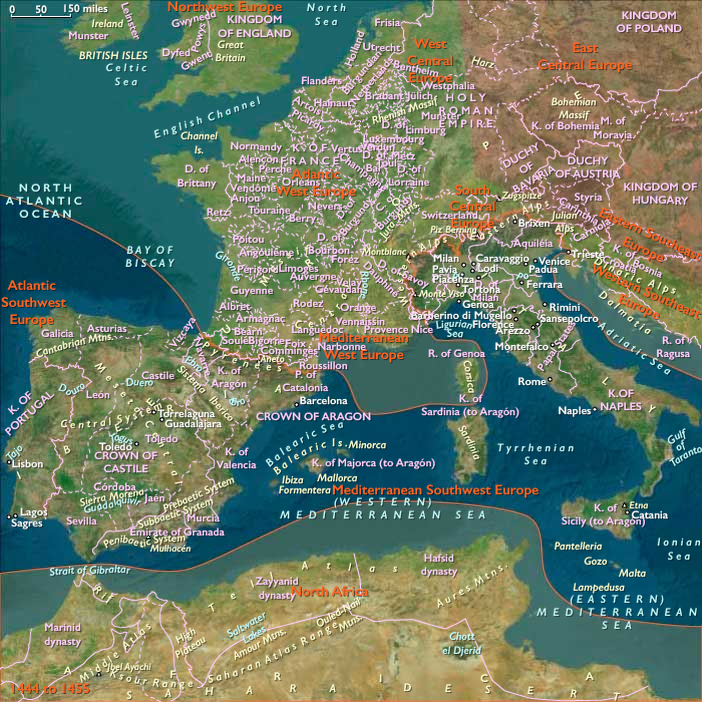
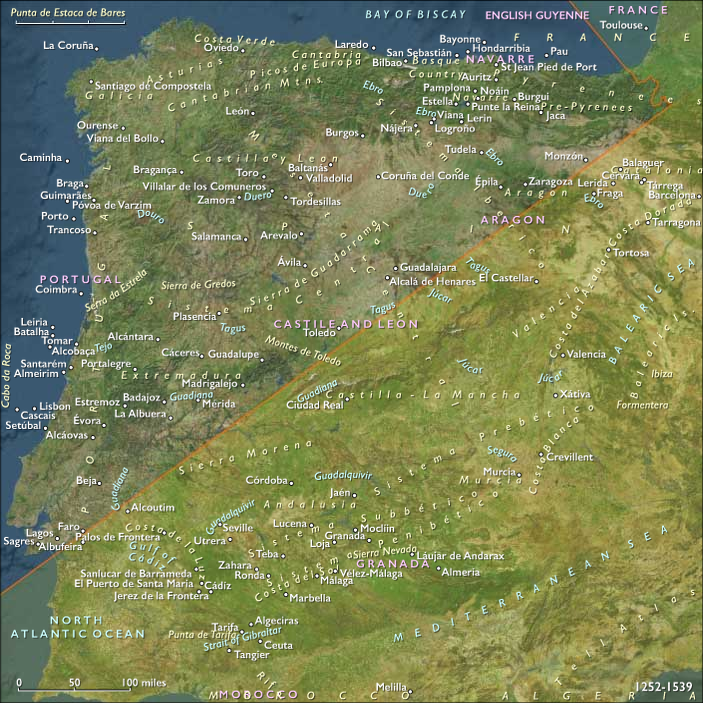
Between 1444 and 1455 CE, Atlantic Southwest Europe—including Galicia, northern and central Portugal, Asturias, Cantabria, and northern Spain south of the Franco-Spanish border (43.05548° N, 1.22924° W)—experienced accelerated Portuguese maritime expansion and cultural renewal through Renaissance humanism, increasing internal tensions within Castile’s aristocracy under the later reign of King John II, and careful diplomatic realignment in Navarre. These developments significantly influenced regional governance stability, economic prosperity, cultural exchanges, and decisively set the stage for the full Iberian Renaissance in subsequent decades.
Political and Military Developments
Portuguese Maritime Dominance and Overseas Expansion
Under the youthful yet ambitious King Afonso V (1438–1481 CE) and continued guidance from Prince Henry the Navigator, Portuguese maritime exploration expanded significantly. Portuguese explorers reached Cape Verde (1444) and later extended influence down Africa’s western coast, establishing trading posts and fortifications. By 1455, Portugal decisively dominated Atlantic exploration and trade, setting a strong foundation for global empire-building.
Castilian Aristocratic Tensions under John II
Castile, under the later reign of King John II (1406–1454 CE), experienced heightened internal aristocratic conflicts, particularly involving powerful noble families and factions vying for influence. Despite these tensions, John II’s administration decisively preserved Castilian territorial coherence and governance structures. His death in 1454 resulted in the accession of his son, Henry IV (1454–1474 CE), whose reign began with challenges inherited from these internal aristocratic struggles.
Navarrese Diplomatic Realignment under John II of Aragón
In Navarre, following Queen Blanche I’s death in 1441, her husband, John II of Aragón (1425–1479 CE as co-ruler) decisively assumed sole governance. His rule involved careful diplomatic realignment, increasingly emphasizing ties with Aragón. Despite tensions with Navarrese nobility over internal administration, he preserved Navarre’s territorial autonomy and regional stability through cautious diplomatic maneuvering with Castile, Aragón, and France.
Economic Developments
Agricultural Prosperity and Rural Stability
Agricultural productivity remained strong, decisively supported by diversified crops—grain, olives, vineyards, citrus fruits, almonds—and robust livestock production. Mining activities (notably gold and silver in Galicia and Asturias) and artisanal crafts significantly reinforced regional economic resilience and demographic stability.
Portuguese Maritime Trade and Atlantic Commerce
Portuguese maritime trade decisively flourished through the ports of Lisbon, Porto, Braga, and Coimbra, increasingly dominating Atlantic commerce routes. Trading posts along Africa’s coast and the exploration of the Cape Verde islands significantly enhanced Portugal’s economic prosperity and maritime influence. Galicia, particularly through ports like A Coruña, continued vibrant trade, reinforcing regional economic resilience.
Pilgrimage Economy and Regional Vitality
Pilgrimage routes to Santiago de Compostela continued to support sustained regional economic vitality through hospitality industries, artisanal commerce, infrastructure projects, and cultural exchanges. Persistent pilgrimage activity significantly reinforced Galicia’s economic stability and international recognition.
Cultural and Religious Developments
Portuguese Renaissance and Humanist Flourishing
Portugal decisively advanced in Renaissance humanist scholarship under King Afonso V. Increasingly robust cultural exchanges with Italian city-states and northern Europe deepened humanist influences on literature, education, architecture, philosophy, and scientific inquiry. Portuguese intellectual life flourished through courtly patronage, scholarly institutions, and maritime exploration literature, laying critical foundations for Portugal’s mature Renaissance era.
Castilian Cultural Continuity and Early Humanist Influence
Despite internal political tensions, Castilian culture remained vibrant, decisively influenced by early humanist contacts, especially from Italy. Intellectual exchanges and scholarly patronage shaped Castilian literature, educational reforms, and philosophical inquiry, laying essential groundwork for the later Spanish Renaissance.
Galician Cultural and Ecclesiastical Patronage
Galicia maintained significant cultural prominence, decisively supported by ecclesiastical authorities of Santiago de Compostela and monastic communities. Scholarly initiatives, manuscript preservation, artistic patronage, and architectural projects continued, reinforcing Galicia’s cultural identity and international visibility.
Persistent Cultural Syncretism and Local Traditions
Orthodox Christianity consistently integrated indigenous Iberian and Celtic traditions, particularly in rural Galicia and northern Portugal. Persistent cultural syncretism decisively reinforced regional identities, social cohesion, and cultural resilience during this transformative era of maritime expansion and humanist flourishing.
Civic Identity and Governance
Portuguese Civic Unity and Global Ambitions
Portugal decisively reinforced civic unity, national identity, and governance stability under King Afonso V and Prince Henry the Navigator. Maritime explorations and overseas ambitions significantly shaped Portuguese civic identity and laid foundations for global empire-building and cultural flourishing.
Castilian Governance Resilience amid Internal Tensions
Despite internal aristocratic tensions during John II’s later reign, Castile decisively maintained territorial integrity, governance stability, and regional coherence. Effective administration structures significantly preserved Castilian civic identity and set conditions for future governance consolidation under Henry IV.
Navarrese Regional Autonomy and Diplomatic Stability
Navarre decisively preserved regional autonomy, diplomatic stability, and governance coherence under John II of Aragón. Careful diplomatic maneuvering significantly maintained territorial integrity, internal coherence, and northern Iberian geopolitical stability.
Notable Regional Groups and Settlements
-
Portuguese: Experienced decisive maritime dominance, economic expansion, and cultural renewal through Renaissance humanist influences under King Afonso V, significantly shaping Portugal’s historical trajectory and future global influence.
-
Castilians: Maintained decisive governance stability, territorial integrity, and cultural continuity despite internal political tensions under John II, significantly influencing Iberian political and intellectual developments.
-
Galicians: Sustained vibrant economic prosperity, cultural vitality, and ecclesiastical prominence, significantly reinforced by pilgrimage activity and maritime commerce.
-
Basques (Navarre): Preserved regional autonomy, diplomatic neutrality, and stable governance under John II of Aragón, significantly shaping northern Iberian political coherence.
Long-Term Significance and Legacy
Between 1444 and 1455 CE, Atlantic Southwest Europe:
-
Achieved decisive Portuguese maritime expansion, global commercial dominance, and deepening Renaissance humanist scholarship, significantly setting foundations for Portugal’s subsequent global empire and cultural flourishing.
-
Maintained Castilian governance resilience, territorial integrity, and cultural continuity despite internal aristocratic struggles, laying important groundwork for the later Spanish Renaissance.
-
Preserved Navarrese diplomatic prudence, territorial autonomy, and governance stability under John II of Aragón, significantly influencing northern Iberian geopolitical coherence.
-
Experienced sustained agricultural prosperity, expanded maritime commerce, pilgrimage-driven economic vitality, and vibrant cultural renewal, profoundly shaping regional historical trajectories.
This transformative era decisively shaped regional identities, governance structures, economic continuity, cultural resilience, and intellectual foundations, profoundly influencing Atlantic Southwest Europe’s trajectory toward the full flowering of the Iberian Renaissance.
People
- Afonso V of Portugal
- Blanche I
- Edward, King of Portugal
- Henry IV of Castile
- Henry the Navigator
- John II of Aragon
- John II of Castile
Groups
- Navarre, Kingdom of
- Basque people
- Flanders, County of
- Normandy, Duchy of
- Brittanny, Duchy of
- Castillian people
- Christians, Roman Catholic
- Galicians
- Aragón, Kingdom of
- Portugal, Burgundian (Alfonsine) Kingdom of
- England, (Plantagenet, Angevin) Kingdom of
- Castile, Crown of
- France, (Valois) Kingdom of
Topics
Commodoties
Subjects
Regions
Subregions
Years: 1444 - 1455
People
- Afonso V of Portugal
- Blanche I
- Edward, King of Portugal
- Henry IV of Castile
- Henry the Navigator
- John II of Aragon
- John II of Castile
Groups
- Navarre, Kingdom of
- Basque people
- Flanders, County of
- Normandy, Duchy of
- Brittanny, Duchy of
- Castillian people
- Christians, Roman Catholic
- Galicians
- Aragón, Kingdom of
- Portugal, Burgundian (Alfonsine) Kingdom of
- England, (Plantagenet, Angevin) Kingdom of
- Castile, Crown of
- France, (Valois) Kingdom of
Topics
Commodoties
Subjects
Regions
Subregions