
Atlantic Southwest Europe (1432–1443 CE): Portuguese Maritime …
Years: 1432 - 1443
Atlantic Southwest Europe (1432–1443 CE): Portuguese Maritime Advances and Early Renaissance Humanism, Castilian Political Stability under John II, and Navarrese Diplomatic Prudence
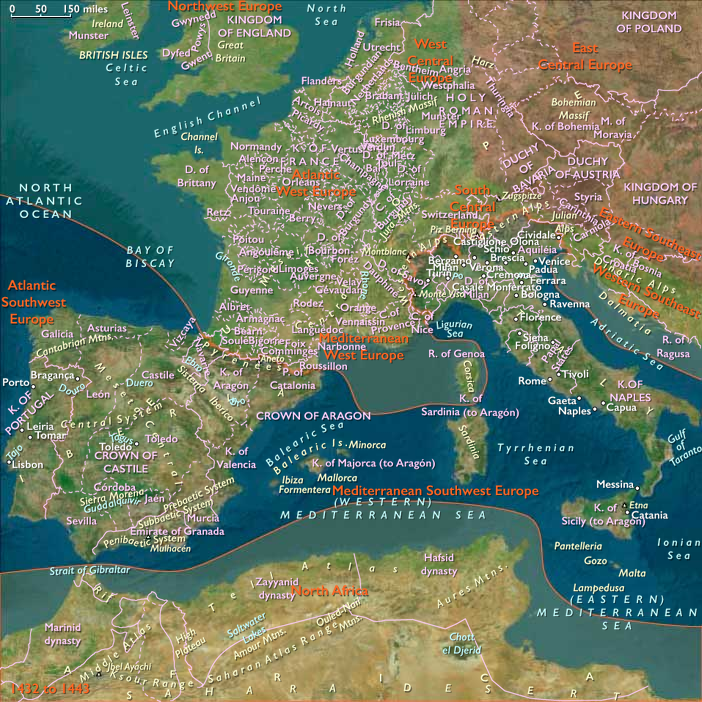
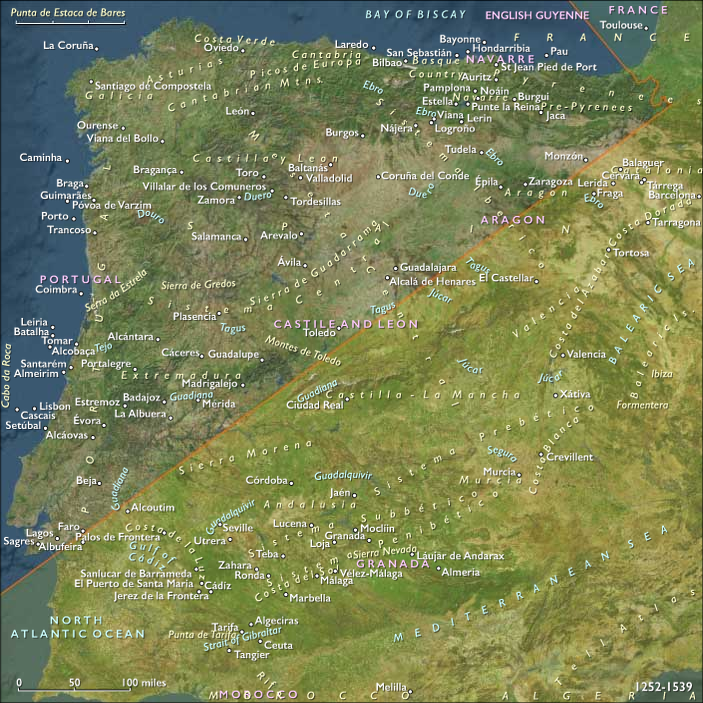
Between 1432 and 1443 CE, Atlantic Southwest Europe—including Galicia, northern and central Portugal, Asturias, Cantabria, and northern Spain south of the Franco-Spanish border (43.05548° N, 1.22924° W)—experienced decisive advances in Portuguese maritime exploration and early Renaissance cultural developments, sustained governance stability and emerging humanist influences in Castile, and careful diplomatic continuity in Navarre. This era laid crucial foundations for the broader Iberian Renaissance, enhanced regional economic prosperity, and strengthened political coherence throughout the region.
Political and Military Developments
Portuguese Maritime Exploration and Overseas Expansion
Under the stable rule of King Duarte I (1433–1438 CE) and subsequently King Afonso V (1438–1481 CE)—both strongly influenced by their uncle, Prince Henry the Navigator—Portuguese maritime expansion intensified significantly. During this era, Portuguese explorers systematically charted the West African coast, expanding trade networks and securing the Atlantic islands (Azores, Madeira, and Cape Verde). This decisive expansion laid crucial economic, strategic, and cultural foundations for Portugal’s future global empire.
Castilian Governance Stability under John II
Castile, governed effectively by King John II (1406–1454 CE), enjoyed sustained political stability and administrative coherence. During this period, John II effectively contained aristocratic factionalism and significantly strengthened royal authority, consolidating Castilian governance, territorial integrity, and economic prosperity. His court increasingly engaged with early humanist scholars and cultural influences, setting crucial intellectual foundations for Castile’s future Renaissance.
Navarrese Diplomatic Prudence under Queen Blanche I
Navarre, under Queen Blanche I (1425–1441 CE) and subsequently her husband, King John II of Aragón (from 1425 onward as co-ruler), decisively maintained diplomatic neutrality and careful governance. Navarre’s rulers skillfully balanced political relationships with Castile, Aragón, and France, significantly preserving territorial autonomy, internal stability, and geopolitical coherence through prudent diplomacy.
Economic Developments
Agricultural Stability and Economic Prosperity
Regional agriculture decisively remained robust, supported by diversified cultivation—especially grain, vineyards, olives, citrus fruits, and almonds—and consistent livestock production. Mining (gold and silver, notably from Galicia and Asturias) remained economically significant, decisively supporting regional economic resilience and demographic stability.
Expansion of Portuguese Maritime Trade Networks
Portuguese maritime trade decisively expanded, notably through the ports of Lisbon, Porto, Braga, and Coimbra. Systematic exploration of Africa and the Atlantic islands significantly enhanced commercial exchanges with northern Europe (England, Flanders, Normandy, Brittany) and established Portugal as an emerging maritime power, reinforcing regional economic prosperity.
Pilgrimage Economy and Regional Vitality in Galicia
The pilgrimage route to Santiago de Compostela continued decisively to support regional economic vitality, bolstering hospitality industries, artisanal commerce, infrastructure projects, and cultural exchanges. Persistent pilgrimage activity significantly reinforced Galicia’s economic resilience and international prominence.
Cultural and Religious Developments
Early Portuguese Renaissance and Humanist Scholarship
Portuguese cultural and intellectual life flourished significantly, decisively influenced by early humanist scholarship and sustained royal patronage. Under Duarte I and the young Afonso V, scholars, artists, and humanist thinkers—benefiting from increased contacts with Italy and northern Europe—shaped Portuguese educational reforms, literary traditions, scientific inquiry, and artistic expression, marking a clear beginning of Portugal’s Renaissance era.
Castilian Intellectual Continuity and Early Renaissance Humanism
Castilian culture remained decisively vibrant, significantly shaped by early humanist influences facilitated by growing connections with Italian scholars and broader European intellectual circles. Under King John II, Castilian literary and scholarly traditions experienced renewal and innovation, establishing foundational elements for the subsequent Spanish Renaissance.
Galician Cultural Resilience and Ecclesiastical Patronage
Galicia maintained significant cultural prominence, decisively supported by ecclesiastical authorities of Santiago de Compostela and monastic communities. Scholarly initiatives, manuscript preservation, and significant artistic and architectural projects continued, reinforcing Galicia’s cultural identity and international visibility.
Persistent Cultural Syncretism and Local Traditions
Orthodox Christianity consistently integrated indigenous Iberian and Celtic traditions, particularly in rural Galicia and northern Portugal. This persistent cultural syncretism decisively reinforced regional identities, social cohesion, and cultural resilience during this transformative era.
Civic Identity and Governance
Portuguese Civic Unity and Global Ambitions
Portugal decisively reinforced civic unity, national identity, and governance stability under Duarte I and Afonso V. Maritime explorations significantly shaped Portuguese collective ambitions, decisively laying foundations for future global influence, cultural patronage, and economic prosperity.
Castilian Governance Stability and Intellectual Foundations
Under John II, Castile decisively maintained governance stability, territorial coherence, and effective administrative reforms. Strengthened royal authority significantly influenced Iberian geopolitical stability, civic unity, and early humanist cultural foundations, shaping the region’s intellectual heritage.
Navarrese Regional Autonomy and Diplomatic Stability
Navarre decisively preserved regional autonomy, diplomatic neutrality, and internal governance stability under Queen Blanche I and King John II of Aragón. Their cautious diplomatic approach significantly maintained territorial integrity, internal coherence, and northern Iberian geopolitical stability throughout the era.
Notable Regional Groups and Settlements
-
Portuguese: Experienced decisive maritime expansion, early humanist scholarship, and cultural patronage under Duarte I, Afonso V, and Prince Henry the Navigator, significantly shaping Portugal’s enduring historical trajectory.
-
Castilians: Maintained governance stability, territorial integrity, and intellectual continuity under John II, significantly influencing Iberian political, economic, and cultural developments.
-
Galicians: Sustained vibrant economic prosperity, cultural vitality, and ecclesiastical prominence, significantly reinforced by pilgrimage activity and maritime commerce.
-
Basques (Navarre): Preserved regional autonomy, diplomatic neutrality, and stable governance under Blanche I and John II of Aragón, significantly shaping northern Iberian political coherence.
Long-Term Significance and Legacy
Between 1432 and 1443 CE, Atlantic Southwest Europe:
-
Significantly advanced Portuguese maritime exploration, global commercial expansion, and early Renaissance humanist scholarship, decisively setting foundations for Portugal’s subsequent global empire and cultural flourishing.
-
Achieved sustained Castilian governance stability, territorial integrity, and intellectual continuity, laying crucial groundwork for the later Spanish Renaissance.
-
Maintained Navarrese diplomatic prudence, territorial autonomy, and governance stability under Blanche I, significantly influencing northern Iberian geopolitical coherence.
-
Experienced resilient agricultural prosperity, expanded maritime commerce, pilgrimage-driven economic vitality, and early cultural renaissance, profoundly shaping regional historical trajectories.
This transformative era decisively shaped regional identities, governance structures, economic continuity, cultural resilience, and intellectual foundations, profoundly influencing Atlantic Southwest Europe’s trajectory toward the full flowering of the Iberian Renaissance.
People
- Afonso V of Portugal
- Blanche I
- Edward, King of Portugal
- Henry the Navigator
- John I of Portugal
- John II of Aragon
- John II of Castile
Groups
- Navarre, Kingdom of
- Basque people
- Flanders, County of
- Normandy, Duchy of
- Brittanny, Duchy of
- Castillian people
- Christians, Roman Catholic
- Galicians
- Aragón, Kingdom of
- Portugal, Burgundian (Alfonsine) Kingdom of
- England, (Plantagenet, Angevin) Kingdom of
- Castile, Crown of
- Marinid Dynasty (Sultanate of Morocco)
- France, (Valois) Kingdom of
Topics
Commodoties
Subjects
Regions
Subregions
Related Events
Showing 10 events out of 42013 total
Years: 1432 - 1443
People
- Afonso V of Portugal
- Blanche I
- Edward, King of Portugal
- Henry the Navigator
- John I of Portugal
- John II of Aragon
- John II of Castile
Groups
- Navarre, Kingdom of
- Basque people
- Flanders, County of
- Normandy, Duchy of
- Brittanny, Duchy of
- Castillian people
- Christians, Roman Catholic
- Galicians
- Aragón, Kingdom of
- Portugal, Burgundian (Alfonsine) Kingdom of
- England, (Plantagenet, Angevin) Kingdom of
- Castile, Crown of
- Marinid Dynasty (Sultanate of Morocco)
- France, (Valois) Kingdom of
Topics
Commodoties
Subjects
Regions
Subregions