
Atlantic Southwest Europe (129–118 BCE): Decline of …
Years: 129BCE - 118BCE
Atlantic Southwest Europe (129–118 BCE): Decline of Lusitanian Resistance and Roman Territorial Consolidation
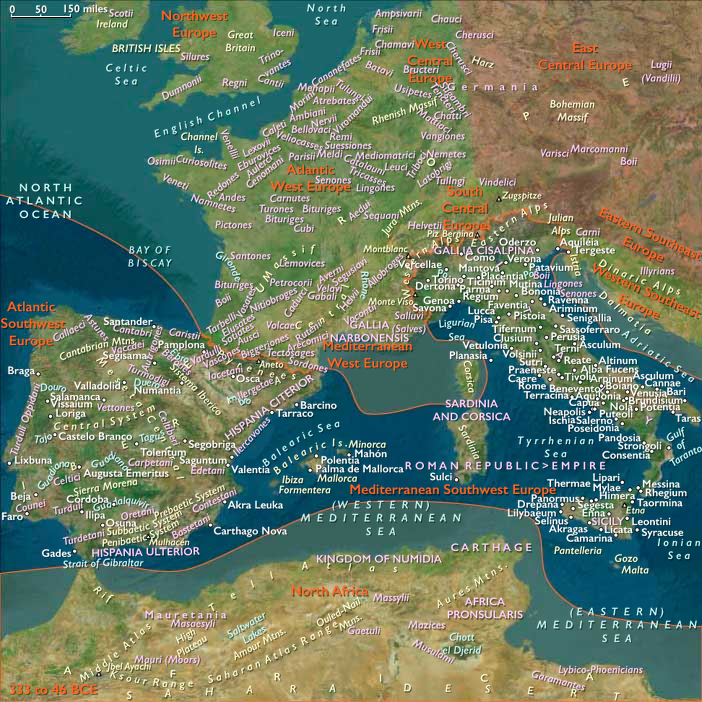
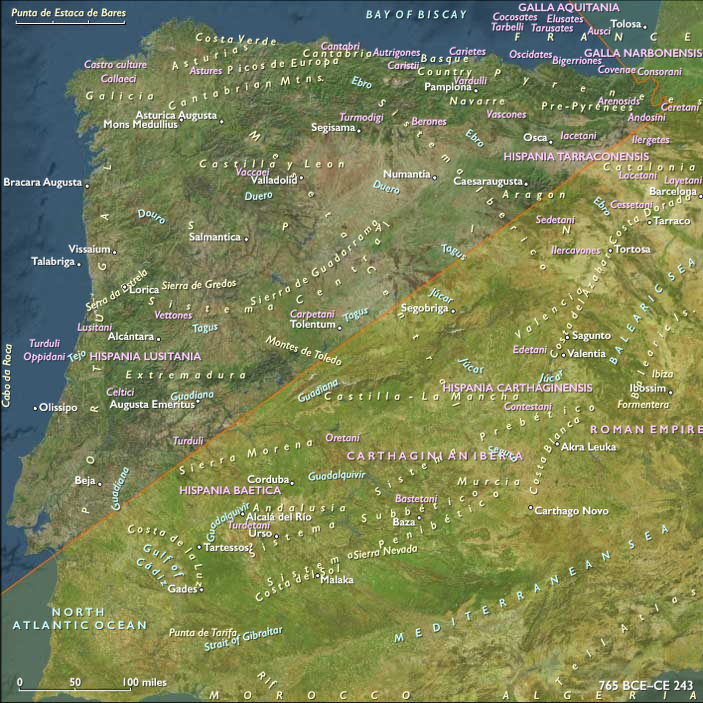
Between 129 and 118 BCE, Atlantic Southwest Europe—encompassing northern and central Portugal, Galicia, Asturias, Cantabria, and northern Spain south of the Franco-Spanish border (43.05548° N, 1.22924° W)—experienced significant shifts following the assassination of Viriathus (139 BCE), leading to a gradual decline of coordinated Lusitanian resistance. The region entered an era defined by increasing Roman military consolidation, heightened regional tensions, intensified economic integration within Mediterranean networks, and continued reliance on slave labor. Despite Roman territorial gains, tribes remained culturally resilient, setting the stage for future conflicts and assimilation processes.
Political and Military Developments
Decline of Unified Lusitanian Resistance
-
Following Viriathus’s assassination in 139 BCE, unified tribal resistance significantly weakened. Lusitanian and allied tribal forces fragmented, reducing their effectiveness in confronting Roman military operations.
-
Roman commanders capitalized on internal divisions, steadily suppressing resistance and extending territorial control deeper into previously autonomous regions.
Increasing Roman Territorial Consolidation
-
Rome intensified administrative and military control in Iberia, expanding provincial governance structures (Hispania Citerior and Ulterior) and securing vital economic and military routes into Atlantic Southwest Europe.
-
Roman garrisons and fortified settlements proliferated, signaling growing dominance and stability in previously resistant tribal territories.
Persistence of Northern Tribal Autonomy
-
Northern tribes such as the Gallaeci, Astures, and Cantabri maintained defensive postures, reinforcing hillfort settlements and territorial boundaries, continuing resistance efforts and preserving substantial autonomy.
-
The Vascones, benefiting from strategic neutrality and diplomatic caution, largely avoided direct confrontation, preserving their distinct cultural and territorial integrity.
Economic and Technological Developments
Deepening Mediterranean-Roman Economic Integration
-
Tribes remained economically embedded within Mediterranean trade networks. Metals, wool, salt, agricultural products, timber, and especially slaves were continuously exported, while Mediterranean luxury goods, wine, oil, and advanced iron weaponry entered tribal economies, deepening economic dependency and integration.
-
Economic elites among Lusitanians, Vettones, Gallaeci, and Celtici benefited significantly, reinforcing local hierarchies and social stratification.
Continued Reliance on Slave Labor
-
Slavery remained fundamental, extensively utilized in mining operations (silver, copper, tin), agriculture, domestic labor, and artisanal craftsmanship. Slave trade continued actively with Roman merchants, reinforcing economic integration and social hierarchies.
Ironworking Sophistication and Craftsmanship
-
Iron metallurgy continued advancing significantly, improving agricultural productivity, warfare capabilities, and artisanal craftsmanship, reshaping local economies.
-
Skilled artisans from Lusitanian, Gallaeci, and Vettones communities produced finely crafted iron weaponry, tools, armor, and decorative objects, integrating indigenous styles with Mediterranean influences.
Cultural and Religious Developments
Cultural Synthesis and Material Expression
-
Material culture further synthesized Celtic, indigenous Iberian, and Roman artistic elements, evident in sophisticated metalwork, pottery, ceremonial artifacts, decorative jewelry, and everyday objects.
-
Despite Roman territorial advances, tribal cultural identities remained resilient and vibrant, reflecting regional pride and autonomy in artistic and cultural expressions.
Complex Religious Practices and Identity
-
Ritual and religious traditions intensified in complexity, integrating indigenous Iberian, Celtic, and Roman religious elements. Ceremonial sites, sanctuaries, sacred landscapes, and ritual practices continued reinforcing tribal solidarity and communal identity.
-
Warrior rites, ancestor ceremonies, and communal feasts persisted as key societal rituals, providing cultural continuity amidst territorial and political pressures.
Notable Tribal Groups and Settlements
-
Lusitanians: Experienced fragmentation following Viriathus’s death but continued local resistance and territorial fortification, even as Roman influence deepened.
-
Vettones and Vaccaei: Strategically repositioned after losing unified resistance, maintaining regional autonomy and economic resilience.
-
Gallaeci, Astures, and Cantabri: Strengthened territorial defenses and autonomy, preparing strategically for potential future Roman aggression.
-
Vascones: Maintained their territorial autonomy and diplomatic neutrality, reinforcing cultural distinctiveness and societal stability.
Long-Term Significance and Legacy
Between 129 and 118 BCE, Atlantic Southwest Europe:
-
Experienced significant shifts from unified resistance under Viriathus to more fragmented tribal opposition, enabling steady Roman territorial consolidation.
-
Deepened economic dependency on Mediterranean trade networks dominated by Rome, firmly establishing slavery as a central economic institution.
-
Preserved and intensified distinct tribal and cultural identities, shaping future Iberian historical trajectories and resistance movements against external domination.
This transformative era laid critical foundations for Roman Hispania, regional integration, and cultural adaptation processes, profoundly influencing subsequent historical and societal developments in Atlantic Southwest Europe.
Groups
- Polytheism (“paganism”)
- Iberians
- Celts
- Carthage, Kingdom of
- Lusitanians, or Lusitani
- Celtiberians
- Roman Republic
- La Tène culture
- Vettones
- Caristii
- Gallaeci
- Vaccaei
- Cantabri (Celtic tribe)
- Astures (Celtic tribe)
- Berones
- Varduli
- Turmodigi
- Turduli Oppidani
- Celtici
- Autrigones
- Hispania Ulterior (region of Hispania)
- Hispania Citerior (region of Hispania)
Topics
Commodoties
- Weapons
- Domestic animals
- Oils, gums, resins, and waxes
- Grains and produce
- Fibers
- Ceramics
- Strategic metals
- Salt
- Slaves
- Beer, wine, and spirits
- Lumber
Subjects
- Commerce
- Language
- Labor and Service
- Decorative arts
- Conflict
- Faith
- Government
- Custom and Law
- Technology
Regions
Subregions
Related Events
Showing 10 events out of 63023 total
Years: 129BCE - 118BCE
Groups
- Polytheism (“paganism”)
- Iberians
- Celts
- Carthage, Kingdom of
- Lusitanians, or Lusitani
- Celtiberians
- Roman Republic
- La Tène culture
- Vettones
- Caristii
- Gallaeci
- Vaccaei
- Cantabri (Celtic tribe)
- Astures (Celtic tribe)
- Berones
- Varduli
- Turmodigi
- Turduli Oppidani
- Celtici
- Autrigones
- Hispania Ulterior (region of Hispania)
- Hispania Citerior (region of Hispania)
Topics
Commodoties
- Weapons
- Domestic animals
- Oils, gums, resins, and waxes
- Grains and produce
- Fibers
- Ceramics
- Strategic metals
- Salt
- Slaves
- Beer, wine, and spirits
- Lumber
Subjects
- Commerce
- Language
- Labor and Service
- Decorative arts
- Conflict
- Faith
- Government
- Custom and Law
- Technology
Regions
Subregions