
Atlantic Southwest Europe (1396–1407 CE): Consolidation of …
Years: 1396 - 1407
Atlantic Southwest Europe (1396–1407 CE): Consolidation of Portuguese Independence, Castilian Governance Stability, and Navarrese Diplomatic Continuity
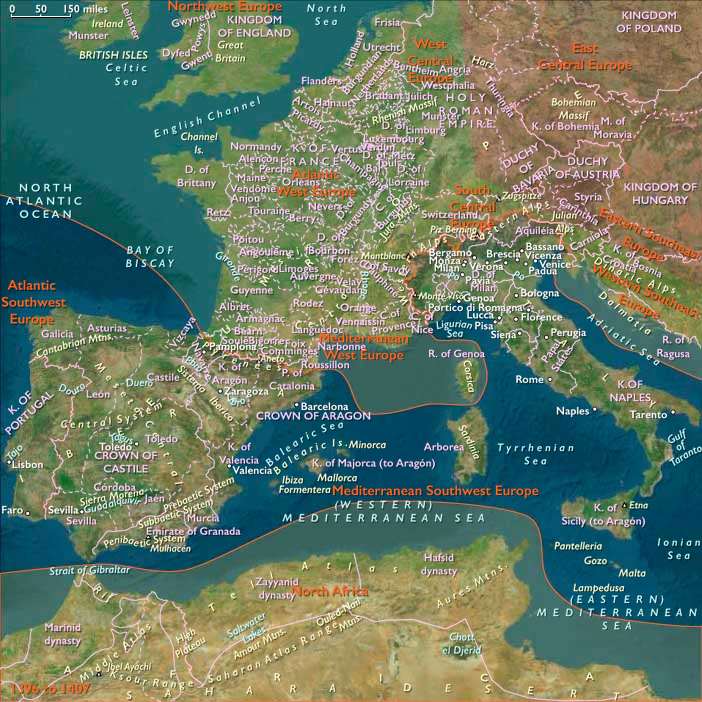
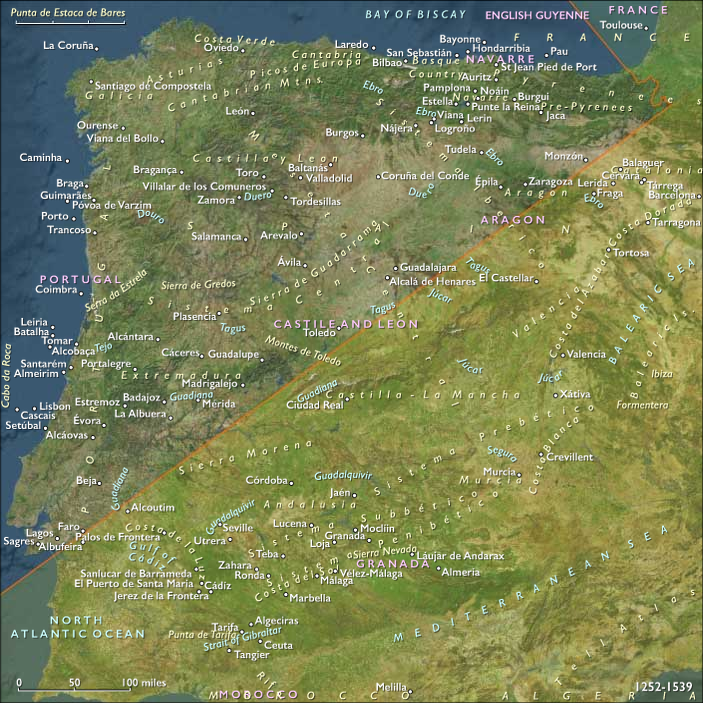
Between 1396 and 1407 CE, Atlantic Southwest Europe—including Galicia, northern and central Portugal, Asturias, Cantabria, and northern Spain south of the Franco-Spanish border (43.05548° N, 1.22924° W)—entered a period of consolidation, characterized by stable governance in Portugal under the House of Aviz, continued stability and administrative coherence in Castile under the Trastámara dynasty, and sustained diplomatic pragmatism in Navarre. This era decisively established the political and cultural foundations that would underpin subsequent Iberian developments throughout the 15th century.
Political and Military Developments
Portuguese Governance Consolidation under King John I
In Portugal, King John I (1385–1433 CE) decisively solidified the independence and legitimacy of the recently established Aviz dynasty following the critical victory at Aljubarrota (1385 CE). His effective governance emphasized administrative reforms, strong frontier security, and diplomatic stability, significantly enhancing Portuguese national identity and sovereignty. By 1407, Portugal was firmly positioned for future maritime expansion and exploration, particularly under the growing influence of his son, Prince Henry the Navigator.
Castilian Stability and Royal Authority under Henry III
Castile, governed by the youthful yet capable King Henry III "the Sufferer" (1390–1406 CE), sustained robust political stability, administrative reforms, and territorial coherence. Henry III decisively strengthened royal authority, reduced aristocratic infighting, and expanded diplomatic ties within Iberia and beyond, laying stable foundations for Castilian prosperity and regional identity in subsequent decades.
Following Henry III’s death in 1406, his son, the young King John II of Castile (1406–1454 CE), inherited a politically stable kingdom, although his minority triggered the beginnings of future internal tensions.
Navarrese Diplomatic Continuity under Charles III "the Noble"
Navarre, under the prudent and widely respected King Charles III "the Noble" (1387–1425 CE), decisively continued policies of diplomatic pragmatism and careful neutrality. His effective governance emphasized internal stability, economic prudence, and balanced diplomacy with Castile, Aragón, and France. Charles III’s policies significantly preserved Navarre’s territorial integrity, governance stability, and northern Iberian geopolitical coherence.
Economic Developments
Steady Agricultural Prosperity and Territorial Management
The region experienced stable agricultural productivity, supported by careful land management, diversified cultivation (grain, olives, vineyards, citrus fruits, almonds), livestock husbandry, artisanal production, and mining operations (notably gold and silver from Galicia and Asturias). These activities decisively reinforced rural economic resilience, demographic stability, and sustained prosperity.
Maritime Commerce and Trade Expansion
Portuguese maritime trade notably expanded through key ports such as Lisbon, Porto, Braga, and Coimbra, strengthening commercial networks with northern Europe (England, Flanders, Normandy, Brittany). Galicia, especially through ports such as A Coruña, maintained robust maritime trade, significantly reinforcing regional economic stability and international commercial links.
Pilgrimage Economy and Cultural Exchange
Pilgrimage activity toward Santiago de Compostela remained vibrant, sustaining significant regional economic vitality through hospitality industries, artisanal trade, infrastructure development, and cultural exchanges. This continued pilgrimage significantly reinforced Galicia’s economic resilience, cultural prominence, and international recognition.
Cultural and Religious Developments
Portuguese Cultural Flourishing and Intellectual Patronage
Under King John I, Portuguese intellectual and cultural life flourished significantly, driven by royal patronage and growing scholarly traditions. Educational institutions, literary production, and artistic initiatives significantly shaped Portuguese linguistic standardization, national identity, and intellectual heritage, laying foundations for future humanist influences.
Castilian Intellectual and Cultural Continuity
Castilian cultural and educational traditions remained robust, decisively reinforced by royal patronage during Henry III’s stable reign. Intellectual initiatives and religious institutions sustained literary production, educational advancement, and cultural continuity, shaping Castilian identity and laying early groundwork for future humanist developments.
Galician Cultural Resilience and Ecclesiastical Patronage
Galicia decisively maintained cultural prominence, strongly supported by ecclesiastical patronage from Santiago de Compostela’s cathedral and monastic communities. Continued manuscript preservation, educational activities, architectural projects, and artistic patronage significantly reinforced Galician cultural identity and international visibility.
Persistent Cultural Syncretism and Local Traditions
Orthodox Christianity consistently integrated indigenous Iberian and Celtic traditions, especially in rural Galicia and northern Portugal. This persistent cultural syncretism decisively reinforced regional identities, social cohesion, and cultural resilience during a stable yet formative era.
Civic Identity and Governance
Portuguese National Unity and Governance Stability
King John I decisively reinforced Portuguese national unity, governance stability, and territorial integrity under the Aviz dynasty. Effective administration and civic unity significantly solidified Portuguese national sovereignty and historical trajectory, laying essential foundations for maritime exploration and economic expansion.
Castilian Governance Stability and Regional Identity
Castile decisively maintained governance stability, territorial coherence, and regional identity under Henry III, significantly shaping Iberian geopolitical stability. Effective governance structures and strengthened royal authority facilitated economic prosperity, civic unity, and enduring political stability.
Navarrese Regional Autonomy and Diplomatic Stability
Navarre skillfully preserved regional autonomy, diplomatic neutrality, and stable governance under Charles III. Strategic diplomacy decisively maintained territorial integrity, internal coherence, and northern Iberian geopolitical stability throughout this formative era.
Notable Regional Groups and Settlements
-
Portuguese: Solidified national identity, governance stability, and cultural vitality under King John I, decisively establishing Portugal’s enduring medieval legacy and laying the groundwork for future exploration.
-
Castilians: Maintained decisive governance stability, territorial integrity, and reinforced regional identity under Henry III, significantly influencing Iberian geopolitical stability and future developments.
-
Galicians: Continued vibrant economic prosperity, cultural prominence, and ecclesiastical patronage, decisively reinforced by pilgrimage traditions and maritime commerce.
-
Basques (Navarre): Preserved regional autonomy, diplomatic neutrality, and stable governance under Charles III, significantly shaping northern Iberian political coherence.
Long-Term Significance and Legacy
Between 1396 and 1407 CE, Atlantic Southwest Europe:
-
Consolidated Portuguese political autonomy, economic stability, and cultural flourishing under the House of Aviz, decisively setting the stage for Portugal’s Age of Discovery.
-
Sustained Castilian governance stability, administrative coherence, and regional identity under Henry III, significantly influencing Iberian stability and territorial integrity.
-
Maintained Navarrese diplomatic pragmatism, territorial autonomy, and internal governance stability under Charles III, decisively influencing northern Iberian geopolitical coherence.
-
Experienced resilient agricultural prosperity, maritime commerce expansion, pilgrimage-driven economic vitality, and cultural continuity, profoundly shaping regional historical trajectories.
This era decisively shaped regional identities, governance structures, economic continuity, and cultural resilience, laying critical foundations for Atlantic Southwest Europe’s historical trajectory through the 15th century and beyond.
People
- Charles II, King of Navarre
- Charles III of Navarre
- Ferdinand I of Portugal
- Henry III of Castile
- Henry the Navigator
- John I of Portugal
- John II of Castile
Groups
- Navarre, Kingdom of
- Basque people
- Flanders, County of
- Normandy, Duchy of
- Brittanny, Duchy of
- Castillian people
- Christians, Roman Catholic
- Galicians
- Portugal, Burgundian (Alfonsine) Kingdom of
- England, (Plantagenet, Angevin) Kingdom of
- Castile, Crown of
Topics
Commodoties
Subjects
Regions
Subregions
Years: 1396 - 1407
People
- Charles II, King of Navarre
- Charles III of Navarre
- Ferdinand I of Portugal
- Henry III of Castile
- Henry the Navigator
- John I of Portugal
- John II of Castile
Groups
- Navarre, Kingdom of
- Basque people
- Flanders, County of
- Normandy, Duchy of
- Brittanny, Duchy of
- Castillian people
- Christians, Roman Catholic
- Galicians
- Portugal, Burgundian (Alfonsine) Kingdom of
- England, (Plantagenet, Angevin) Kingdom of
- Castile, Crown of
Topics
Commodoties
Subjects
Regions
Subregions