
Atlantic Southwest Europe (1360–1371 CE): Portuguese Stability …
Years: 1360 - 1371
Atlantic Southwest Europe (1360–1371 CE): Portuguese Stability under Pedro I and Ferdinand I, Castilian Turmoil and Civil Strife, and Navarrese Diplomatic Maneuvering
Between 1360 and 1371 CE, Atlantic Southwest Europe—including Galicia, northern and central Portugal, Asturias, Cantabria, and northern Spain south of the Franco-Spanish border (43.05548° N, 1.22924° W)—experienced contrasting developments amid a period marked by political turbulence in Castile, relative governance stability in Portugal, and skillful diplomatic neutrality in Navarre. Portugal, governed successively by King Pedro I (1357–1367 CE) and King Ferdinand I (1367–1383 CE), maintained stable administration and moderate economic recovery from the previous era’s devastation. Castile, deeply troubled by civil war and aristocratic conflicts under King Pedro I "the Cruel" (1350–1369 CE) and later Henry II (1369–1379 CE), faced severe internal instability and political transformation. Navarre, under King Charles II "the Bad" (1349–1387 CE), navigated carefully between rival powers, preserving regional autonomy, diplomatic flexibility, and stable governance.
Political and Military Developments
Portuguese Stability under Pedro I and Ferdinand I
Portugal enjoyed continued governance stability and administrative coherence under the late reign of King Pedro I, whose effective administration and judicial reforms sustained internal stability. His successor, King Ferdinand I, decisively maintained territorial integrity and economic recovery despite tensions arising from Castilian civil conflict. Ferdinand’s cautious diplomacy and strategic neutrality safeguarded Portuguese autonomy and prosperity.
Castilian Civil War and Dynastic Conflict
Castile endured severe internal turmoil characterized by intense civil conflict between Pedro I "the Cruel" and his half-brother, the future Henry II of Trastámara. Their protracted conflict culminated in Pedro’s death in 1369, bringing Henry II to power. This dynastic shift decisively altered Castilian governance, weakening central authority temporarily but ultimately laying foundations for future political realignments and territorial consolidation under the Trastámara dynasty.
Navarrese Diplomatic Prudence under Charles II
Navarre skillfully preserved diplomatic neutrality and regional autonomy under the prudent yet politically opportunistic leadership of King Charles II "the Bad." His strategic balancing of Castilian, French, and Aragonese interests decisively preserved Navarre’s territorial integrity and internal stability, ensuring continued regional autonomy amidst Iberian instability.
Economic Developments
Agricultural and Economic Recovery
Following the demographic devastation of the Black Death, the region’s agricultural productivity gradually recovered. Improved land management, revived cultivation practices (grains, olives, vineyards, citrus fruits, almonds), and livestock husbandry supported economic stabilization. Additionally, mining operations (especially gold and silver in Galicia and Asturias) steadily resumed, reinforcing regional economic resilience.
Maritime Commerce and Renewed Trade Expansion
Portuguese ports—especially Lisbon, Porto, Braga, and Coimbra—experienced gradual resurgence in maritime commerce, strengthening trade links with northern Europe (England, Flanders, Normandy, Brittany). Galicia, notably through A Coruña, similarly resumed robust maritime trade, significantly reinforcing regional economic recovery and commercial vitality.
Pilgrimage Recovery and Economic Revitalization
Pilgrimage to Santiago de Compostela regained strength, decisively contributing to the region’s economic and cultural renewal. Pilgrim influx supported hospitality, trade, artisanal industries, and infrastructure projects, reinforcing Galicia’s economic recovery and renewed cultural prominence.
Cultural and Religious Developments
Portuguese Cultural Continuity and Royal Patronage
Portugal sustained intellectual and cultural vibrancy under Pedro I and Ferdinand I. Royal patronage decisively promoted literature, education, and scholarly traditions. Monastic communities and universities maintained intellectual continuity, shaping Portuguese linguistic standardization, cultural identity, and intellectual heritage.
Galician Cultural Revival and Ecclesiastical Patronage
Galicia’s cultural life and intellectual traditions strongly recovered, significantly supported by renewed pilgrimage traffic to Santiago de Compostela. Ecclesiastical patronage sustained scholarly initiatives, architectural projects, manuscript preservation, and educational institutions, decisively reinforcing Galician cultural resilience and international prominence.
Monastic and Ecclesiastical Influence Amid Recovery
Monastic communities decisively contributed to regional renewal through scholarly activity, manuscript preservation, agricultural innovations, and educational reforms. Ecclesiastical authorities maintained significant influence over Iberian religious identity, social cohesion, and cultural resilience.
Persistent Cultural Syncretism and Local Traditions
Orthodox Christianity continued integrating indigenous Iberian and Celtic traditions, notably in rural Galicia and northern Portugal. Persistent cultural syncretism decisively reinforced distinctive regional identities, social cohesion, and cultural resilience amid broader political transformations.
Civic Identity and Governance
Portuguese Governance Stability and Civic Cohesion
Under Pedro I and Ferdinand I, Portugal decisively preserved governance stability, territorial integrity, and civic identity. Effective administration significantly solidified Portuguese national coherence, internal stability, and economic recovery, laying enduring foundations for Portugal’s medieval prosperity.
Castilian Political Transition and Regional Identity
Castile faced intense civil conflict and political upheaval during Pedro I’s final years and Henry II’s early reign. Despite instability, the Trastámara dynasty’s establishment decisively shaped future governance structures and strengthened Castilian regional identity and coherence, paving the way for later administrative reforms.
Navarrese Regional Autonomy and Diplomatic Stability
Navarre maintained regional autonomy, diplomatic neutrality, and stable governance under Charles II. Skillful diplomatic maneuvering significantly preserved territorial integrity, internal stability, and northern Iberian geopolitical coherence.
Notable Regional Groups and Settlements
-
Portuguese: Experienced governance stability, economic recovery, and cultural continuity under Pedro I and Ferdinand I, decisively shaping Portuguese national identity and medieval trajectory.
-
Castilians: Navigated severe civil conflict and political upheaval yet preserved regional coherence, frontier stability, and resilient governance structures, laying foundations for future stability under the Trastámara dynasty.
-
Galicians: Achieved economic revival, cultural resilience, and renewed prominence supported by pilgrimage traditions, maritime trade recovery, and ecclesiastical patronage.
-
Basques (Navarre): Skillfully preserved regional autonomy, diplomatic neutrality, and stable governance under Charles II, significantly shaping northern Iberian geopolitical stability.
Long-Term Significance and Legacy
Between 1360 and 1371 CE, Atlantic Southwest Europe:
-
Maintained Portuguese governance stability, economic recovery, and cultural vitality under Pedro I and Ferdinand I, decisively shaping Portugal’s historical trajectory and medieval prosperity.
-
Endured severe Castilian civil strife and dynastic change, yet preserved regional identity, territorial coherence, and resilient governance, laying foundations for future stability under the Trastámara dynasty.
-
Sustained Navarrese regional autonomy, diplomatic neutrality, and governance resilience under Charles II, significantly shaping northern Iberian geopolitical coherence.
-
Experienced economic revitalization, cultural renewal, and persistent governance stability following the devastation of the Black Death, decisively influencing the region’s enduring medieval legacy.
This pivotal era decisively influenced regional identities, governance stability, economic recovery, and cultural resilience, profoundly shaping Atlantic Southwest Europe’s historical trajectory.
People
- Charles II, King of Navarre
- Ferdinand I of Portugal
- Henry II, King of Castile and León
- Peter I of Portugal
- Peter of Castile
Groups
- Portuguese people
- Navarre, Kingdom of
- Basque people
- Flanders, County of
- Normandy, Duchy of
- Brittanny, Duchy of
- Castillian people
- Christians, Roman Catholic
- Castile, Kingdom of
- Galicians
- Portugal, Burgundian (Alfonsine) Kingdom of
- England, (Plantagenet, Angevin) Kingdom of
- Castile, Crown of
- Portugal, Burgundian (Alfonsine) Kingdom of
Topics
Commodoties
Subjects
Regions
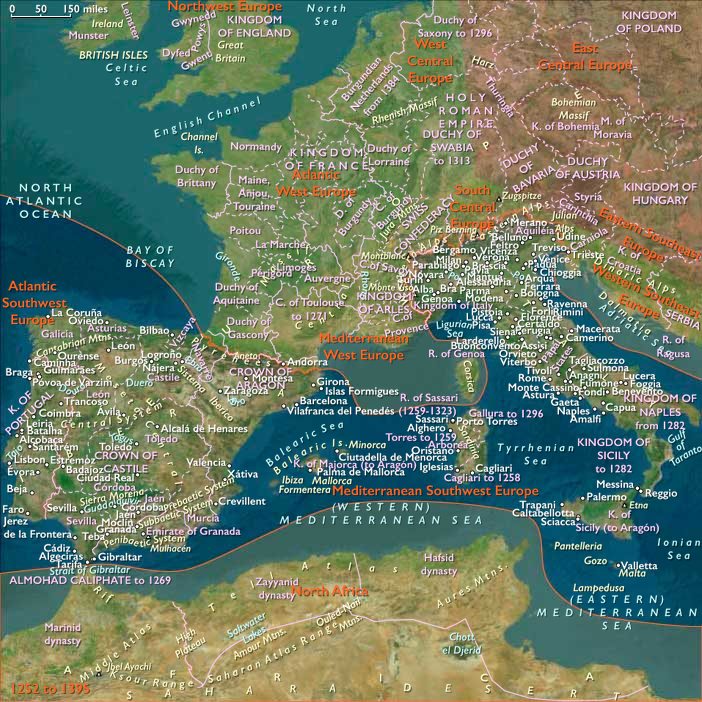
Subregions
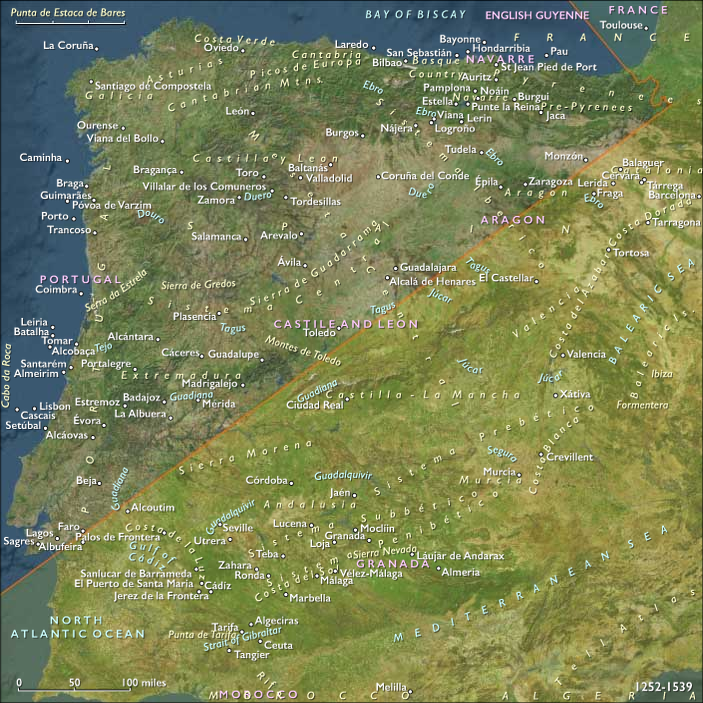
Years: 1360 - 1371
People
- Charles II, King of Navarre
- Ferdinand I of Portugal
- Henry II, King of Castile and León
- Peter I of Portugal
- Peter of Castile
Groups
- Portuguese people
- Navarre, Kingdom of
- Basque people
- Flanders, County of
- Normandy, Duchy of
- Brittanny, Duchy of
- Castillian people
- Christians, Roman Catholic
- Castile, Kingdom of
- Galicians
- Portugal, Burgundian (Alfonsine) Kingdom of
- England, (Plantagenet, Angevin) Kingdom of
- Castile, Crown of
- Portugal, Burgundian (Alfonsine) Kingdom of
Topics
Commodoties
Subjects
Regions
Subregions