
Atlantic Southwest Europe (1156–1167 CE): Portuguese Expansion, …
Years: 1156 - 1167
Atlantic Southwest Europe (1156–1167 CE): Portuguese Expansion, Leonese-Castilian Stability, and Navarrese Consolidation
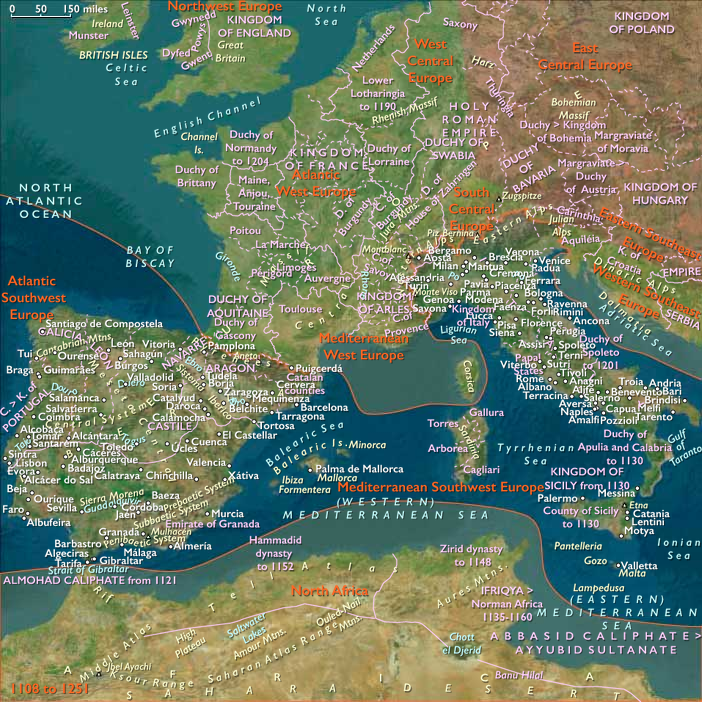
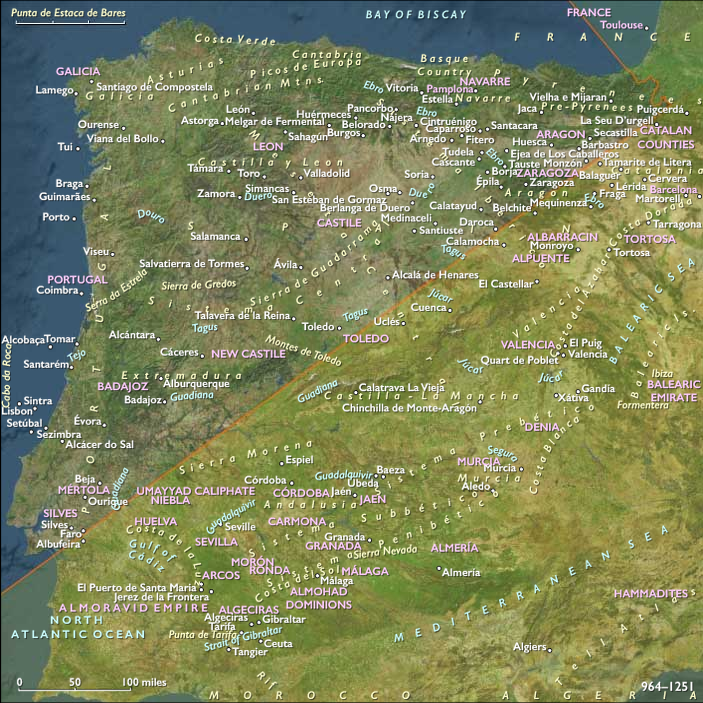
Between 1156 and 1167 CE, Atlantic Southwest Europe—including Galicia, northern and central Portugal, Asturias, Cantabria, and northern Spain south of the Franco-Spanish border (43.05548° N, 1.22924° W)—continued experiencing significant political consolidation, territorial expansion, and cultural vibrancy. Under King Afonso Henriques (1139–1185 CE), Portugal decisively expanded southward, firmly establishing national sovereignty and distinct Portuguese identity. Alfonso VII of León-Castile (d. 1157 CE), succeeded by his sons, maintained internal cohesion while adapting to dynastic transitions that led to León and Castile’s temporary political separation. In Navarre, Sancho VI "the Wise" (1150–1194 CE) strengthened regional autonomy, governance stability, and territorial cohesion, significantly influencing northern Iberian geopolitics.
Political and Military Developments
Portuguese Territorial Expansion under Afonso Henriques
King Afonso Henriques continued assertive southward expansion, significantly extending Portuguese territories beyond the Tagus River, notably with the conquest of Alcácer do Sal in 1158. These successful military campaigns decisively consolidated Portuguese control over strategic frontier areas, significantly enhancing territorial coherence and national sovereignty, while furthering Portugal’s distinct cultural and civic identity.
Dynastic Transition and Stability in León and Castile
Following the death of Alfonso VII in 1157, León and Castile were temporarily divided between his sons: Ferdinand II (1157–1188 CE) inherited León, while Sancho III (1157–1158 CE), succeeded by Alfonso VIII (1158–1214 CE), ruled Castile. Despite temporary political fragmentation, both kingdoms retained internal stability, defined clearer regional identities, and maintained administrative continuity. Castilian identity notably solidified under Alfonso VIII’s later governance, decisively influencing the kingdom’s territorial coherence and frontier security.
Navarre’s Governance Consolidation under Sancho VI
Under Sancho VI "the Wise", Navarre decisively strengthened its internal governance and regional autonomy. Sancho’s careful diplomatic strategy, coupled with administrative reforms, ensured stable governance structures, distinct regional identity, and effective territorial defenses, significantly influencing northern Iberian diplomacy and political alignments.
Economic Developments
Continued Agricultural Prosperity
The region experienced sustained agricultural prosperity, notably influenced by continued Moorish agricultural techniques, including advanced irrigation systems and diverse crop cultivation. Regional productivity—particularly vineyards, grains, citrus fruits, and olives—decisively reinforced economic stability, supporting population growth and territorial repopulation efforts.
Maritime Commerce and Northern European Trade
Portuguese coastal ports—particularly Porto, Braga, Coimbra, and Lisbon—continued expanding vibrant maritime trade networks, significantly connecting with markets in England, France, Normandy, and Flanders. Galicia maintained maritime prosperity through ports like A Coruña, decisively strengthening regional autonomy, economic vitality, and cultural exchanges.
Pilgrimage-Driven Economic Activity
Pilgrimage traditions to Santiago de Compostela sustained robust regional economic activities, notably hospitality industries, artisanal commerce, and international cultural exchange. Continued pilgrimage flows decisively reinforced Galicia’s economic resilience and cultural prominence.
Cultural and Religious Developments
Galician Cultural Resilience and Santiago’s Continued Prestige
Galicia sustained significant cultural and religious vitality, decisively supported by Santiago de Compostela’s international pilgrimage prominence. Ecclesiastical institutions continued substantial investments in architecture, scholarly traditions, and education, reinforcing Galicia’s distinct cultural identity and European-wide influence.
Monastic Intellectual Vitality and Cluniac Influence
Monastic communities maintained vibrant scholarly traditions, manuscript preservation, and educational activities. Cluniac ideals decisively shaped regional ecclesiastical discipline, liturgical uniformity, and stronger alignment with Rome, significantly influencing Iberian Christianity and religious identity.
Syncretic Cultural Continuity
Orthodox Christianity continued integrating indigenous Iberian and Celtic traditions, notably in rural Galicia and northern Portugal. Persistent cultural syncretism significantly fostered regional identity, social cohesion, and cultural resilience amid broader political and territorial changes.
Civic Identity and Governance
Portuguese National Identity and Stable Governance
King Afonso Henriques decisively consolidated Portuguese national identity through robust territorial governance, administrative efficiency, and frontier expansion. His effective leadership significantly solidified civic identity, territorial coherence, and national sovereignty, laying enduring foundations for Portugal’s medieval trajectory.
Castilian and Leonese Civic Stability amid Dynastic Transitions
Despite León-Castile’s temporary political fragmentation following Alfonso VII’s death, regional civic identities remained robust. Ferdinand II and Alfonso VIII reinforced internal administrative structures, territorial stability, and frontier governance, significantly shaping distinct Castilian and Leonese identities and regional governance stability.
Navarre’s Governance Autonomy and Cohesion
Under Sancho VI, Navarre significantly strengthened autonomous governance, internal cohesion, and distinct civic identity. His prudent diplomacy and administrative reforms decisively reinforced regional stability, territorial integrity, and governance coherence within broader Iberian political dynamics.
Notable Regional Groups and Settlements
-
Portuguese: Decisively strengthened their national identity, significantly reinforced by territorial expansion and effective frontier governance under King Afonso Henriques.
-
Castilians and Leonese: Clearly defined regional identities amid dynastic transitions, decisively reinforced territorial coherence, governance stability, and Iberian political influence.
-
Galicians: Continued cultural and economic vitality, significantly reinforced by pilgrimage-driven commerce, maritime trade, and sustained regional autonomy.
-
Basques (Navarre): Maintained resilient regional autonomy, internal governance stability, and distinct identity under Sancho VI, decisively influencing northern Iberian geopolitics and diplomatic alignments.
Long-Term Significance and Legacy
Between 1156 and 1167 CE, Atlantic Southwest Europe:
-
Achieved decisive territorial consolidation and Portuguese national expansion under King Afonso Henriques, significantly shaping Portugal’s medieval trajectory, territorial sovereignty, and distinct national identity.
-
Experienced resilient civic stability and reinforced Castilian and Leonese identities amid dynastic transitions, significantly influencing Iberian territorial governance and political stability.
-
Solidified Navarre’s governance autonomy and regional identity under Sancho VI, decisively influencing northern Iberian political coherence and diplomatic stability.
-
Sustained robust economic prosperity, maritime commerce, pilgrimage-driven cultural exchange, and regional governance stability, significantly shaping Atlantic Southwest Europe’s medieval historical trajectory and enduring legacy.
This transformative era decisively shaped regional identities, political stability, territorial coherence, and cultural resilience, profoundly influencing Atlantic Southwest Europe’s historical trajectory and enduring medieval legacy.
People
- Afonso I of Portugal
- Alfonso VII of León and Castile
- Alfonso VIII of Castile
- Ferdinand II of León
- Peter I of Aragon and Navarre
- Sancho VI of Navarre
Groups
- Moors
- Galicia, Kingdom of
- Christianity, Chalcedonian
- Islam
- al-Andalus (Andalusia), Muslim-ruled
- Portuguese people
- Navarre, Kingdom of
- Basque people
- León, Kingdom of
- Castillian people
- Aragón, Kingdom of
- Castile, Kingdom of
- Almoravid dynasty
- Galicians
- Leonese people
- Portugal, Burgundian (Alfonsine) Kingdom of
Topics
Commodoties
- Fish and game
- Weapons
- Oils, gums, resins, and waxes
- Grains and produce
- Fibers
- Textiles
- Ceramics
- Strategic metals
- Salt
- Beer, wine, and spirits
- Lumber
Subjects
- Commerce
- Architecture
- Engineering
- Labor and Service
- Conflict
- Mayhem
- Faith
- Government
- Scholarship
- Custom and Law
- Technology
- religious movement
Regions
Subregions
Years: 1156 - 1167
People
- Afonso I of Portugal
- Alfonso VII of León and Castile
- Alfonso VIII of Castile
- Ferdinand II of León
- Peter I of Aragon and Navarre
- Sancho VI of Navarre
Groups
- Moors
- Galicia, Kingdom of
- Christianity, Chalcedonian
- Islam
- al-Andalus (Andalusia), Muslim-ruled
- Portuguese people
- Navarre, Kingdom of
- Basque people
- León, Kingdom of
- Castillian people
- Aragón, Kingdom of
- Castile, Kingdom of
- Almoravid dynasty
- Galicians
- Leonese people
- Portugal, Burgundian (Alfonsine) Kingdom of
Topics
Commodoties
- Fish and game
- Weapons
- Oils, gums, resins, and waxes
- Grains and produce
- Fibers
- Textiles
- Ceramics
- Strategic metals
- Salt
- Beer, wine, and spirits
- Lumber
Subjects
- Commerce
- Architecture
- Engineering
- Labor and Service
- Conflict
- Mayhem
- Faith
- Government
- Scholarship
- Custom and Law
- Technology
- religious movement
Regions
Subregions