
Atlantic Southwest Europe (1132–1143 CE): Portuguese Independence, …
Years: 1132 - 1143
Atlantic Southwest Europe (1132–1143 CE): Portuguese Independence, Castilian-Leonese Consolidation, and Galician Cultural Continuity
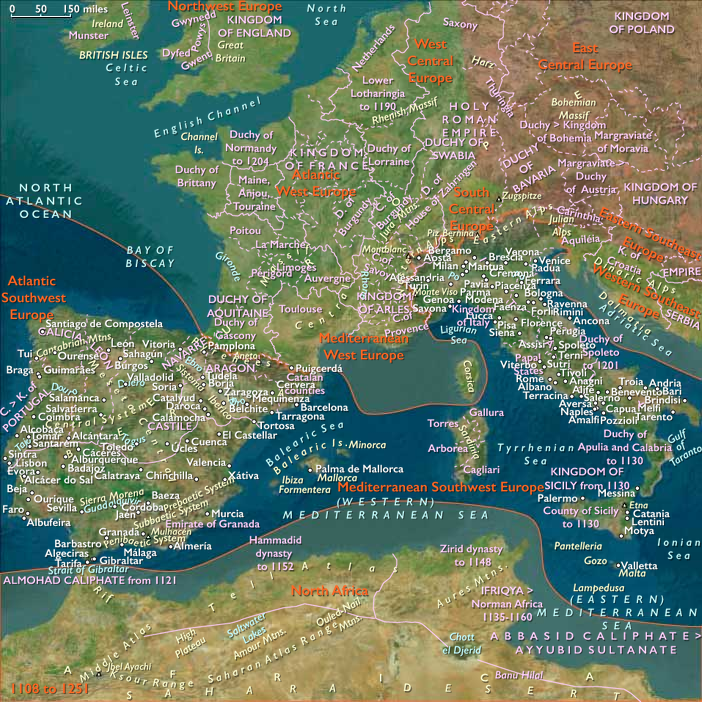
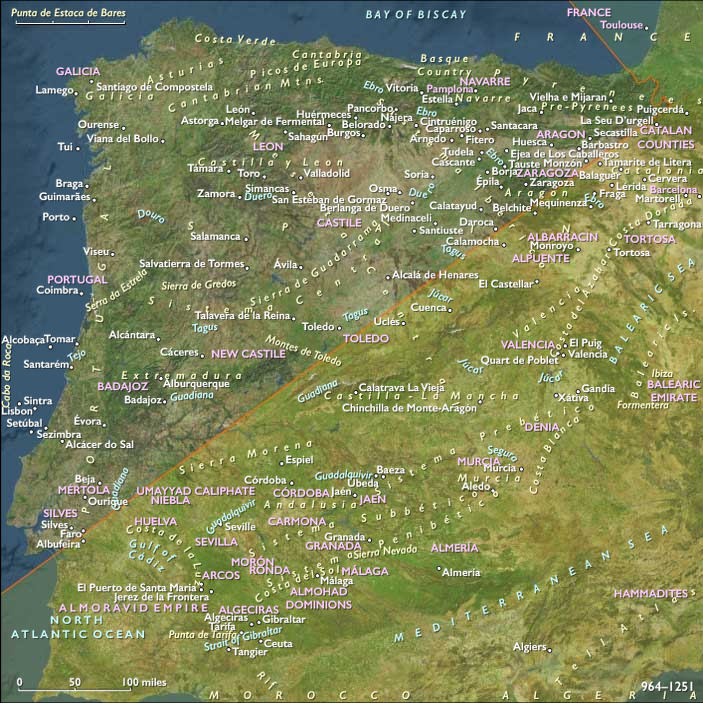
Between 1132 and 1143 CE, Atlantic Southwest Europe—including Galicia, northern and central Portugal, Asturias, Cantabria, and northern Spain south of the Franco-Spanish border (43.05548° N, 1.22924° W)—witnessed critical political realignments and the decisive emergence of distinct national and regional identities. Most notably, this era marked Portugal’s pivotal transition to political independence, culminating in the recognition of Afonso Henriques (1139–1185 CE) as the first King of Portugal following his decisive victory at the Battle of Ourique (1139 CE). Meanwhile, León-Castile stabilized politically under Alfonso VII (1126–1157 CE), decisively reinforcing Castilian and Leonese identities and territorial cohesion. In the north, Galicia continued to flourish culturally and economically, sustained by pilgrimage traditions and maritime commerce, while Aragón-Navarre, under the assertive rule of Alfonso I "the Battler" (1104–1134 CE) and subsequently his successor, Ramiro II (1134–1137 CE), navigated complex dynastic and territorial changes.
Political and Military Developments
Portuguese Independence and the Reign of Afonso Henriques
This era was transformative for Portugal. Following Countess Teresa’s deposition after the Battle of São Mamede (1128 CE), her son, Afonso Henriques, decisively established authority over the county. His military successes, notably his victory at the Battle of Ourique in 1139, decisively solidified his position, leading to his declaration as the first King of Portugal. In 1143, the Treaty of Zamora saw León-Castile formally recognizing Portuguese independence, definitively transitioning Portugal from autonomous county to independent kingdom.
Consolidation of Castilian and Leonese Stability under Alfonso VII
Following Queen Urraca’s death (1126 CE), Alfonso VII decisively stabilized León-Castile, strengthening internal governance structures, territorial administration, and frontier defenses. His proclamation as Imperator totius Hispaniae reinforced claims of supreme authority, bolstering Castilian and Leonese identities. Alfonso’s administrative cohesion decisively reinforced regional stability, political coherence, and frontier security.
Aragón-Navarre Succession and Territorial Shifts
After the death of Alfonso I "the Battler" (1134 CE), Aragón-Navarre experienced significant dynastic shifts. Alfonso’s successor, Ramiro II (1134–1137 CE), known as "the Monk," inherited a challenging political environment marked by internal instability. He ultimately passed power to his daughter, Petronilla, whose marriage to Ramon Berenguer IV, Count of Barcelona, decisively unified Aragón and Catalonia. Navarre separated, regaining independent governance under García Ramírez (1134–1150 CE), significantly altering Iberian territorial alignments.
Economic Developments
Regional Economic Stability and Growth
Agriculture remained robustly productive, significantly supported by advanced Moorish agricultural techniques and widespread adoption of improved irrigation and crop diversification. Economic prosperity was reinforced through vibrant mining industries (especially silver and gold in Galicia and Asturias), livestock husbandry, and flourishing artisanal crafts, decisively supporting regional stability and population growth.
Expanded Maritime and Pilgrimage Commerce
Portuguese coastal ports—particularly Braga, Porto, and Coimbra—expanded maritime trade networks, increasingly connecting with northern European markets. Galicia’s maritime commerce through ports like A Coruña also flourished, significantly reinforcing regional economic vitality. Santiago de Compostela’s pilgrimage continued driving robust economic activity, hospitality industries, and cultural exchanges, decisively shaping Galicia’s economic resilience and regional prominence.
Cultural and Religious Developments
Galician Cultural Continuity and Santiago’s Prominence
Galicia maintained its cultural and spiritual prominence, decisively supported by Santiago de Compostela’s continuing pilgrimage significance. Ecclesiastical institutions fostered substantial architectural investment, scholarly pursuits, and cultural activity, reinforcing Galicia’s distinctive cultural identity and resilience.
Monastic Scholarship and Cluniac Influence
Monastic communities continued vibrant intellectual traditions, manuscript preservation, agricultural innovation, and scholarly endeavors. Cluniac reform ideals remained influential, strengthening ecclesiastical discipline, liturgical uniformity, and closer ties with Rome, significantly shaping Iberian Christian identity.
Cultural Syncretism and Iberian Traditions
Orthodox Christianity continued integrating indigenous Celtic and Iberian cultural traditions, particularly evident in rural Galicia and northern Portugal. This cultural syncretism decisively reinforced distinctive regional identities, social cohesion, and cultural continuity.
Civic Identity and Governance
Emergence of Portuguese National Identity
Under King Afonso Henriques, Portuguese national identity decisively emerged. His effective governance significantly consolidated territorial integrity, administrative autonomy, and civic identity, laying enduring foundations for Portugal’s sovereignty and national cohesion.
Consolidated Castilian and Leonese Governance
Under Alfonso VII, León-Castile decisively stabilized, reinforcing clearly defined regional identities (Castilian and Leonese) within strengthened administrative structures. Territorial coherence, frontier governance, and regional civic identity significantly shaped Iberian political stability and territorial integrity.
Aragónese-Catalonian Unification and Navarrese Autonomy
Dynastic transitions after Alfonso I’s death reshaped Aragón and Navarre’s governance. Aragón unified with Catalonia through Petronilla’s marriage to Ramon Berenguer IV, significantly influencing regional governance stability. Navarre’s regained independence under García Ramírez decisively preserved its regional autonomy, governance stability, and distinct identity.
Notable Regional Groups and Settlements
-
Portuguese: Decisively established as a distinct national identity, under King Afonso Henriques, advancing decisively toward recognized independence and sovereignty.
-
Castilians and Leonese: Solidified as distinct regional identities, significantly shaping governance stability and territorial coherence under Alfonso VII’s rule.
-
Galicians: Continued flourishing culturally and economically, decisively reinforced by Santiago’s international pilgrimage prominence and maritime commerce.
-
Basques (Navarre): Maintained resilient governance stability, regional identity, and political coherence amid broader Iberian shifts, significantly shaping regional diplomacy and territorial autonomy.
Long-Term Significance and Legacy
Between 1132 and 1143 CE, Atlantic Southwest Europe:
-
Witnessed the definitive establishment of Portuguese independence under King Afonso Henriques, decisively reshaping regional identities, political structures, and Iberian geopolitics.
-
Achieved decisive stabilization and territorial cohesion within León-Castile under Alfonso VII, solidifying distinct Castilian and Leonese identities and administrative coherence.
-
Navigated complex dynastic transitions within Aragón-Navarre, significantly reshaping northern Iberian territorial boundaries and regional alliances.
-
Sustained robust economic prosperity, pilgrimage-driven commerce, cultural vitality, and local governance, significantly influencing the region’s medieval trajectory and historical legacy.
This critical era decisively shaped regional and national identities, territorial stability, and cultural resilience, profoundly influencing Atlantic Southwest Europe’s enduring medieval trajectory and historical significance.
People
- Afonso I of Portugal
- Alfonso VII of León and Castile
- Alfonso the Battler
- García Ramírez of Navarre
- Peter I of Aragon and Navarre
- Petronilla of Aragon
- Ramiro II of Aragon
- Ramon Berenguer IV
- Theresa
- Urraca of Zamora
Groups
- Moors
- Galicia, Kingdom of
- Christianity, Chalcedonian
- Islam
- al-Andalus (Andalusia), Muslim-ruled
- Portuguese people
- Navarre, Kingdom of
- Basque people
- León, Kingdom of
- Castillian people
- Aragón, Kingdom of
- Castile, Kingdom of
- Almoravid dynasty
- Galicians
- Leonese people
- Portugal, Burgundian (Alfonsine) Kingdom of
Topics
Commodoties
- Fish and game
- Weapons
- Oils, gums, resins, and waxes
- Grains and produce
- Fibers
- Textiles
- Ceramics
- Strategic metals
- Salt
- Beer, wine, and spirits
- Lumber
Subjects
- Commerce
- Architecture
- Engineering
- Labor and Service
- Conflict
- Mayhem
- Faith
- Government
- Scholarship
- Custom and Law
- Technology
- religious movement
Regions
Subregions
Years: 1132 - 1143
People
- Afonso I of Portugal
- Alfonso VII of León and Castile
- Alfonso the Battler
- García Ramírez of Navarre
- Peter I of Aragon and Navarre
- Petronilla of Aragon
- Ramiro II of Aragon
- Ramon Berenguer IV
- Theresa
- Urraca of Zamora
Groups
- Moors
- Galicia, Kingdom of
- Christianity, Chalcedonian
- Islam
- al-Andalus (Andalusia), Muslim-ruled
- Portuguese people
- Navarre, Kingdom of
- Basque people
- León, Kingdom of
- Castillian people
- Aragón, Kingdom of
- Castile, Kingdom of
- Almoravid dynasty
- Galicians
- Leonese people
- Portugal, Burgundian (Alfonsine) Kingdom of
Topics
Commodoties
- Fish and game
- Weapons
- Oils, gums, resins, and waxes
- Grains and produce
- Fibers
- Textiles
- Ceramics
- Strategic metals
- Salt
- Beer, wine, and spirits
- Lumber
Subjects
- Commerce
- Architecture
- Engineering
- Labor and Service
- Conflict
- Mayhem
- Faith
- Government
- Scholarship
- Custom and Law
- Technology
- religious movement
Regions
Subregions