
Atlantic Southwest Europe (1096–1107 CE): Consolidation of …
Years: 1096 - 1107
Atlantic Southwest Europe (1096–1107 CE): Consolidation of Portuguese Autonomy, Alfonso VI’s Late Reign, and Regional Stabilization
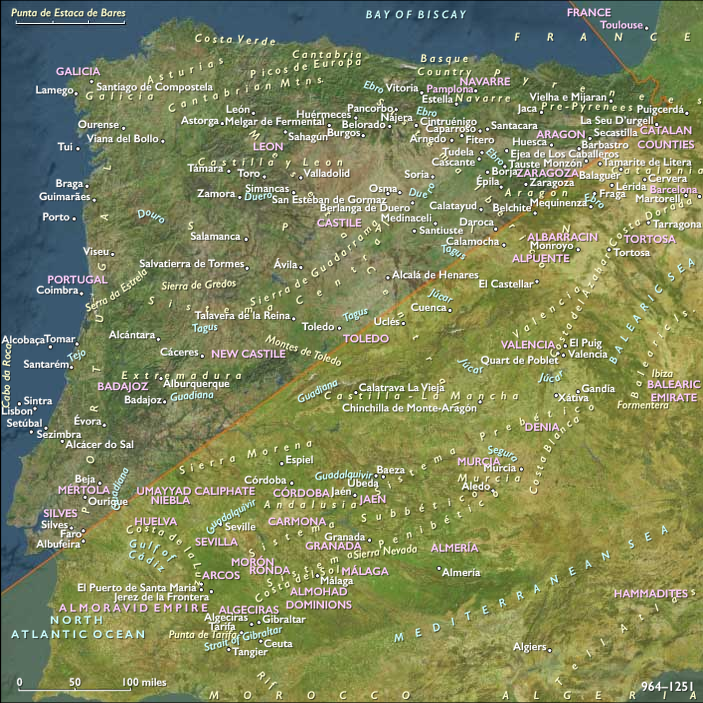
Between 1096 and 1107 CE, Atlantic Southwest Europe—including Galicia, northern and central Portugal, Asturias, Cantabria, and northern Spain south of the Franco-Spanish border (43.05548° N, 1.22924° W)—experienced significant political stabilization, territorial consolidation, and sustained economic prosperity. In the Kingdom of León-Castile, the latter reign of Alfonso VI (1072–1109 CE) focused on reinforcing administrative structures and securing territorial gains, especially in the critical frontier areas. In Portugal, Raymond of Burgundy (1093–1107 CE) decisively strengthened regional autonomy, significantly revitalizing local governance and laying enduring foundations for future sovereignty. Concurrently, the Navarre-Aragón union, governed by Peter I (1094–1104 CE) and later by Alfonso I "the Battler" (1104–1134 CE), maintained regional stability amid broader Iberian complexities, preserving internal cohesion and identity.
Political and Military Developments
Alfonso VI’s Territorial Consolidation and Late Reign Stability
In his later years, Alfonso VI concentrated on consolidating extensive territorial acquisitions, notably maintaining the strategic city of Toledo. He reinforced administrative efficiency, frontier security, and territorial repopulation along the Duero and Tagus rivers. Although his ambitious southern advances slowed, Alfonso’s rule continued providing essential political stability, profoundly shaping regional governance and territorial integrity.
Strengthening of Portuguese Autonomy under Raymond of Burgundy
Count Raymond of Burgundy significantly consolidated Portuguese autonomy during his tenure, effectively fortifying frontier defenses, administrative structures, and local governance. His capable administration notably stabilized Portuguese regional identity, territory, and civic governance, laying essential groundwork for future Portuguese independence. Raymond’s death in 1107 marked a transitional moment but left a robust foundation for the county’s future.
Navarre-Aragón Stability under Peter I and Alfonso I
Navarre-Aragón maintained stability under Peter I’s leadership, carefully navigating diplomatic complexities amid Castilian expansion and interactions with Islamic taifa kingdoms. Upon Peter’s death in 1104, his brother, Alfonso I ("the Battler"), succeeded him, ushering in a more assertive era. However, the region’s internal stability and governance cohesion remained intact, significantly influencing northern Iberian politics.
Economic Developments
Sustained Economic Prosperity
Regional economies continued flourishing, supported by stable agriculture (grain, vineyards, olives), livestock husbandry, artisanal crafts, and mining activities, especially precious metals from Galicia and Asturias. Stable political conditions reinforced economic growth, frontier repopulation, and territorial integration efforts.
Continued Expansion of Maritime and Pilgrimage Commerce
Coastal settlements, particularly Bracara Augusta (Braga) and smaller northern Portuguese ports, expanded vibrant maritime trade networks, significantly enhancing regional connections with Atlantic and Mediterranean markets. The pilgrimage routes to Santiago de Compostela further supported robust commercial activities, strengthening economic resilience and regional prosperity.
Cultural and Religious Developments
Santiago de Compostela’s Continued Prominence
Pilgrimage activity to Santiago de Compostela remained robust, consolidating its role as a leading European spiritual and cultural center. The city’s ecclesiastical authority, economic prosperity, and cultural exchanges were strengthened significantly by ongoing pilgrimage influx, profoundly shaping regional identity and cultural prominence.
Ecclesiastical Authority and Community Stability
Influential bishoprics—including Braga, Lugo, Asturica Augusta, and Santiago de Compostela—provided strong local governance, moral authority, and educational leadership. Their ongoing influence significantly reinforced community stability, regional cohesion, and cultural continuity.
Monastic Intellectual Vitality
Monastic communities actively maintained scholarly traditions, manuscript preservation, agricultural innovation, and intellectual pursuits. Their sustained cultural and educational roles significantly preserved regional historical heritage and cultural resilience.
Enduring Cultural Syncretism
Integration of orthodox Christianity with indigenous Celtic and Iberian traditions remained strong, particularly in rural Galicia, Asturias, and northern Portugal. This cultural fusion significantly reinforced regional identity, cultural distinctiveness, and social resilience during political stabilization.
Civic Identity and Governance
Solidified León-Castile Governance Structures
Under Alfonso VI’s later rule, governance structures became increasingly stable, supported by effective local aristocratic and ecclesiastical cooperation. Territorial consolidation and repopulation notably strengthened regional civic identities, reinforcing political cohesion and territorial integrity.
Portuguese Regional Identity and Stability
Raymond of Burgundy’s effective administration decisively consolidated Portuguese autonomy, territorial cohesion, and administrative structures, significantly shaping civic identity and governance stability. His capable governance laid critical groundwork for Portugal’s future national sovereignty and regional cohesion.
Stable Governance in Navarre-Aragón
The Navarre-Aragón union maintained territorial integrity, stable local governance, and resilient civic identity under Peter I and subsequently Alfonso I "the Battler." This political stability preserved regional autonomy and diplomatic maneuverability amid broader Iberian political dynamics.
Notable Tribal Groups and Settlements
-
Astures and Cantabri: Continued providing critical frontier security, governance stability, and regional cohesion, significantly supporting León-Castile’s territorial consolidation and political stability.
-
Galicians and Lusitanians: Played pivotal roles in maintaining economic prosperity, cultural vitality, and localized governance stability, notably reinforcing Santiago’s prominence and Portuguese territorial autonomy.
-
Basques (Navarre): Maintained resilient regional identity and internal cohesion amid Navarre-Aragón political integration, significantly shaping regional governance structures and cultural continuity.
Long-Term Significance and Legacy
Between 1096 and 1107 CE, Atlantic Southwest Europe:
-
Experienced significant political consolidation and territorial stabilization under Alfonso VI’s late reign, decisively reshaping Iberian political structures and territorial cohesion.
-
Achieved decisive strengthening of Portuguese regional autonomy and governance under Raymond of Burgundy, laying essential foundations for future Portuguese national sovereignty.
-
Preserved stable governance and regional autonomy within Navarre-Aragón, navigating diplomatic complexities and preserving internal cohesion.
-
Continued economic prosperity, pilgrimage traditions, ecclesiastical authority, and cultural resilience, significantly shaping the medieval trajectory and enduring legacy of the region.
This decisive era consolidated regional political stability, strengthened civic identities, and reinforced economic resilience, profoundly influencing Atlantic Southwest Europe’s historical trajectory and lasting medieval legacy.
People
- Alfonso VI of León and Castile
- Alfonso the Battler
- Peter I of Aragon and Navarre
- Raymond of Burgundy
Groups
- Polytheism (“paganism”)
- Lusitanians, or Lusitani
- Gallaeci
- Cantabri (Celtic tribe)
- Astures (Celtic tribe)
- Moors
- Galicia, Kingdom of
- Christianity, Chalcedonian
- Islam
- al-Andalus (Andalusia), Muslim-ruled
- Navarre, Kingdom of
- Basque people
- León, Kingdom of
- Aragón, Kingdom of
- Castile, Kingdom of
- Almoravid dynasty
Topics
Commodoties
- Fish and game
- Weapons
- Oils, gums, resins, and waxes
- Grains and produce
- Fibers
- Textiles
- Ceramics
- Strategic metals
- Salt
- Beer, wine, and spirits
- Lumber
Subjects
- Commerce
- Architecture
- Engineering
- Labor and Service
- Conflict
- Mayhem
- Faith
- Government
- Scholarship
- Custom and Law
- Technology
- religious movement
Regions

Subregions
Years: 1096 - 1107
People
- Alfonso VI of León and Castile
- Alfonso the Battler
- Peter I of Aragon and Navarre
- Raymond of Burgundy
Groups
- Polytheism (“paganism”)
- Lusitanians, or Lusitani
- Gallaeci
- Cantabri (Celtic tribe)
- Astures (Celtic tribe)
- Moors
- Galicia, Kingdom of
- Christianity, Chalcedonian
- Islam
- al-Andalus (Andalusia), Muslim-ruled
- Navarre, Kingdom of
- Basque people
- León, Kingdom of
- Aragón, Kingdom of
- Castile, Kingdom of
- Almoravid dynasty
Topics
Commodoties
- Fish and game
- Weapons
- Oils, gums, resins, and waxes
- Grains and produce
- Fibers
- Textiles
- Ceramics
- Strategic metals
- Salt
- Beer, wine, and spirits
- Lumber
Subjects
- Commerce
- Architecture
- Engineering
- Labor and Service
- Conflict
- Mayhem
- Faith
- Government
- Scholarship
- Custom and Law
- Technology
- religious movement
Regions
Subregions