
Atlantic Southwest Europe (1024–1035 CE): Sancho III’s …
Years: 1024 - 1035
Atlantic Southwest Europe (1024–1035 CE): Sancho III’s Dominance, León’s Recovery, and the Strengthening of Portuguese Autonomy
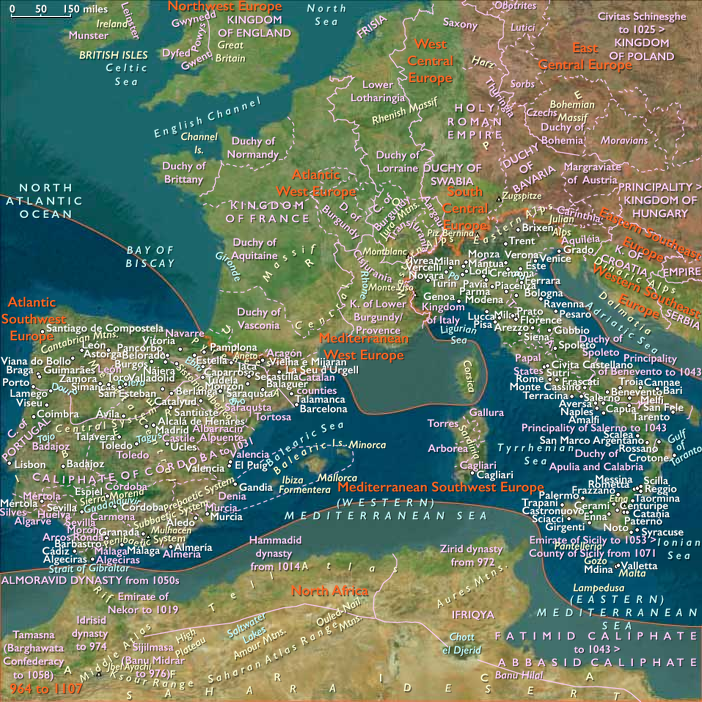
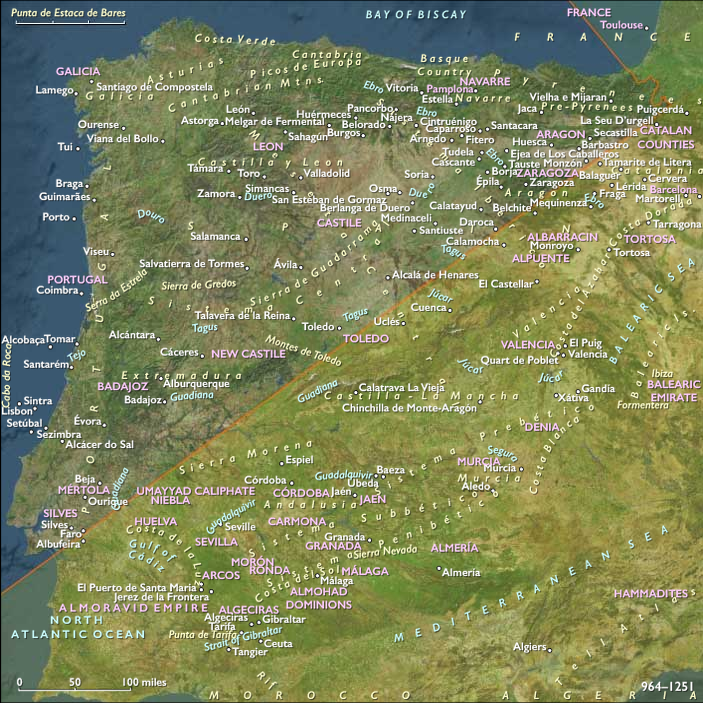
Between 1024 and 1035 CE, Atlantic Southwest Europe—including Galicia, northern and central Portugal, Asturias, Cantabria, and northern Spain south of the Franco-Spanish border (43.05548° N, 1.22924° W)—witnessed significant political realignments, territorial consolidations, and continued economic prosperity. This era was dominated by the expansive influence of Sancho III Garcés ("the Great") of Pamplona (1004–1035 CE), who became the most powerful ruler in Christian Iberia, significantly influencing León, Castile, and Portugal. Meanwhile, Alfonso V of León (999–1028 CE) and his successor Bermudo III (1028–1037 CE) worked diligently to strengthen royal authority and restore political cohesion after earlier instabilities. The County of Portugal under Nuno Alvites (1015–1028 CE) and subsequently Ilduara Mendes and her husband, Count Nuño Menéndez (1028–1050 CE), continued consolidating local autonomy and administrative effectiveness, laying foundations for Portugal’s future independence.
Political and Military Developments
Sancho III’s Expansion and Dominance
Sancho III “the Great” of Pamplona significantly expanded his territorial and diplomatic influence across northern Iberia during this period. Through strategic marriages and skillful alliances, he effectively extended his influence into León, Castile, and beyond the Pyrenees. By 1030, Sancho III had become Iberia’s preeminent Christian ruler, overseeing a substantial political federation that encompassed large territories of the Atlantic Southwest, reshaping regional power dynamics and setting the stage for future political entities.
Leónese Restoration under Alfonso V and Bermudo III
In León, Alfonso V continued strengthening royal governance until his death in 1028 CE. His successor, Bermudo III (1028–1037 CE), inherited a kingdom that was politically improved yet challenged by Pamplona’s dominance. Bermudo III strove to reinforce frontier defenses, local governance structures, and royal authority, although Pamplona’s ascendancy complicated León’s internal stability and territorial sovereignty.
Consolidation of Portuguese Autonomy
The County of Portugal experienced continued stability and local governance consolidation under Nuno Alvites (1015–1028 CE). After his death in 1028, his widow, Ilduara Mendes, and her second husband, Nuño Menéndez (1028–1050 CE), effectively governed the county. Their capable leadership maintained Portuguese territorial integrity, administrative efficiency, and robust frontier defense, further reinforcing Portuguese regional cohesion and identity.
Legacy of Sancho III’s Death (1035 CE)
Sancho III’s death in 1035 profoundly impacted Iberian politics. His vast territories were divided among his sons, leading to significant political fragmentation but also setting foundational territorial boundaries for future kingdoms, notably Castile, Aragón, and Navarre. This fragmentation reshaped regional dynamics for subsequent decades.
Economic Developments
Prosperous Regional Economies
During this period, economic prosperity continued robustly, supported by villa-based agriculture (grain, vineyards, olives), artisanal production, mining (gold and silver in Galicia and Asturias), and livestock husbandry. The region’s economic stability underpinned political resilience and territorial recovery.
Continued Maritime Commerce
Coastal settlements, notably Bracara Augusta (Braga) and numerous ports in Galicia and northern Portugal, sustained vibrant maritime trade with Atlantic and Mediterranean markets. Steady commerce significantly supported regional wealth, strengthening economic connections with broader European trade networks.
Cultural and Religious Developments
Flourishing of Santiago de Compostela
Pilgrimage to Santiago de Compostela continued expanding significantly, solidifying its reputation as one of Europe’s primary pilgrimage destinations. Increased pilgrimage activity profoundly influenced regional economics, cultural exchanges, and spiritual life, bolstering regional cohesion and identity.
Ecclesiastical Leadership and Stability
Bishoprics—especially Braga, Lugo, Asturica Augusta, and Santiago de Compostela—continued providing robust moral authority, local governance, and educational leadership. Ecclesiastical institutions reinforced social cohesion, political stability, and regional cultural identity.
Monastic Scholarship and Cultural Continuity
Monastic communities remained vibrant, preserving scholarly traditions, manuscript culture, agricultural innovations, and intellectual leadership. Their cultural and educational roles significantly reinforced regional continuity, intellectual resilience, and historical heritage.
Persistent Syncretic Traditions
Integration of orthodox Christianity with indigenous Celtic and Iberian traditions persisted robustly, especially in rural Galicia, Asturias, and northern Portugal, reinforcing regional identities and cultural resilience.
Civic Identity and Governance
Decentralization and Consolidation under Sancho III
Sancho III’s dominance led to significant decentralization, with local and regional autonomy strongly reinforced under his overarching authority. Civic identities became distinctly regionalized, laying foundations for the eventual emergence of separate Iberian kingdoms.
Continued Leónese Centralization and Local Autonomy
Under Bermudo III, León struggled yet persisted in reinforcing local governance structures, frontier defenses, and royal administrative order, maintaining regional stability amid broader Iberian political challenges.
Strengthened Portuguese Regional Identity
The County of Portugal firmly solidified administrative autonomy, local governance, and cohesive regional identity under the effective leadership of Ilduara Mendes and Nuño Menéndez, laying critical foundations for its future national sovereignty.
Notable Tribal Groups and Settlements
-
Astures and Cantabri: Provided critical military strength, local governance stability, and regional cohesion, decisively shaping León’s frontier security and governance.
-
Galicians and Lusitanians: Contributed significantly to regional economic prosperity, cultural resilience, and local autonomy, underpinning Portuguese territorial integrity and Santiago’s prominence.
-
Basques (Pamplona): Firmly established political autonomy, territorial dominance, and diplomatic strength under Sancho III, decisively influencing broader Iberian political realignments.
Long-Term Significance and Legacy
Between 1024 and 1035 CE, Atlantic Southwest Europe:
-
Experienced transformative political realignment under Sancho III “the Great,” profoundly reshaping Iberian political and territorial dynamics, and setting the stage for future kingdoms.
-
Continued Leónese political and administrative restoration, securing territorial integrity and governance stability despite regional challenges.
-
Strengthened Portuguese autonomy and regional identity, decisively influencing future Portuguese national emergence.
-
Sustained robust economic prosperity, pilgrimage traditions, cultural vitality, and ecclesiastical leadership, significantly shaping medieval regional trajectory.
This decisive era solidified political structures, regional identities, and economic resilience, profoundly shaping Atlantic Southwest Europe’s long-term medieval trajectory and historical legacy.
People
Groups
- Polytheism (“paganism”)
- Lusitanians, or Lusitani
- Gallaeci
- Cantabri (Celtic tribe)
- Astures (Celtic tribe)
- Moors
- Christianity, Chalcedonian
- Islam
- al-Andalus (Andalusia), Muslim-ruled
- Navarre, Kingdom of
- Basque people
- León, Kingdom of
- Córdoba, (Umayyad) Caliphate of
- Castile, County of
- Castile, Kingdom of
Topics
Commodoties
- Fish and game
- Weapons
- Oils, gums, resins, and waxes
- Grains and produce
- Fibers
- Textiles
- Ceramics
- Strategic metals
- Salt
- Beer, wine, and spirits
- Lumber
Subjects
- Commerce
- Architecture
- Engineering
- Labor and Service
- Conflict
- Mayhem
- Faith
- Government
- Scholarship
- Custom and Law
- Technology
- religious movement
Regions
Subregions
Years: 1024 - 1035
People
Groups
- Polytheism (“paganism”)
- Lusitanians, or Lusitani
- Gallaeci
- Cantabri (Celtic tribe)
- Astures (Celtic tribe)
- Moors
- Christianity, Chalcedonian
- Islam
- al-Andalus (Andalusia), Muslim-ruled
- Navarre, Kingdom of
- Basque people
- León, Kingdom of
- Córdoba, (Umayyad) Caliphate of
- Castile, County of
- Castile, Kingdom of
Topics
Commodoties
- Fish and game
- Weapons
- Oils, gums, resins, and waxes
- Grains and produce
- Fibers
- Textiles
- Ceramics
- Strategic metals
- Salt
- Beer, wine, and spirits
- Lumber
Subjects
- Commerce
- Architecture
- Engineering
- Labor and Service
- Conflict
- Mayhem
- Faith
- Government
- Scholarship
- Custom and Law
- Technology
- religious movement
Regions
Subregions