
Atlantic Southwest Europe (1012–1023 CE): Leónese Restoration, …
Years: 1012 - 1023
Atlantic Southwest Europe (1012–1023 CE): Leónese Restoration, Pamplona’s Ascendancy, and Portuguese Consolidation
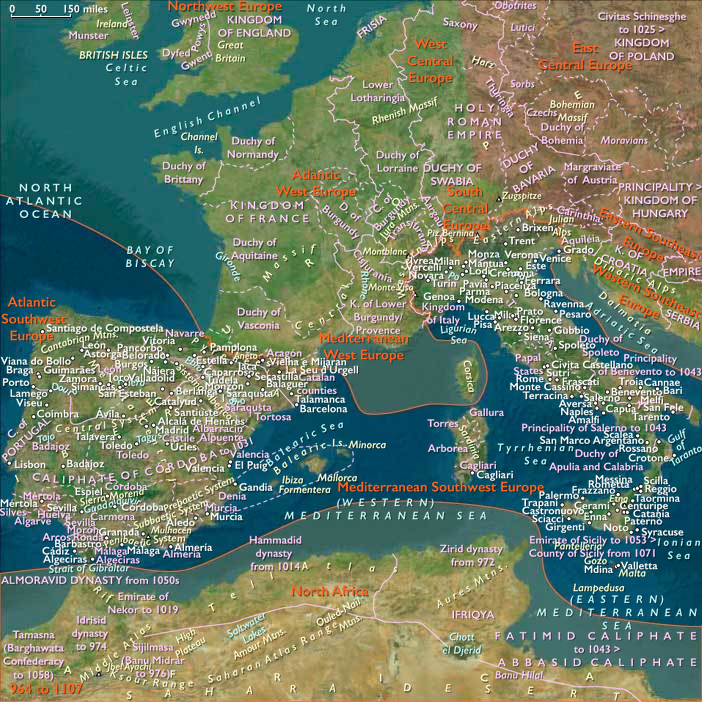
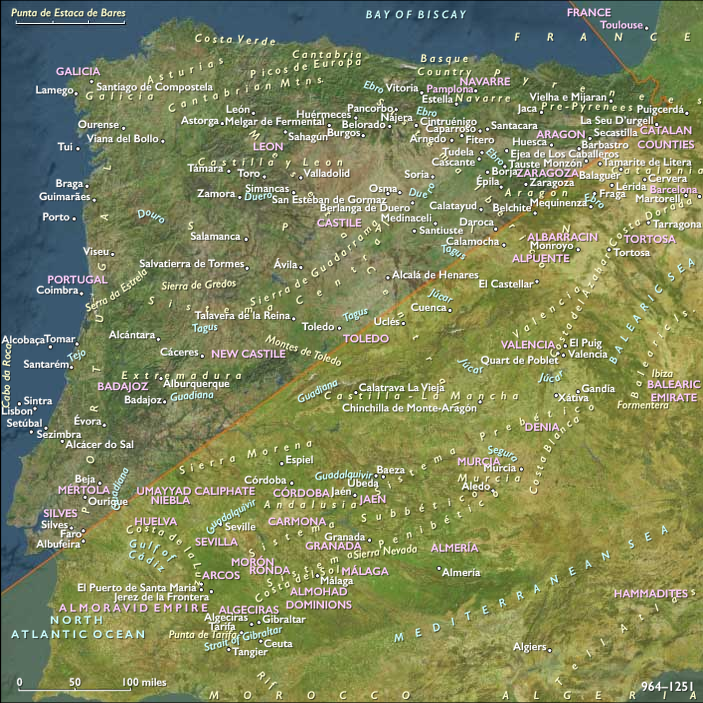
Between 1012 and 1023 CE, Atlantic Southwest Europe—including Galicia, northern and central Portugal, Asturias, Cantabria, and northern Spain south of the Franco-Spanish border (43.05548° N, 1.22924° W)—continued its steady recovery and political reorganization following the decline of Almanzor’s Córdoba. Under King Alfonso V of León (999–1028 CE), the Kingdom of León revitalized governance, frontier defenses, and administrative structures, laying a strong foundation for future stability. Concurrently, the Kingdom of Pamplona under Sancho III Garcés "the Great" (1004–1035 CE) achieved unprecedented political strength and territorial influence, marking a decisive period in Basque regional ascendancy. Meanwhile, the County of Portugal solidified its autonomy and territorial cohesion under Alvito Nunes (1008–1015 CE) and his successor Nuno Alvites (1015–1028 CE), further strengthening its distinct identity. Collectively, these dynamics significantly reshaped the political landscape, economic resilience, and cultural vibrancy of the region.
Political and Military Developments
Leónese Consolidation under Alfonso V
King Alfonso V systematically reestablished centralized royal authority in León, strategically reinforcing frontier defenses along the Duero River and revitalizing administrative structures weakened by earlier instability. The promulgation of the Fuero de León (1017 CE), a seminal municipal charter codifying laws, privileges, and administrative organization, greatly improved governance, fostering lasting civic stability and regional order.
Pamplona’s Golden Era under Sancho III Garcés
Sancho III “the Great” notably expanded Pamplona’s territorial reach and diplomatic influence, significantly altering Iberian power dynamics. Through skillful alliances and strategic marriages, he extended his influence beyond traditional Basque territories into Castile, León, and the Pyrenees. Pamplona emerged as a prominent power during this period, asserting dominance and influencing future regional political realignments.
Portuguese County Strengthens Autonomy
Under the leadership of Alvito Nunes (1008–1015 CE) and subsequently his son Nuno Alvites (1015–1028 CE), the County of Portugal reinforced territorial and administrative autonomy. Effective frontier governance, stable local leadership, and cohesive aristocratic management secured regional stability and further distinguished Portuguese identity, laying enduring foundations for its future independence.
Economic Developments
Sustained Economic Recovery and Growth
With increasing political stability, Atlantic Southwest Europe experienced robust economic revitalization. Agricultural productivity in villa-based systems (grain, vineyards, olives), artisanal industries, livestock husbandry, and mining activities—especially precious metals from Galicia and Asturias—flourished, underpinning steady regional prosperity.
Expansion of Maritime Trade
Coastal settlements such as Bracara Augusta (Braga) and numerous ports in Galicia and northern Portugal notably expanded maritime commerce. The region’s trade networks with Atlantic and Mediterranean markets strengthened significantly, accelerating economic recovery and establishing long-lasting commercial prosperity.
Cultural and Religious Developments
Santiago de Compostela’s Full Revival
Rebuilding and pilgrimage activity at Santiago de Compostela surged, fully restoring its reputation as a major European pilgrimage destination. Increased pilgrim traffic profoundly revitalized regional economies, intensified cultural exchanges, and solidified Santiago’s position as a crucial spiritual and cultural landmark.
Ecclesiastical Influence and Community Stability
Prominent bishoprics—including Braga, Lugo, Asturica Augusta, and Santiago de Compostela—continued providing critical local governance, moral authority, and educational leadership. Their influential roles significantly facilitated regional cohesion, community resilience, and cultural continuity.
Monastic Scholarly and Cultural Prosperity
Monastic communities thrived as centers of manuscript preservation, scholarly innovation, education, and agricultural improvement. Their vibrant intellectual activity and agricultural advancements decisively supported regional cultural heritage and resilience.
Enduring Cultural Syncretism
Integration of orthodox Christianity with local Celtic and Iberian traditions persisted robustly, particularly in rural Galicia, Asturias, and northern Portugal. This persistent syncretism reinforced distinct regional identities, strengthening social cohesion and cultural continuity during the era’s revitalization.
Civic Identity and Governance
Strengthened Leónese Civic Structure
Under Alfonso V, León’s administrative reforms—most notably the Fuero de León (1017 CE)—fortified civic identities, stabilizing royal governance while enhancing local autonomy. Strong municipal structures and improved royal authority significantly shaped regional civic stability.
Pamplona’s Decisive Regional Autonomy
Pamplona, under Sancho III “the Great,” established clear territorial coherence, centralized political governance, and robust diplomatic influence, significantly shaping Iberian political structures and civic identities for generations to follow.
Portuguese Regional Cohesion and Identity
The County of Portugal, under Alvito Nunes and Nuno Alvites, solidified local governance, frontier security, and regional autonomy, strengthening civic identity and decisively laying foundational structures for future Portuguese sovereignty and identity.
Notable Tribal Groups and Settlements
-
Astures and Cantabri: Continued providing essential military strength, political cohesion, and robust local governance, significantly supporting León’s revitalization.
-
Galicians and Lusitanians: Contributed decisively to regional economic growth, cultural revival, and strong local autonomy, underpinning Portuguese territorial stability and Santiago’s resurgence.
-
Basques (Pamplona): Under Sancho III “the Great,” firmly established political autonomy, territorial cohesion, and diplomatic prominence, decisively influencing Iberian regional politics.
Long-Term Significance and Legacy
Between 1012 and 1023 CE, Atlantic Southwest Europe:
-
Achieved decisive political restoration and administrative stability in León under Alfonso V, significantly enhancing regional governance structures.
-
Witnessed the ascendancy of Pamplona under Sancho III “the Great,” profoundly reshaping Iberian political dynamics and territorial balances.
-
Consolidated Portuguese autonomy and cohesion, laying critical foundations for future independence and distinct national identity.
-
Enjoyed significant economic revitalization, cultural flourishing, and ecclesiastical leadership, profoundly shaping the medieval trajectory of the region.
This transformative era decisively strengthened political authority, regional autonomy, cultural vitality, and economic prosperity in Atlantic Southwest Europe, leaving a profound legacy influencing subsequent Iberian historical developments.
People
Groups
- Polytheism (“paganism”)
- Lusitanians, or Lusitani
- Gallaeci
- Cantabri (Celtic tribe)
- Astures (Celtic tribe)
- Moors
- Christianity, Chalcedonian
- Islam
- al-Andalus (Andalusia), Muslim-ruled
- Navarre, Kingdom of
- Basque people
- Portugal, (first) County of
- León, Kingdom of
- Córdoba, (Umayyad) Caliphate of
- Castile, County of
Topics
Commodoties
- Fish and game
- Weapons
- Oils, gums, resins, and waxes
- Grains and produce
- Fibers
- Textiles
- Ceramics
- Strategic metals
- Salt
- Beer, wine, and spirits
- Lumber
Subjects
- Commerce
- Architecture
- Engineering
- Labor and Service
- Conflict
- Mayhem
- Faith
- Government
- Scholarship
- Custom and Law
- Technology
- religious movement
Regions
Subregions
Years: 1012 - 1023
People
Groups
- Polytheism (“paganism”)
- Lusitanians, or Lusitani
- Gallaeci
- Cantabri (Celtic tribe)
- Astures (Celtic tribe)
- Moors
- Christianity, Chalcedonian
- Islam
- al-Andalus (Andalusia), Muslim-ruled
- Navarre, Kingdom of
- Basque people
- Portugal, (first) County of
- León, Kingdom of
- Córdoba, (Umayyad) Caliphate of
- Castile, County of
Topics
Commodoties
- Fish and game
- Weapons
- Oils, gums, resins, and waxes
- Grains and produce
- Fibers
- Textiles
- Ceramics
- Strategic metals
- Salt
- Beer, wine, and spirits
- Lumber
Subjects
- Commerce
- Architecture
- Engineering
- Labor and Service
- Conflict
- Mayhem
- Faith
- Government
- Scholarship
- Custom and Law
- Technology
- religious movement
Regions
Subregions