
Athens, unlike other Mycenaean centers, such as …
Years: 909BCE - 898BCE
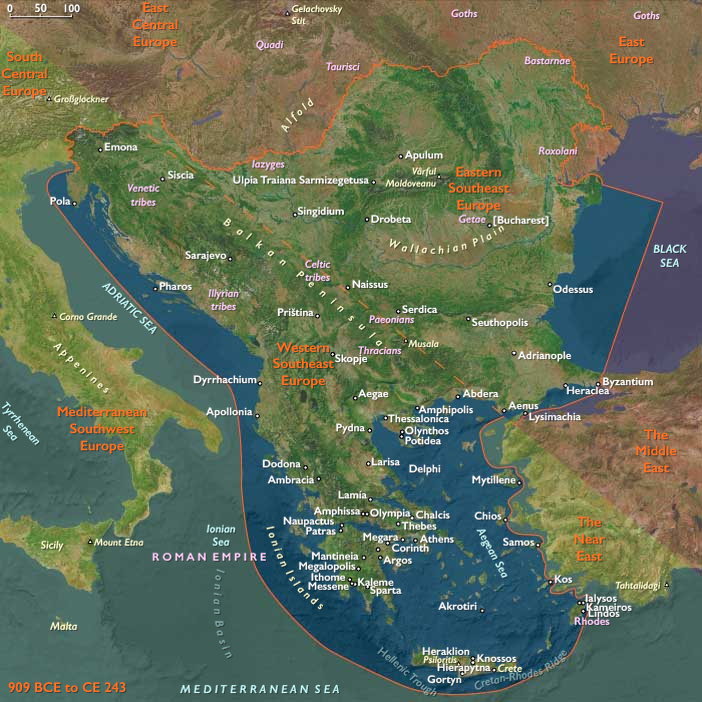
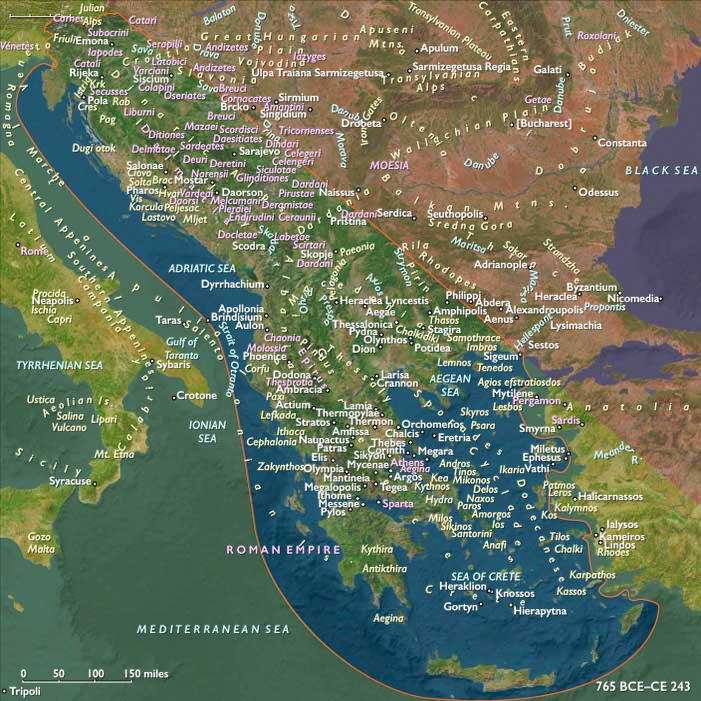
Athens, unlike other Mycenaean centers, such as Mycenae and Pylos, had not been not sacked and abandoned during the Greek Dark Ages, and the Athenians will forever maintain that they are "pure" Ionians with no Doric element.
Athens had lost most of its power, however, and probably dwindled to a small hill fortress once again.
Traces of Dorians appear only at the start of the Geometric period about 950 BCE.
This simple pottery decoration appears to be correlated with other changes in material culture, such as the introduction of iron weapons and alterations in burial practices from Mycenaean group burials in tholos tombs to individual burials and cremation.
These can certainly be associated with the historical Dorian settlers, such as those of Sparta in the tenth century BCE.
During the time of the so-called “Dorian Invasion” of the Peloponnesus around 1068 BCE, the Dorians had consulted the Delphic Oracle, who prophesied that their invasion would succeed as long as the king was not harmed.
The news of this prophecy, that only the death of an Athenian king would ensure the safety of Athens, had quickly found its way to the ears of King Codrus.
In devotion to his people, Codrus disguised himself as a peasant and made it to the vicinity of the Dorian encampment across the river, where he provoked a group of Dorian soldiers.
He was put to death in the quarrel, and the Dorians, realizing Codrus had been slain, decided to retreat in fear of their prophesied defeat.
In the aftermath of these events, no one thought himself worthy to succeed Codrus, the title of king was abolished, and that of archon, or chief magistrate, substituted for it.
The first such archon was Codrus' son, Medon.
Megacles, though probably legendary, was possibly an archon from 922 BCE to 892 BCE.
Locations
Groups
Topics
Commodoties
Subjects
Regions
Subregions
Years: 909BCE - 898BCE
Locations
Groups
Topics
Commodoties
Subjects
Regions
Subregions