
Athens is inhabited but not wealthy. …
Years: 1197BCE - 1054BCE
Athens is inhabited but not wealthy.
Although Athens shows indications of occupation in the Early and Middle Bronze ages (3000-1500 BCE), the earliest buildings date from the Late Bronze Age, particularly about 1200 BCE when the Acropolis is the citadel.
Around its top is built a massive wall of cyclopean masonry (a type of construction using huge blocks without mortar).
The construction of this wall probably marks the union of the twelve towns of Attica (the department in which Athens lies) under the leadership of Athens, an event traditionally ascribed to Theseus.
The palace of the king is in the area of the later Erechtheum (but almost no traces of it have been identified.)
The town, insofar as it is outside the Acropolis, lies to the south (where wells and slight remains of houses have been found).
The principal cemetery lies to the northwest (and several richly furnished chamber tombs and many smaller ones have been discovered in the area that will later become the Agora.)
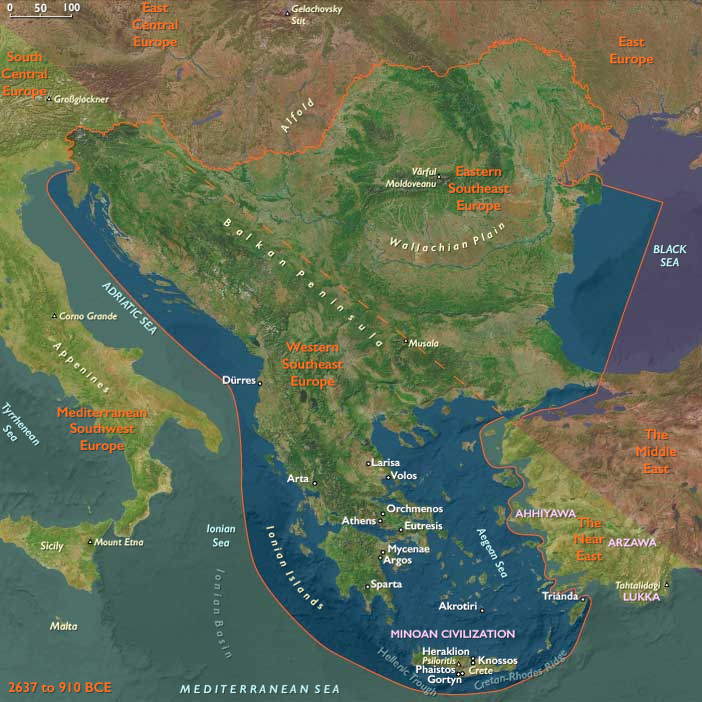
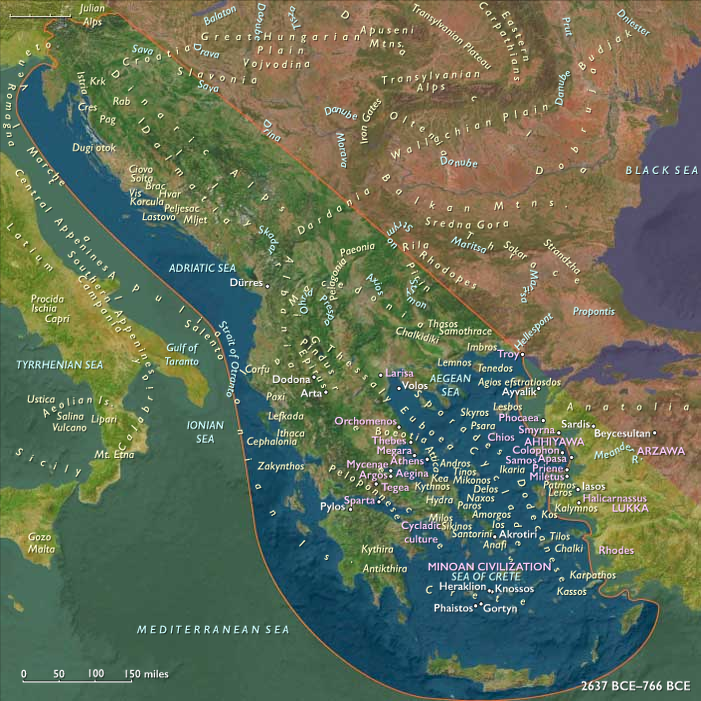
Whether through the strength of its walls, the valor of its citizens, or its geographical position away from the main route to the Peloponnesus, Athens seems to have weathered the Late Bronze and Early Iron ages, troubled times, better than other, more important centers.
Locations
Groups
Topics
Commodoties
Subjects
Regions
Subregions
Years: 1197BCE - 1054BCE
Locations
Groups
Topics
Commodoties
Subjects
Regions
Subregions