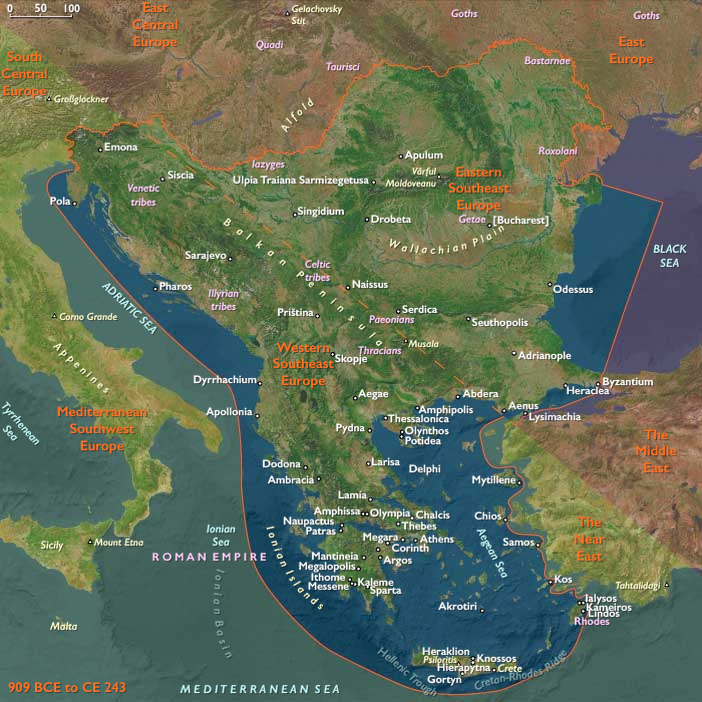
On the arrival of Pelopidas at Larissa, whence according to Diodorus, he dislodged the Macedonian garrison, Alexander of Pherae presents himself and offers submission.
When Pelopidas expresses indignation at the tales of Alexander's profligacy and cruelty, the tyrant takes alarm and flees.
These events appear to refer to the early part of the year 368 BCE.
Pelopidas in the summer of this year is again sent into Thessaly, in consequence of fresh complaints against Alexander.
Accompanied by Ismenias, he goes merely as a negotiator, without any military force, and is seized by Alexander and thrown into prison. (The scholar William Mitford suggested that Pelopidas was taken prisoner in battle, but the language of Demosthenes hardly supports such an inference.)
The Thebans send a large army into Thessaly to rescue Pelopidas, but they cannot keep the field against the superior cavalry of Alexander, who, aided by auxiliaries from Athens, pursues them with great slaughter.
The destruction of the whole Theban army is said to only have been averted by the ability of Epaminondas, who is serving in the campaign, but not as general.