
Athens, denied the use of Attica, draws …
Years: 411BCE - 411BCE
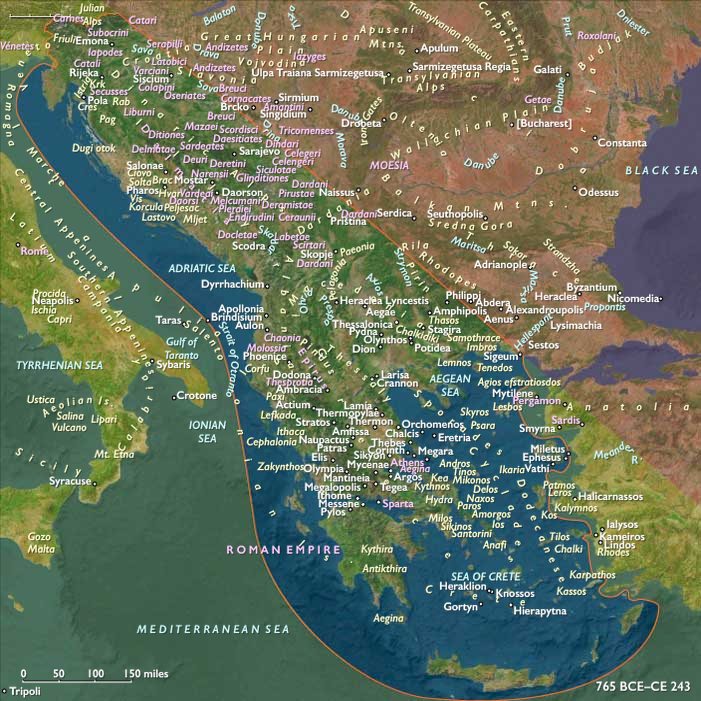
Athens, denied the use of Attica, draws more heavily on Euboea for food, a condition relevant to Euboea's revolt in 411.
Locations
People
Groups
- Ionians
- Dorians
- Aeolians
- Greece, classical
- Sicily, classical
- Italy, classical
- Sparta, Kingdom of
- Magna Graecia
- Syracuse, Corinthian city-state of
- Peloponnesian League (Spartan Alliance)
- Athenian Empire (Delian League)
Topics
- Iron Age Europe
- Iron Age Cold Epoch
- Classical antiquity
- Peloponnesian War, Second or Great
- Decelean War, or Ionian War
Commodoties
Subjects
Regions

Subregions
Related Events
Showing 10 events out of 65059 total
Years: 411BCE - 411BCE
Locations
People
Groups
- Ionians
- Dorians
- Aeolians
- Greece, classical
- Sicily, classical
- Italy, classical
- Sparta, Kingdom of
- Magna Graecia
- Syracuse, Corinthian city-state of
- Peloponnesian League (Spartan Alliance)
- Athenian Empire (Delian League)
Topics
- Iron Age Europe
- Iron Age Cold Epoch
- Classical antiquity
- Peloponnesian War, Second or Great
- Decelean War, or Ionian War
Commodoties
Subjects
Regions
Subregions