
The Prussian armies are gathered along the …
Years: 1866 - 1866
June
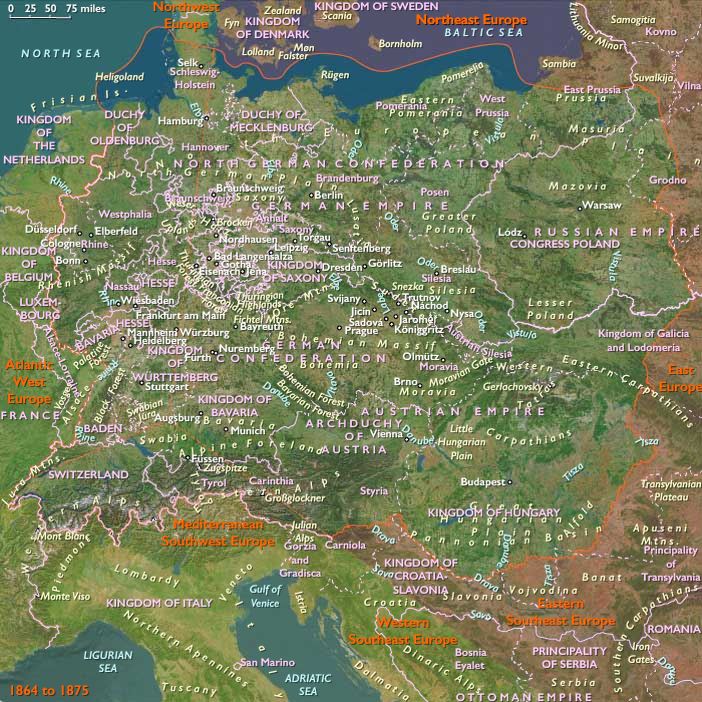
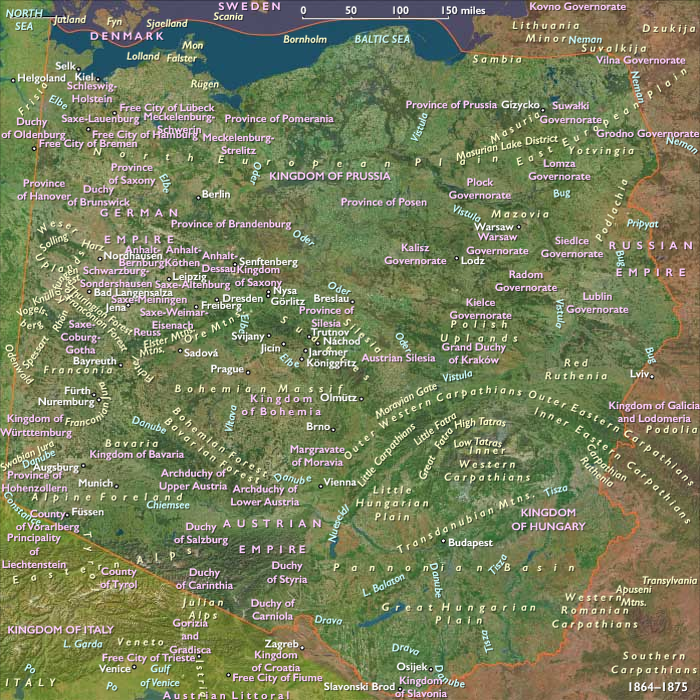
The Prussian armies are gathered along the Prussian border at the outset of the war in June: the Army of the Elbe under Karl Herwarth von Bittenfeld at Torgau, ...
Locations
People
Groups
- Germans
- Austria, Archduchy of
- Prussia, Kingdom of
- Russian Empire
- Austrian Empire
- Nassau, Duchy of
- Baden, Grand Duchy of
- Bavaria, Kingdom of
- Saxony, Kingdom of
- Württemberg, Kingdom of
- Hesse (-Darmstadt) and the Rhine, Grand Duchy of
- Hesse (-Kassel), Electorate of
- Hanover, Kingdom of
- Mecklenburg-Strelitz, Grand Duchy of
- German Confederation
- Brunswick, Duchy of
- Mecklenburg-Schwerin, Grand Duchy of
- Oldenburg, Grand Duchy of
- France, Second Empire of
- Italy, Kingdom of
Topics
- Austrian Revolution & Reaction: 1848-51
- German Revolutions: 1864-1875
- Austro-Prussian War (Seven Weeks War)
- Langensalza, Battle of
Subjects
Regions
Subregions
Related Events
Showing 10 events out of 13367 total
Years: 1866 - 1866
June
Locations
People
Groups
- Germans
- Austria, Archduchy of
- Prussia, Kingdom of
- Russian Empire
- Austrian Empire
- Nassau, Duchy of
- Baden, Grand Duchy of
- Bavaria, Kingdom of
- Saxony, Kingdom of
- Württemberg, Kingdom of
- Hesse (-Darmstadt) and the Rhine, Grand Duchy of
- Hesse (-Kassel), Electorate of
- Hanover, Kingdom of
- Mecklenburg-Strelitz, Grand Duchy of
- German Confederation
- Brunswick, Duchy of
- Mecklenburg-Schwerin, Grand Duchy of
- Oldenburg, Grand Duchy of
- France, Second Empire of
- Italy, Kingdom of
Topics
- Austrian Revolution & Reaction: 1848-51
- German Revolutions: 1864-1875
- Austro-Prussian War (Seven Weeks War)
- Langensalza, Battle of
Subjects
Regions
Subregions