
The cloistered emperor Toba dies in 1156, …
Years: 1156 - 1156
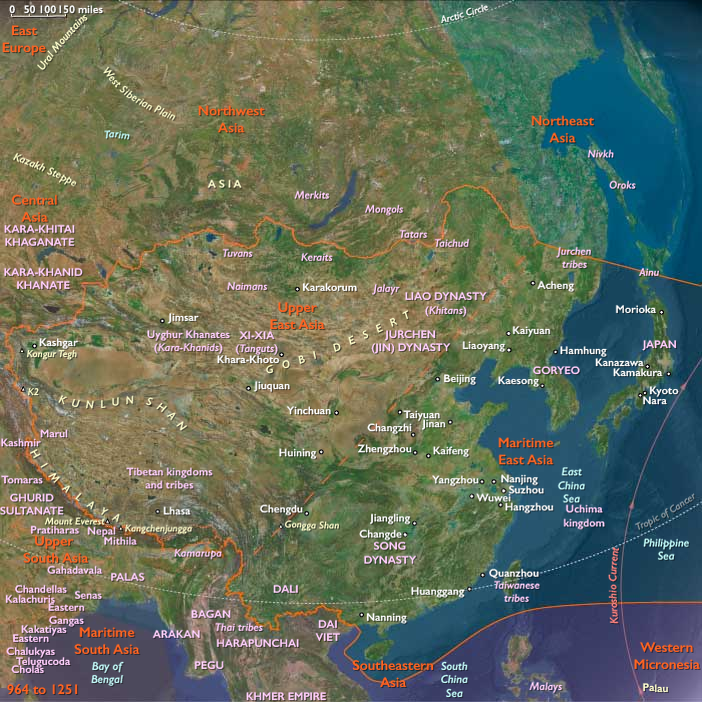
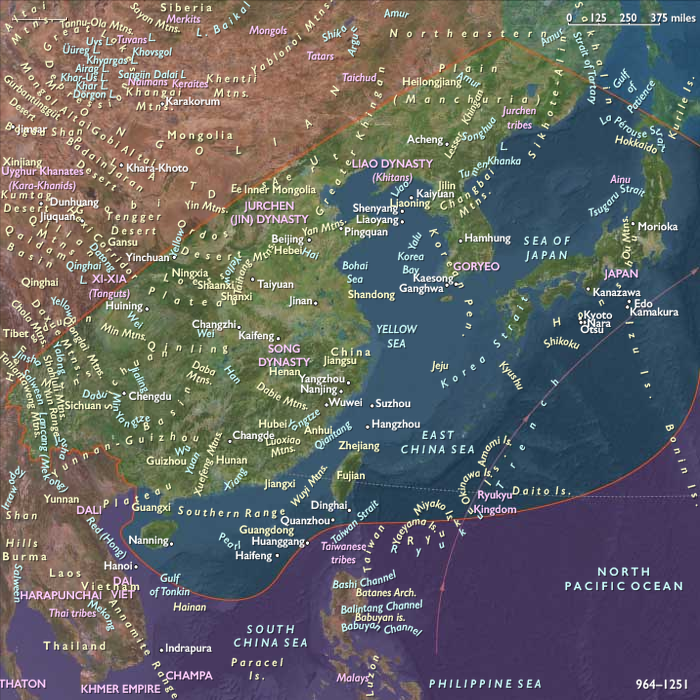
The cloistered emperor Toba dies in 1156, and his deposed eldest son Sutoku elects to leave the monastery and regain his place on the imperial throne, currently occupied by his twenty-eight-year-old brother Shirakawa II.
Two factions of the imperial family, one favoring Sutoku, the other favoring Shirakawa, turn to the powerful Minamoto and Taira families, rival samurai orbushi clans, for help.
To settle the court dispute, the samurai clans apply military force in an action known as the Hogen War, aiding the victory of Shirakawa and his adherents, who drive Sutoku into exile and kill most of his supporters.
Minamoto no Yoshitomo, along with Taira no Kiyomori, supports the Emperor Go-Shirakawa and Fujiwara no Tadamichi, while his father Minamoto no Tameyoshi, then head of the Minamoto clan, with his young son Minamoto no Tametomo and Taira no Tadamasa, sides with the retired Emperor Sutoku and Fujiwara no Yorinaga.
Minamotono Tameyoshi, although he is most famous for his involvement in the Hōgen Rebellion, is also said to have intervened in a number of other conflicts earlier in his life.
Around 1113, the ongoing rivalry between the warrior monks of Mii-dera and Enryaku-ji erupted into outright violence in the streets of Kyoto.
Though the palace guard mobilized quickly to protect the Emperor, it is said that Tameyoshi, with a handful of mounted samurai, drove the mobs away himself.
Upon being defeated in the Hōgen Rebellion, Tameyoshi takes the tonsure and is released into the custody of his son Minamoto no Yoshitomo, who then has him beheaded.
This is an unprecedented breaking of Buddhist values in Japan, yet no one in the court berates Yoshitomo for his actions at the time until after his death.
Minamoto no Yoshitomo becoes head of his clan after the death of his father and together with Taira no Kiyomori, succeeds in establishing the two samurai clans as major new political powers in Kyoto.
Locations
People
Groups
Topics
Commodoties
Subjects
Regions
Subregions
Related Events
Showing 10 events out of 48604 total
Years: 1156 - 1156
Locations
People
Groups
Topics
Commodoties
Subjects
Regions
Subregions