
Liu Bang—Emperor Gaozu of Han—had at the …
Years: 154BCE - 154BCE
Liu Bang—Emperor Gaozu of Han—had at the beginning of the Han dynasty created princely titles for many of his relatives in certain territories that accounted for between approximately one-third to one-half of the empire.
This had been an attempt to consolidate Liu family rule over the parts of China that were not ruled directly from the capital under the prefecture system.
These princes were still setting their own laws during the reign of Emperor Wen, but in addition they were minting their own coins (albeit with Emperor Wen's approval) and collecting their own taxes.
Many princes were effectively ignoring the imperial government's authority within their own principalities.
The rich principality of Wu was especially domineering hen Emperor Jing became emperor in 157 BCE.
Emperor Jing already had an inimical relationship with his cousin-once-removed Liu Pi, Prince of Wu, the nephew of his grandfather, Han founder Emperor Gaozu.
The principality of Wu enjoys abundant copper and salt supplies, among other natural resources.
Liu Pi's heir apparent, Lu Xian, had been on an official visit to the capital Chang'an when Emperor Jing was still Crown Prince Qi, and the two competed in a liubo board game.
During arguments over the game, Liu Xian had offended Crown Prince Qi, who threw the liubo board at him, which resulted in the death of the former.
Liu Pi hates Emperor Jing for causing the death of Lu Xian.
Emperor Jing's key advisor Chao Cuo had suggested that he cut down the sizes of the principalities to make them less threatening, using as excuses offenses that the princes had committed that had generally been ignored by Emperor Wen.
Chao had explicitly contemplated the possibility that Wu and other principalities might rebel, but had justified the action by asserting that if they were going to rebel, it would be better to let them rebel earlier than later when they might be more prepared.
Emperor Jing, in 154 BCE, thus orders the following punishments:
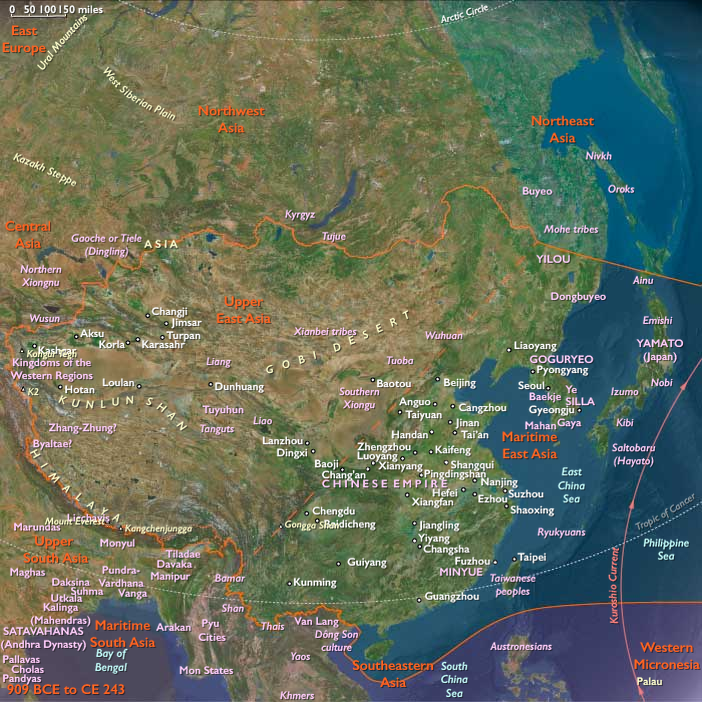
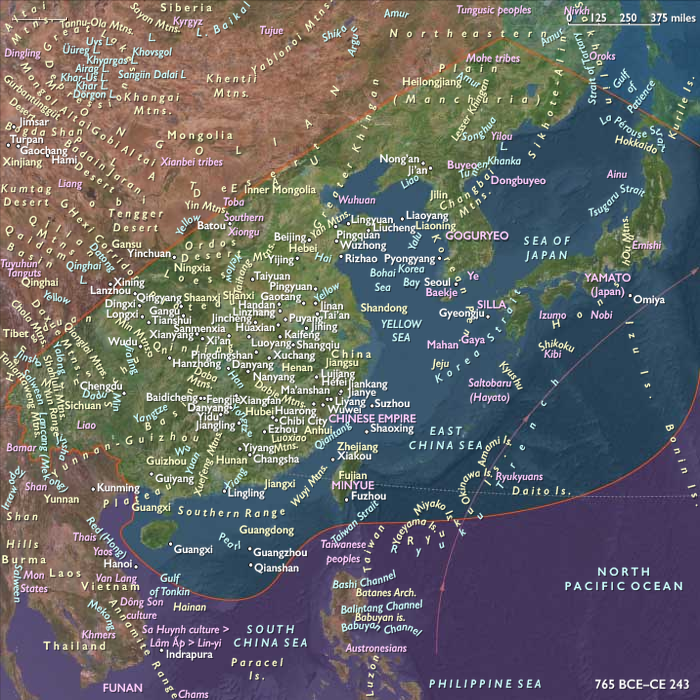
He carves out the prefecture of Donghai from the principality of Chu (modern northern Jiangsu and northern Anhui), based on Liu Wu, Prince of Chu, having had sexual relations during the mourning period for Empress Dowager Bo.
He carves out the prefecture of Changshan from the Principality of Zhao (modern central and southern Hebei), based on an unspecified offense.
He carves out six counties from the principality of Jiaoxi (roughly modern Weifang, Shandong), based on Liu Ang, the Prince of Jiaoxi, embezzling funds from the sales of titles intended for paying border patrol costs.
He carves out the prefectures of Huiji and Yuzhang from the Principality of Wu, based on various offenses by Liu Pi, the Prince of Wu.
In response to these actions, Liu Pi organizes a rebellion.
The seven actively participating princes are Liu Pi, Prince of Wu; Liu Wu, Prince of Chu; Liu Ang, Prince of Jiaoxi; Liu Xiongqu, Prince of Jiaodong (roughly modern Qingdao, Shandong); Liu Xian, Prince of Zichuan (roughly part of modern Weifang, Shandong); Liu Piguang, Prince of Jinan (roughly modern Jinan, Shandong); and Liu Sui, Prince of Zhao.
Two other principalities agree to join—Qi (modern central Shandong) and Jibei (modern northwestern Shandong)—but neither actually do.
Liu Jianglü, Prince of Qi, changes his mind at the final moment and chooses to resist the rebel forces; Liu Zhi, Prince of Jibei, is put under house arrest by the commander of his guards and prevented from joining the rebellion.
Three other princes—Liu An, Prince of Huainan (roughly modern Lu'an, Anhui); Liu Ci, Prince of Lujiang (roughly modern Chaohu, Anhui); and Liu Bo, Prince of Hengshan (roughly part of modern Lu'an, Anhui), are persuaded to join but either later refuse or merely do not join.
The seven princes also request help from the southern independent kingdoms of Donghai (modern Zhejiang) and Minyue (modern Fujian), and the powerful Northern Xiongnu.
Donghai and Minyue send troops to participate in the campaign, but the Northern Xiongnu, after initially promising to do so, do not.
The seven princes claim that Chao Cuo is aiming to wipe out the principalities and that they will be satisfied if Chao is executed.
Locations
People
Groups
Topics
Commodoties
Subjects
Regions
Subregions
Related Events
Showing 3 events out of 3 total
Years: 154BCE - 154BCE
Locations
People
Groups
Topics
Commodoties
Subjects
Regions
Subregions