
Hippias, frightened by the murder of his …
Years: 513BCE - 502BCE
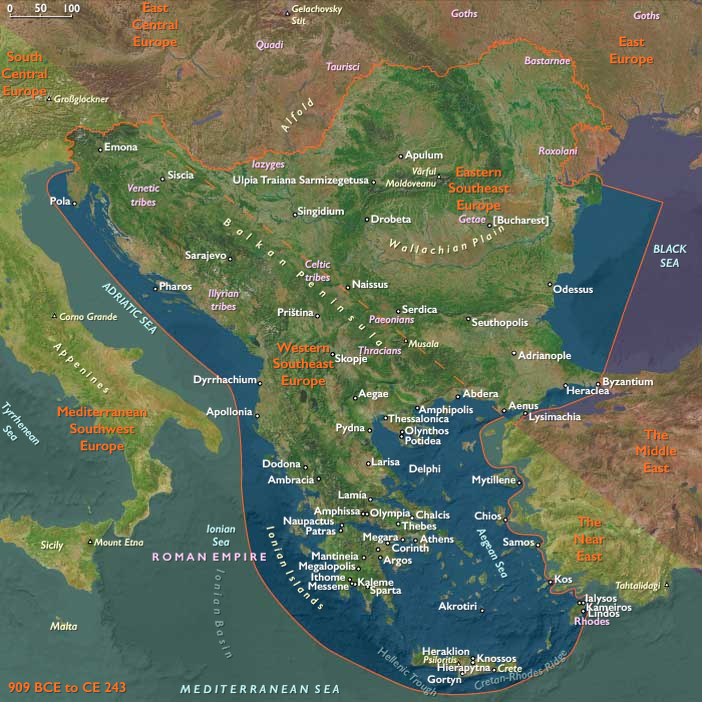
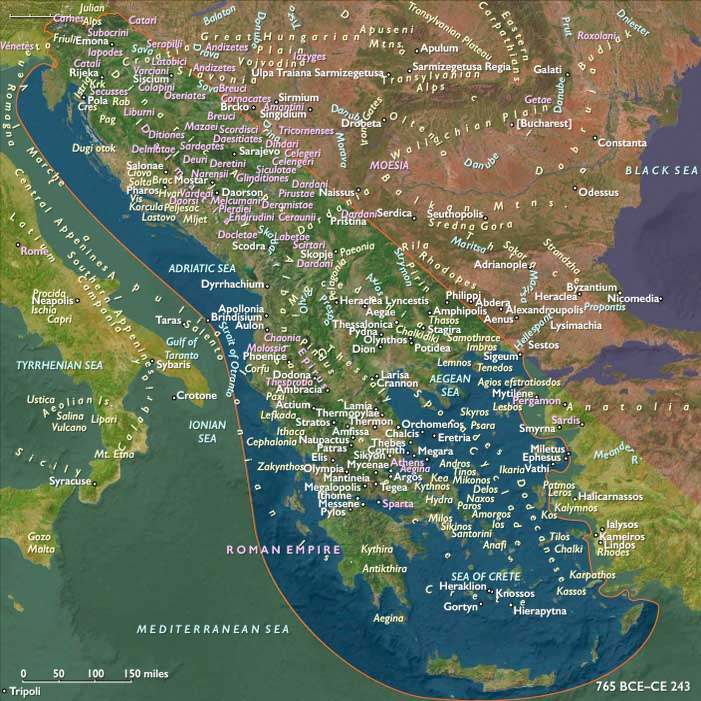
Hippias, frightened by the murder of his brother in 514 BCE, has become increasingly repressive, and the Alcmaeonids try unsuccessfully with other Athenian nobles to fight their way back to power two years later.
They are more successful when they enlist the help of Delphi.
The Spartans are repeatedly urged by Delphi to set Athens free, and it is finally a Spartan army under Cleomenes I invades Attica, besieges the tyrant's party on the acropolis, and forces their surrender and evacuation.
Hippias takes refuge with the Persian governor at Sardis.
The Spartans have no wish to see a democratic Athens, but they misjudge the mood of the people.
In the struggle for power that follows the fall of the tyranny, Cleisthenes, the head of the prominent Alcmaeonidae family, fails to impose his leadership, and Isagoras, the leader of the more reactionary nobles, is elected chief archon in 508 BCE.
It is at this point, according to later tradition, that Cleisthenes takes the people into partnership and transforms the situation.
Now in his early sixties, reorganizes the Athenian tribes into demes—political divisions based on locality—and extends citizenship to include nearly all resident aliens, apparently to pack the assembly with new voters who will support him.
In this first introduction of democracy to Athens, the liberal Cleisthenes fulfills the tendencies begun by Solon and enforced by Peisistratus.
Before the year 508-507 is over, the main principles of a complete reform of the system of government have been approved by the popular Assembly, a relative of the Alcmaeonids has been elected chief archon for the following year, Isagoras has left Athens to invoke Spartan intervention, and Sparta has declared for Isagoras.
The Spartan king demands the expulsion of “those under the curse,” and Cleisthenes and his relatives are again exiles.
Locations
People
Groups
Topics
Commodoties
Subjects
Regions
Subregions
Years: 513BCE - 502BCE
Locations
People
Groups
Topics
Commodoties
Subjects
Regions
Subregions