
East Central Europe (304–315 CE): Constantine’s Rise …
Years: 304 - 315
East Central Europe (304–315 CE): Constantine’s Rise and Sustained Frontier Stability
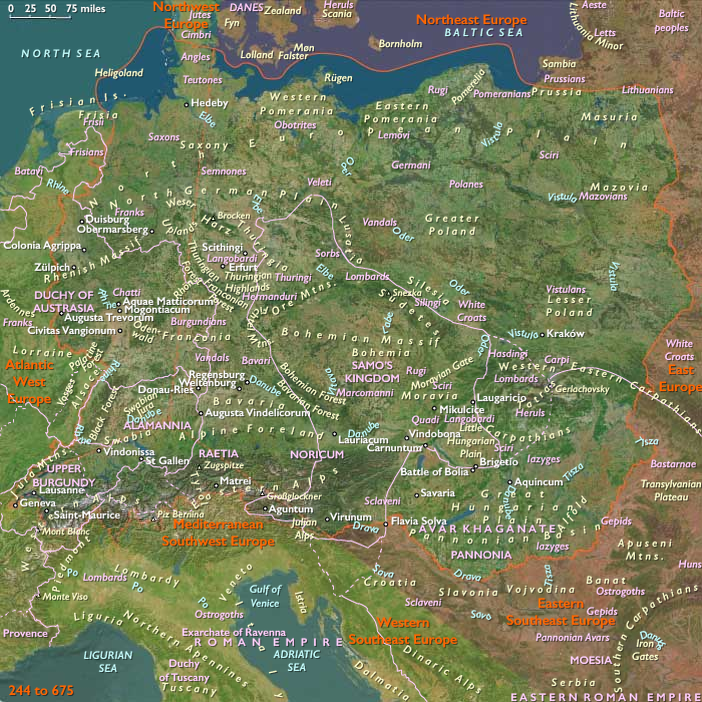
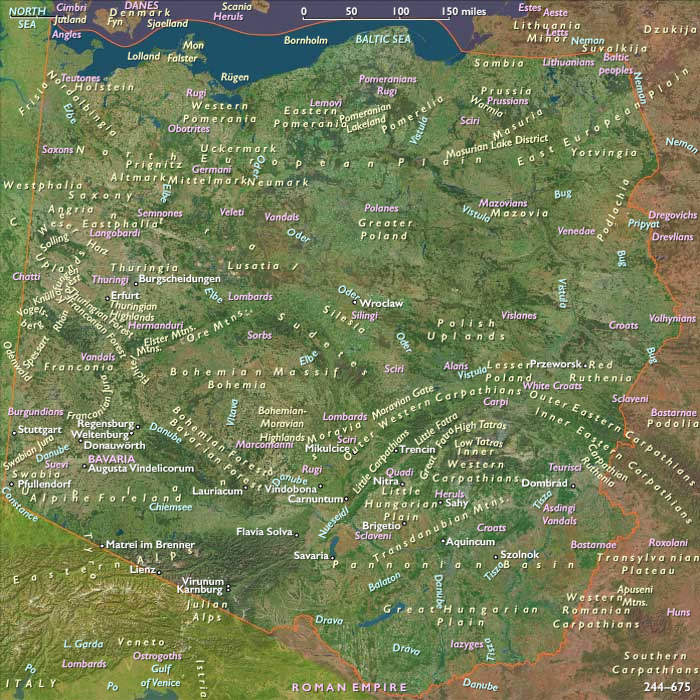
Between 304 and 315 CE, East Central Europe—covering Poland, Czechia, Slovakia, Hungary, and those portions of Germany and Austria lying east of 10°E and north of a line stretching from roughly 48.2°N at 10°E southeastward to the Austro-Slovenian border near 46.7°N, 15.4°E—experienced continued frontier stability, supported initially by the Tetrarchy’s efficient administration and subsequently maintained by Emperor Constantine the Great (306–337 CE). Roman provinces along the Danube (Pannonia Prima, Pannonia Secunda, Pannonia Savia, Pannonia Valeria, and Noricum) benefited from robust defensive measures, active diplomatic relations, and flourishing regional trade, ensuring a sustained period of stability and prosperity.
Political and Military Developments
Transition from Tetrarchy to Constantine
-
The early part of the era saw continued stability from the Tetrarchic system. After Constantine’s rise to power (306 CE), he maintained and enhanced frontier security, further solidifying Roman administrative control in East Central Europe.
-
Constantine prioritized the strategic importance of the Danube provinces, reinforcing military defenses, fortifications, and provincial governance.
Effective Diplomacy with Tribal Confederations
-
Continued diplomatic engagement successfully maintained stable relations with key tribal groups, notably the Marcomanni, Quadi, Iazyges, and limited threats from the Vandals and Goths.
-
Roman diplomacy focused on managing tribal alliances and territorial arrangements, preventing major incursions, and fostering peaceful economic exchanges.
Economic and Technological Developments
Sustained Economic Prosperity
-
Stability along the frontier allowed robust trade networks to flourish, significantly benefiting both Roman settlements and neighboring tribal communities. Commerce in agricultural goods, metals, amber, textiles, and ceramics remained vibrant.
Frontier Infrastructure Enhancement
-
Infrastructure investment continued actively under Constantine, including improved roads, bridges, fortifications, and public buildings, facilitating both military and economic vitality throughout the region.
Cultural and Artistic Developments
Cultural Flourishing and Artistic Productivity
-
The stable conditions fostered continued cultural exchange between Romans and tribal societies. Material culture, including pottery, jewelry, metalwork, and religious artifacts, demonstrated a high level of artistic refinement and cultural integration.
Constantine’s Influence on Frontier Culture
-
Constantine’s rule introduced subtle shifts toward greater imperial unity and Christian influence, though the region maintained significant cultural diversity. Tribal-Roman interactions retained rich traditional expressions alongside these emerging influences.
Settlement and Urban Development
Continued Urban Growth and Fortification
-
Frontier towns, including Carnuntum, Vindobona, and Aquincum, continued their expansion as fortified administrative and economic centers, benefiting from sustained regional prosperity and effective governance.
Stabilization of Tribal Settlements
-
Tribal settlements remained economically prosperous and increasingly permanent, maintaining stable trade and diplomatic relationships with Roman frontier towns.
Social and Religious Developments
Stability in Tribal Social Hierarchies
-
Tribal leadership maintained strong internal stability, guided by leaders adept at managing peaceful diplomatic and economic relationships with Roman authorities.
Religious Diversity and Emerging Christianity
-
Traditional tribal religious practices remained prevalent, emphasizing community unity and prosperity. Concurrently, Constantine’s rise introduced Christianity into frontier settlements, initiating gradual religious shifts alongside continuing pagan and tribal traditions.
Long-Term Consequences and Historical Significance
The era from 304 to 315 CE represented continued stability and economic prosperity along the Roman Danube frontier, facilitated by effective Roman governance and strategic diplomacy under Constantine the Great. The maintenance of peaceful tribal relations, combined with flourishing trade and cultural integration, reinforced the foundation for ongoing stability and significantly influenced the historical trajectory of East Central Europe through the early fourth century.
People
Groups
- Polytheism (“paganism”)
- Iazyges, or Iazygians
- Vandals (East Germanic tribe)
- Marcomanni (Germanic tribe)
- Quadi (Germanic tribe)
- Goths (East Germanic tribe)
- Germans
- Christians, Early
- Noricum (Roman province)
- Roman Empire: Tetrarchy
- Pannonia Savia (Roman province)
- Pannonia Prima (Roman province)
- Pannonia Secunda (Roman province)
- Pannonia Valeria (Roman province)
Topics
Commodoties
Subjects
Regions
Subregions
Related Events
Showing 10 events out of 60029 total
Years: 304 - 315
People
Groups
- Polytheism (“paganism”)
- Iazyges, or Iazygians
- Vandals (East Germanic tribe)
- Marcomanni (Germanic tribe)
- Quadi (Germanic tribe)
- Goths (East Germanic tribe)
- Germans
- Christians, Early
- Noricum (Roman province)
- Roman Empire: Tetrarchy
- Pannonia Savia (Roman province)
- Pannonia Prima (Roman province)
- Pannonia Secunda (Roman province)
- Pannonia Valeria (Roman province)
Topics
Commodoties
Subjects
Regions
Subregions