
Ashoka gives up not only military conquest …
Years: 261BCE - 250BCE
Ashoka gives up not only military conquest but also hunting, the royal sport.
He studies Buddhist scriptures and begins to govern according to Buddhist principles of nonviolence, philanthropy, and compassion.
He reforms the habits of the royal court, touring the country with his officials and instructing his subjects on morality and toleration.
He relaxes harsh laws, works to create an ordered economic expansion, and establishes principles of justice and morality.
He has many of his edicts, particularly those on practical morality and the way of compassion, carved on stone pillars and erected throughout India.
He also builds rest houses and digs wayside wells for travelers and constructs hospitals for both humans and animals.
Ashoka seeks to help common people and emphasizes nonviolence and kindness.
Although tolerant of other religions, he makes great efforts to convert his subjects to Buddhism and dispatches Buddhist missionaries abroad, particularly to Tamraparni (present Sri Lanka).
He is said to have held a third council at Pataliputra in 250 to settle certain doctrinal controversies among Buddhists.
He attempts to create a state religion incorporating Buddhism and other faiths as well as Hinduism.
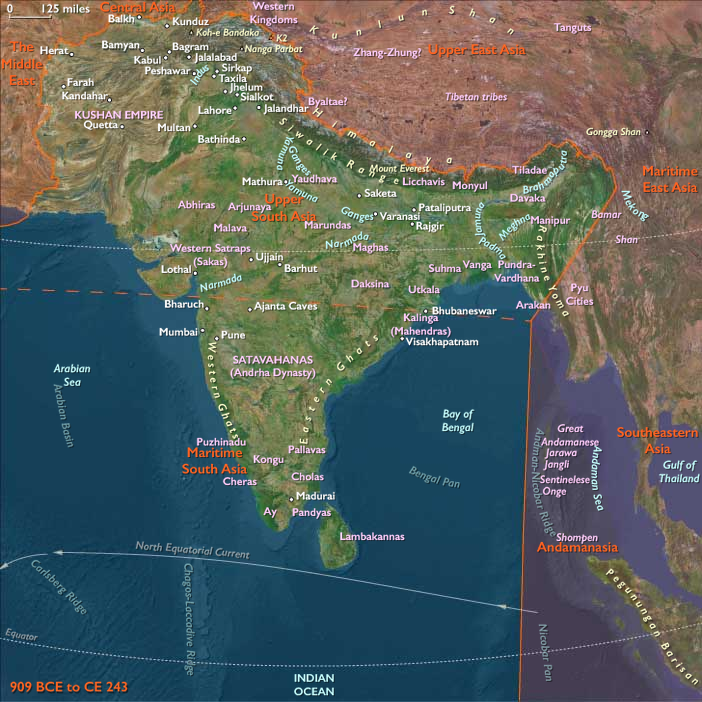
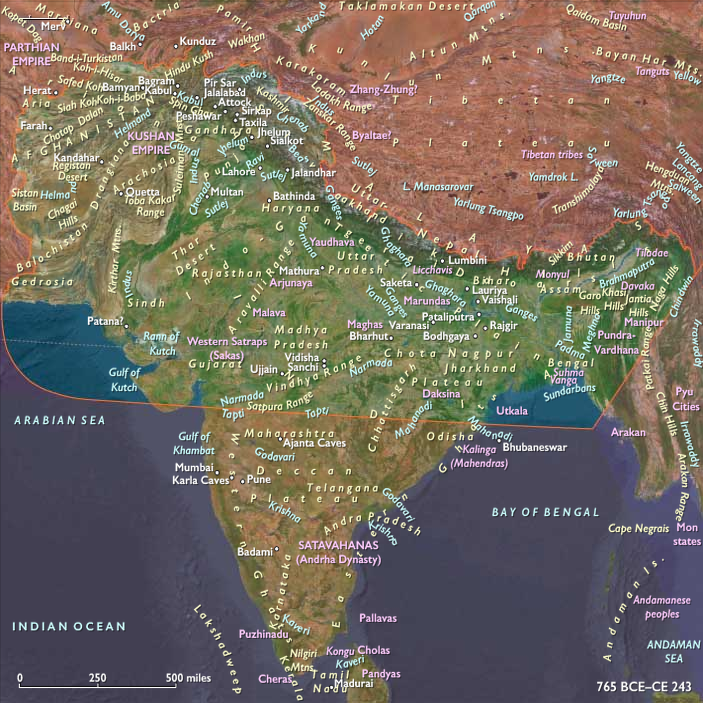
By this date, Ahsoka’s empire extends to the south of central India's Deccan Plateau and west into Baluchistan and modern Afghanistan; in the southeast it includes the state of Kalinga, which he had conquered around 261, and, in the southwest, the state of Maharashtra.
Locations
People
Groups
Topics
Commodoties
Subjects
Regions
Subregions
Related Events
Showing 10 events out of 63928 total
Years: 261BCE - 250BCE
Locations
People
Groups
Topics
Commodoties
Subjects
Regions
Subregions