
The coastal people, primarily some of the …
Years: 1684 - 1827
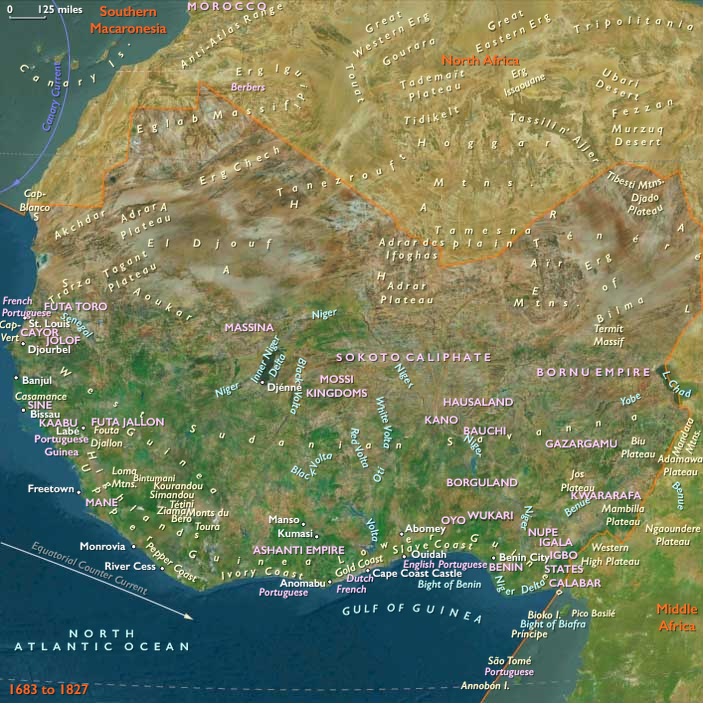
The coastal people, primarily some of the Fante and the inhabitants of the new town of Accra, who are chiefly Ga, come to rely on British protection against Ashanti incursions, but the ability of the merchant companies to provide this security is limited.
The British Crown dissolves the company in 1821, giving authority over British forts on the Gold Coast to Governor Charles MacCarthy, governor of Sierra Leone.
The British forts and Sierra Leone will remain under common administration for the first half of the century.
MacCarthy's mandate is to impose peace and to end the slave trade.
He seeks to do this by encouraging the coastal peoples to oppose Kumasi rule and by closing the great roads to the coast.
Incidents and sporadic warfare continues, however.
MacCarthy is killed, and most of his force is wiped out in a battle with Ashanti forces in 1824.
An Ashanti invasion of the coast in 1826 is defeated, nonetheless, by British and local forces, including the Fante and the people of Accra.
When the British government allows control of the Gold Coast settlements to revert to the British African Company of Merchants in the late 1820s, relations with Ashanti are still problematic.
From the Ashanti point of view, the British have failed to control the activities of their local coastal allies.
Had this been done, Ashanti might not have found it necessary to attempt to impose peace on the coastal peoples.
MacCarthy's encouragement of coastal opposition to Ashanti and the subsequent 1824 British military attack further indicate to Ashanti authorities that the Europeans, especially the British, do not respect Ashanti.
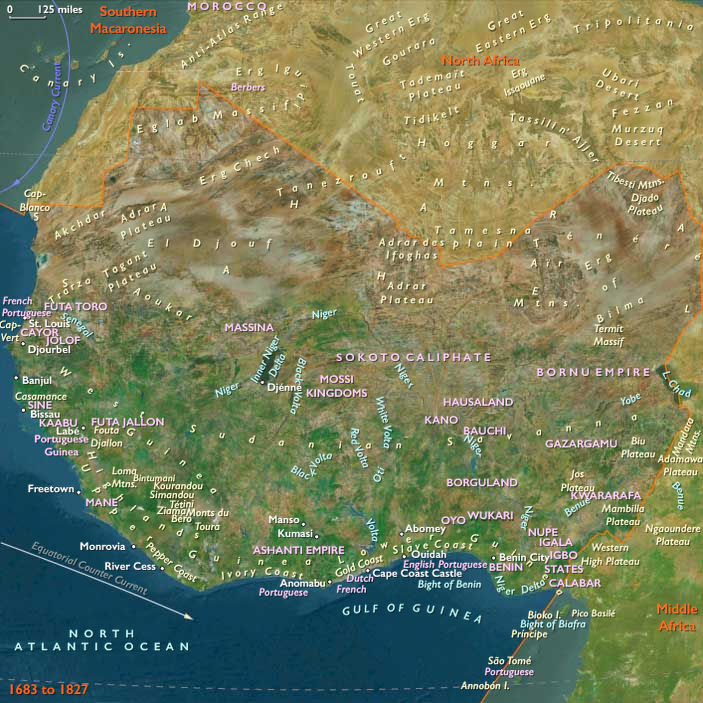
The British Crown dissolves the company in 1821, giving authority over British forts on the Gold Coast to Governor Charles MacCarthy, governor of Sierra Leone.
The British forts and Sierra Leone will remain under common administration for the first half of the century.
MacCarthy's mandate is to impose peace and to end the slave trade.
He seeks to do this by encouraging the coastal peoples to oppose Kumasi rule and by closing the great roads to the coast.
Incidents and sporadic warfare continues, however.
MacCarthy is killed, and most of his force is wiped out in a battle with Ashanti forces in 1824.
An Ashanti invasion of the coast in 1826 is defeated, nonetheless, by British and local forces, including the Fante and the people of Accra.
When the British government allows control of the Gold Coast settlements to revert to the British African Company of Merchants in the late 1820s, relations with Ashanti are still problematic.
From the Ashanti point of view, the British have failed to control the activities of their local coastal allies.
Had this been done, Ashanti might not have found it necessary to attempt to impose peace on the coastal peoples.
MacCarthy's encouragement of coastal opposition to Ashanti and the subsequent 1824 British military attack further indicate to Ashanti authorities that the Europeans, especially the British, do not respect Ashanti.
Locations
People
Groups
- Dutch people
- Danes (Scandinavians)
- Ga-Adangme
- Akan people
- Fante people
- Ewe people
- English people
- Gold Coast, Dutch
- Gold Coast, Danish
- Royal African Company
- Ashanti of Kumasi, Kingdom of the
- Britain, Kingdom of Great
- Gold Coast, Danish Crown Colony of
- Gold Coast, British colony
Topics
- Interaction with Subsaharan Africa, Early European
- Sub-Saharan Africa, Modern
- Ashanti-Fante War
- Ashanti-Akim-Akwapim War
- Ashante-Fante War
Commodoties
Subjects
Regions
Subregions
Related Events
Showing 10 events out of 30218 total
Years: 1684 - 1827
Locations
People
Groups
- Dutch people
- Danes (Scandinavians)
- Ga-Adangme
- Akan people
- Fante people
- Ewe people
- English people
- Gold Coast, Dutch
- Gold Coast, Danish
- Royal African Company
- Ashanti of Kumasi, Kingdom of the
- Britain, Kingdom of Great
- Gold Coast, Danish Crown Colony of
- Gold Coast, British colony
Topics
- Interaction with Subsaharan Africa, Early European
- Sub-Saharan Africa, Modern
- Ashanti-Fante War
- Ashanti-Akim-Akwapim War
- Ashante-Fante War
Commodoties
Subjects
Regions
Subregions