
The Empire’s wars with the Arabs had …
Years: 837 - 837
The Empire’s wars with the Arabs had been waged on and off for almost two centuries when the young Theophilos ascended the throne in Constantinople in 829.
An ambitious man and a convinced iconoclast, Theophilos seeks to bolster his regime and support his religious policies by military success against the Abbasid Caliphate, the Empire's major antagonist.
Theophilos launches a series of moderately successful campaigns against the Caliphate throughout the 830s, allowing him to portray himself in the traditional Roman way as a victorious emperor.
He breaks the brief truce with the caliphate by giving imperial support to the Khurramite rebel Babak al-Khorammi.
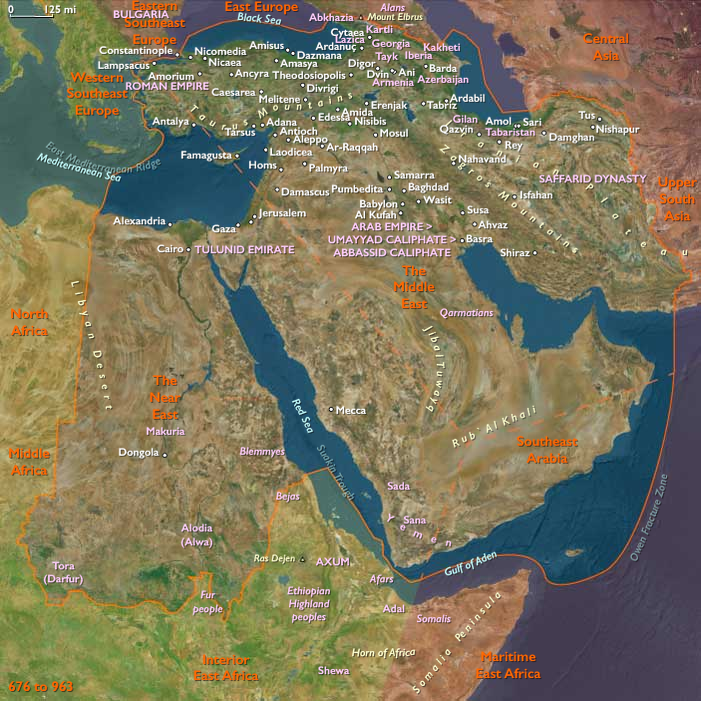
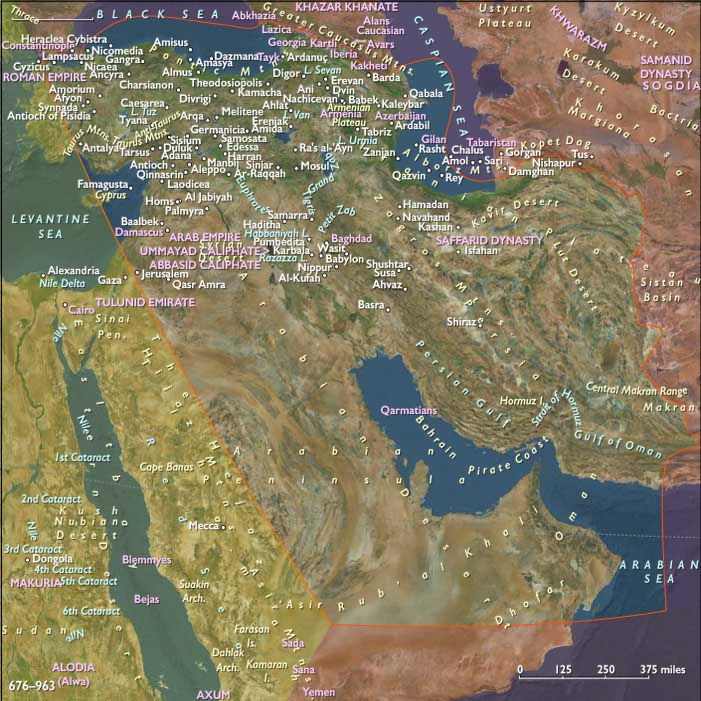
Theophilos decides in 837—at the urging of the hard-pressed Babak—to take advantage of the Caliphate's preoccupation with the suppression of the Khurramite revolt and personally lead a major campaign against the frontier emirates.
He assembles a very large army, some seventy thousand fighting men and one hundred thousand in total according to al-Tabari, and invades Arab territory around the upper Euphrates almost unopposed.
The imperial army takes the towns of Sozopetra and Arsamosata, ravages and plunders the countryside, extracts ransom from several cities in exchange for not attacking them, and defeats a number of smaller Arab forces.
Locations
People
Groups
- Arab people
- Persian people
- Zoroastrians
- Christianity, Chalcedonian
- Greeks, Medieval (Byzantines)
- Islam
- Roman Empire, Eastern: Phrygian or Armorian dynasty
- Abbasid Caliphate (Samarra)
Topics
- Arab-Byzantine Wars
- Islamic Golden Age
- Iconoclastic period, second
- Khurramites' Revolt
- Byzantine-Muslim War of 830-41
Commodoties
Subjects
Regions
Subregions
Years: 837 - 837
Locations
People
Groups
- Arab people
- Persian people
- Zoroastrians
- Christianity, Chalcedonian
- Greeks, Medieval (Byzantines)
- Islam
- Roman Empire, Eastern: Phrygian or Armorian dynasty
- Abbasid Caliphate (Samarra)
Topics
- Arab-Byzantine Wars
- Islamic Golden Age
- Iconoclastic period, second
- Khurramites' Revolt
- Byzantine-Muslim War of 830-41
Commodoties
Subjects
Regions
Subregions