
As governor of Damascus, Janbirdi al-Ghazali is …
Years: 1520 - 1520
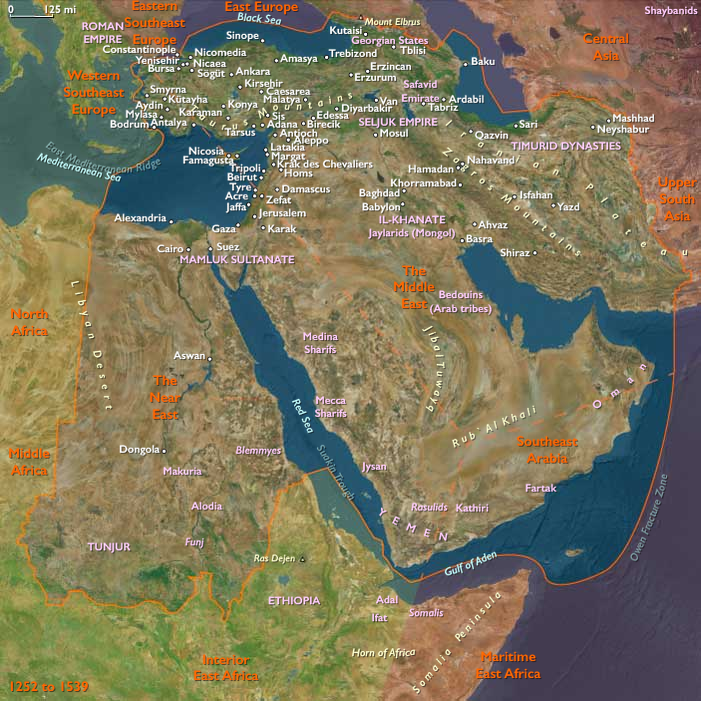
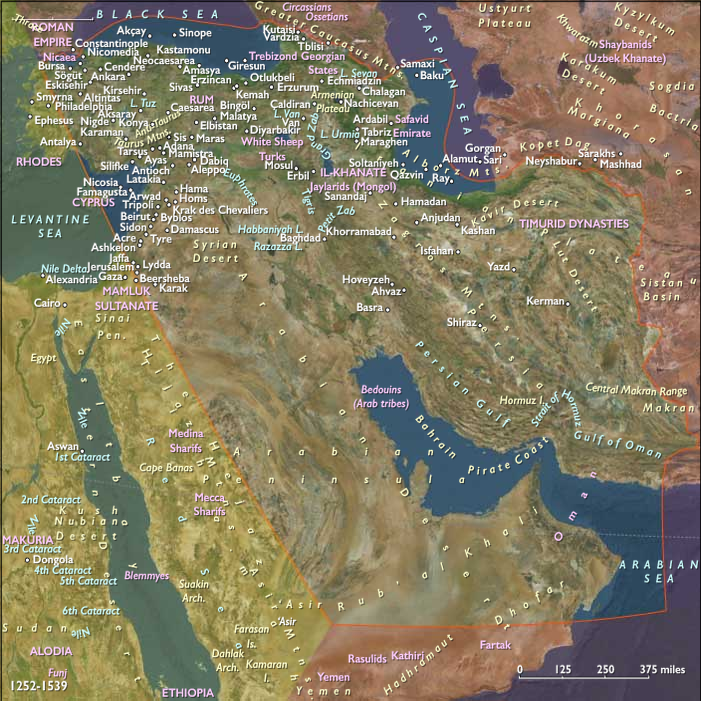
As governor of Damascus, Janbirdi al-Ghazali is in charge of safeguarding the pilgrim caravan destined to make hajj in the Hejaz for the pilgrim route from Damascus to Aqaba in southern Transjordan.
In order to do this successfully, he subjugates the Turkmen nomads in the area.
After two years, he manages to have those same Turkmen tribes protecting the pilgrims.
By 1520, hajj caravans are traveling without incident.
In line with Ottoman state policy at this time, al-Ghazali embarks on major development projects in Damascus.
Having been appointed the nazir or "supervisor" of Damascus's main waqf, he has the Umayyad Mosque repaired and redecorated.
He also has a number of other mosques, schools and canals rebuilt and repaired.
Supervisors of madrasas ("religious schools") who are deemed negligent are stripped of their position and their school buildings restored.
Following the succession of Süleyman the Magnificent to the sultanate after Selim's death in 1520, al-Ghazali revolts against the Ottoman state.
He seeks to restore Mamluk suzerainty, declaring himself "sultan" or al-Malik al-Ashraf ("the most noble king").
He bans preachers in mosques from upholding the Ottoman sultan's name in Friday prayers, purges Ottoman officials and soldiers from Syria, and bans Ottoman dress by the provinces's citizens.
After he declares himself sultan, the cities of Tripoli, Hama, and Hims joins his rebellion.
Following failed attempts to enlist the support of Shah Ismail of the Safavid Empire and Kha'ir Bey, the Ottoman governor of Egypt, he nonetheless raises an army and sets out to conquer Aleppo.
Locations
People
Groups
Subjects
Regions
Subregions
Related Events
Showing 10 events out of 38792 total
Years: 1520 - 1520
Locations
People
Groups
Subjects
Regions
Subregions