
Between 16,500 and 14,000 years ago …
Years: 16461BCE - 14734BCE
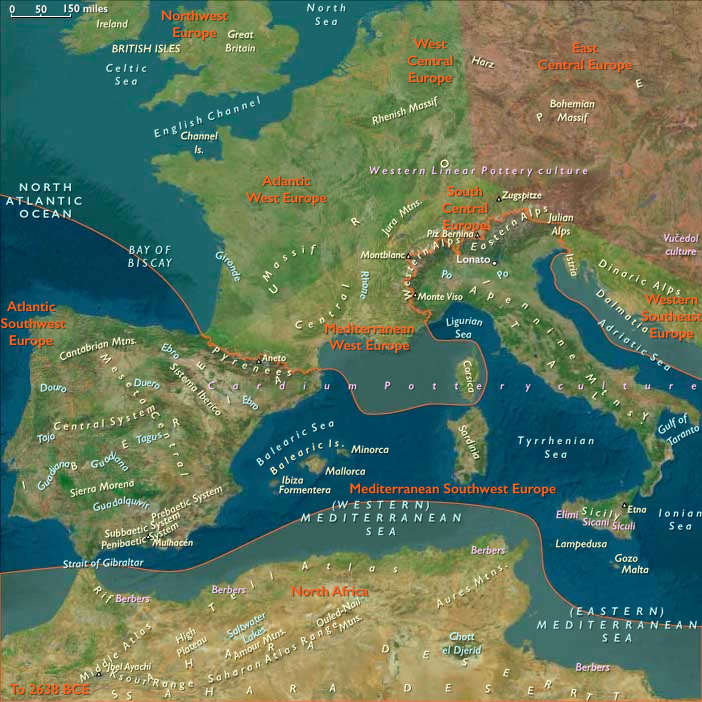
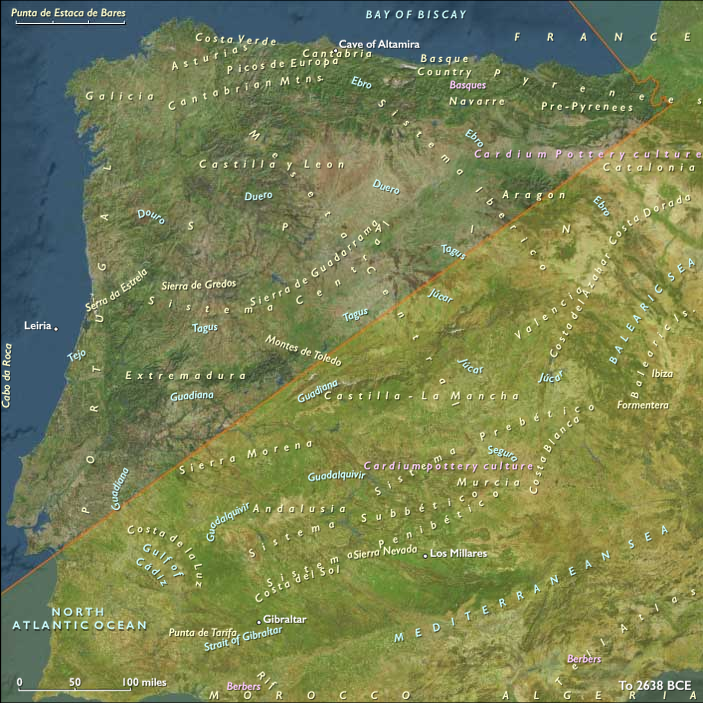
Between 16,500 and 14,000 years ago, artists—possibly hunters—skillfully depicted bison, deer, and other animals in red and black paint on the ceiling of Altamira Cave in northeastern Spain. These early painters incorporated the cave’s natural contours into their engravings and artwork, creating a remarkable three-dimensional effect.
The act of painting deep within Altamira and other caves suggests the invention of a portable lamp fueled by fat or oil, allowing artists to illuminate the recesses as they worked.
Archaeological Findings and Human Occupation
Excavations of the cave floor have uncovered rich Upper Solutrean (18,500 years ago) and Lower Magdalenian (16,500–14,000 years ago) artifact deposits, both part of the Paleolithic (Old Stone Age).
Between these two periods, the cave was uninhabited by humans, serving only as a shelter for wild animals. When occupied, its location provided access to abundant wildlife in the surrounding valleys, while its proximity to the coast allowed for a supplementary marine diet.
Around 13,000 years ago, a rockfall sealed the cave entrance, preserving its contents for millennia. The cave was eventually rediscovered when a falling tree disturbed the collapsed rocks, revealing its hidden artwork.
The Mastery of Altamira’s Artists
Human occupation was limited to the cave entrance, but paintings extend throughout its entire length. The artists used charcoal, ochre, and hematite, often scratching or diluting the pigments to create variations in intensity, producing a chiaroscuro effect.
The Polychrome Ceiling is the cave’s most impressive feature, depicting a herd of bison in different poses, along with two horses, a large doe, and possibly a wild boar. This art, dating to the Magdalenian period, includes both animal subjects and abstract shapes.
Solutrean-era artwork in the cave features horses, goats, and handprints—created by placing a hand against the wall and blowing pigment over it, leaving a negative impression of the palm.
Although numerous caves in northern Spain contain Paleolithic art, none rival Altamira in artistic sophistication or density of imagery.
Locations
Groups
Topics
Commodoties
Subjects
Regions
Subregions
Years: 16461BCE - 14734BCE
Locations
Groups
Topics
Commodoties
Subjects
Regions
Subregions