
Articles of the Treaty of Nemours (or …
Years: 1588 - 1588
May
Articles of the Treaty of Nemours (or Treaty of Saint-Maur) had been agreed upon in writing and signed in Nemours on July 7, 1585 between the Queen Mother of France, Catherine de' Medici acting for the King, and representatives of the House of Guise, including the Duke of Lorraine.
Catherine had then hastened to Saint-Maur-des-Fossés, where on July 13 the treaty had been signed between King Henry III of France and the leaders of the Catholic League, including Henri, duc de Guise.
The king had been pressured by members of the Catholic League to sign the accord, which was recognized by contemporaries as a renewal of the old French Wars of Religion.
The Treaty of Nemours, and the events that ensued, are responsible for the advent of the War of the Three Henrys, the final phase of the French Wars of Religion.
The War of the Three Henrys, the eighth and final conflict in the series of civil wars known as the French Wars of Religion, has been fought since 1584 between Henry of Guise, Henry of Navarre (also Henry Bourbon) and Henry III of France.
Henry of Navarre, the heir presumptive and a Protestant, leads the Huguenot forces.
Henry of Guise is the "ultra-Catholic" head of the House of Guise and leader of the Holy League.
King Henry III commands the royal forces.
The King had at first tried to co-opt the head of the Catholic League and steer it towards a negotiated settlement.
This was anathema to the Guise leaders, who want to bankrupt the Huguenots and divide their considerable assets with the King.
The situation had degenerated into open warfare.
Henry of Navarre had again sought foreign aid from the German princes and Elizabeth I of England.
Meanwhile, the solidly Catholic people of Paris, under the influence of the Committee of Sixteen have become dissatisfied with Henry III and his failure to defeat the Calvinists.
Guise has sent his cousin Charles, Duke of Aumale, to lead a rising in Picardy (which could also support the retreat of the Spanish Armada).
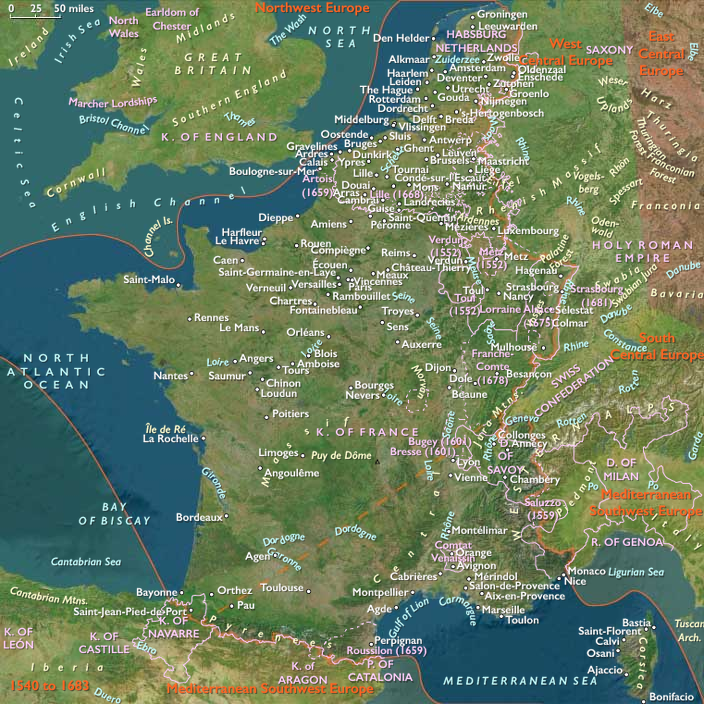
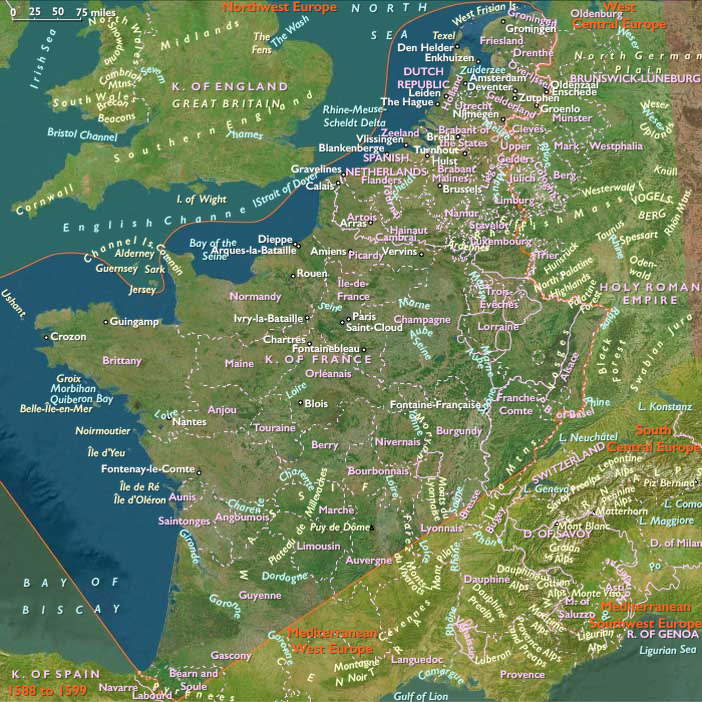
An alarmed Henry III orders Guise to remain in Champagne; he defies the king and on May 9, 1588, enters Paris, bringing to a head his ambiguous challenge to royal authority three days later in the Day of the Barricades, a popular uprising that raises barricades on the streets of Paris to defend the Duke of Guise against the alleged hostility of the king; Henry III flees the city.
The Committee of Sixteen takes complete control of the government, while the Guise protect the surrounding supply lines.
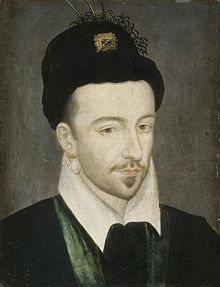
Henry III in Polish hat, (c. 1571-1581)anonymous, after Etienne Dumonstier; oil on wood, Musée de châteaux de Versailles et de Trianon
Locations
People
Groups
- Papal States (Republic of St. Peter)
- Lorraine, (second) Duchy of
- France, (Valois) Kingdom of
- England, (Tudor) Kingdom of
- Navarre, Lower, Kingdom of
- Huguenots (the “Reformed”)
- Spain, Habsburg Kingdom of
- Holy, or Catholic, League, the (French)
Topics
- Counter-Reformation (also Catholic Reformation or Catholic Revival)
- Anglo-Spanish War of 1585-1604
- Religion, Eighth War of (War of the Three Henrys)
- Spanish Armada, Defeat of the
Commodoties
Subjects
Regions
Subregions
Years: 1588 - 1588
May
Henry III in Polish hat, (c. 1571-1581)anonymous, after Etienne Dumonstier; oil on wood, Musée de châteaux de Versailles et de Trianon
Locations
People
Groups
- Papal States (Republic of St. Peter)
- Lorraine, (second) Duchy of
- France, (Valois) Kingdom of
- England, (Tudor) Kingdom of
- Navarre, Lower, Kingdom of
- Huguenots (the “Reformed”)
- Spain, Habsburg Kingdom of
- Holy, or Catholic, League, the (French)
Topics
- Counter-Reformation (also Catholic Reformation or Catholic Revival)
- Anglo-Spanish War of 1585-1604
- Religion, Eighth War of (War of the Three Henrys)
- Spanish Armada, Defeat of the
Commodoties
Subjects
Regions
Subregions