
Artemisia's Gentilischi's Giuditta che decapita Oloferne ( …
Years: 1613 - 1613
Artemisia's Gentilischi's Giuditta che decapita Oloferne (Judith beheading Holofernes) (1612–1613), displayed in the Capodimonte Museum of Naples, is impressive for the violence portrayed.
She had in 1612 been denied access to the all-male professional academies for art, her early talent notwithstanding.
Her father had been working with Agostino Tassi to decorate the vaults of Casino della Rose inside the Pallavicini Rospigliosi Palace in Rome, so Orazio had hired the painter to tutor his daughter privately.
During this tutelage, Tassi had raped Artemisia.
Another man, Cosimo Quorlis, had helped Tassi with the rape.
After the initial rape, Artemisia had continued to have sexual relations with Tassi, with the expectation that they were going to be married.
However, Tassi had reneged on his promise to marry Artemisia after he heard the rumor that she was having an affair with another man.
Quorlis had threatened that if he could not have her, he would publicly humiliate her.
Orazio had pressed charges against Tassi only after he learned that Artemisia and Tassi were not going to be married.
Orazio also claimed that Tassi had stolen a painting of Judith from the Gentileschi household.
The major issue of this trial was the fact that Tassi had deflowered Artemisia.
If Artemisia had not been a virgin before Tassi raped her, the Gentileschis would not have been able to press charges.
In the ensuing seven-month trial, it is discovered that Tassi had planned to murder his wife, had enjoined in adultery with his sister-in-law, and had planned to steal some of Orazio’s paintings.
During the trial, Artemisia had been given a gynecological examination and had been tortured using thumbscrews.
At the end of the trial Tassi had been sentenced to one year's imprisonment.
The trial subsequently will influence the feminist view of Artemisia Gentileschi during the late twentieth century.
One month after the trial, in order to restore his daughter's honor, Orazio had arranged for her to marry Pierantonio Stiattesi, a modest artist from Florence.
She had in 1612 been denied access to the all-male professional academies for art, her early talent notwithstanding.
Her father had been working with Agostino Tassi to decorate the vaults of Casino della Rose inside the Pallavicini Rospigliosi Palace in Rome, so Orazio had hired the painter to tutor his daughter privately.
During this tutelage, Tassi had raped Artemisia.
Another man, Cosimo Quorlis, had helped Tassi with the rape.
After the initial rape, Artemisia had continued to have sexual relations with Tassi, with the expectation that they were going to be married.
However, Tassi had reneged on his promise to marry Artemisia after he heard the rumor that she was having an affair with another man.
Quorlis had threatened that if he could not have her, he would publicly humiliate her.
Orazio had pressed charges against Tassi only after he learned that Artemisia and Tassi were not going to be married.
Orazio also claimed that Tassi had stolen a painting of Judith from the Gentileschi household.
The major issue of this trial was the fact that Tassi had deflowered Artemisia.
If Artemisia had not been a virgin before Tassi raped her, the Gentileschis would not have been able to press charges.
In the ensuing seven-month trial, it is discovered that Tassi had planned to murder his wife, had enjoined in adultery with his sister-in-law, and had planned to steal some of Orazio’s paintings.
During the trial, Artemisia had been given a gynecological examination and had been tortured using thumbscrews.
At the end of the trial Tassi had been sentenced to one year's imprisonment.
The trial subsequently will influence the feminist view of Artemisia Gentileschi during the late twentieth century.
One month after the trial, in order to restore his daughter's honor, Orazio had arranged for her to marry Pierantonio Stiattesi, a modest artist from Florence.
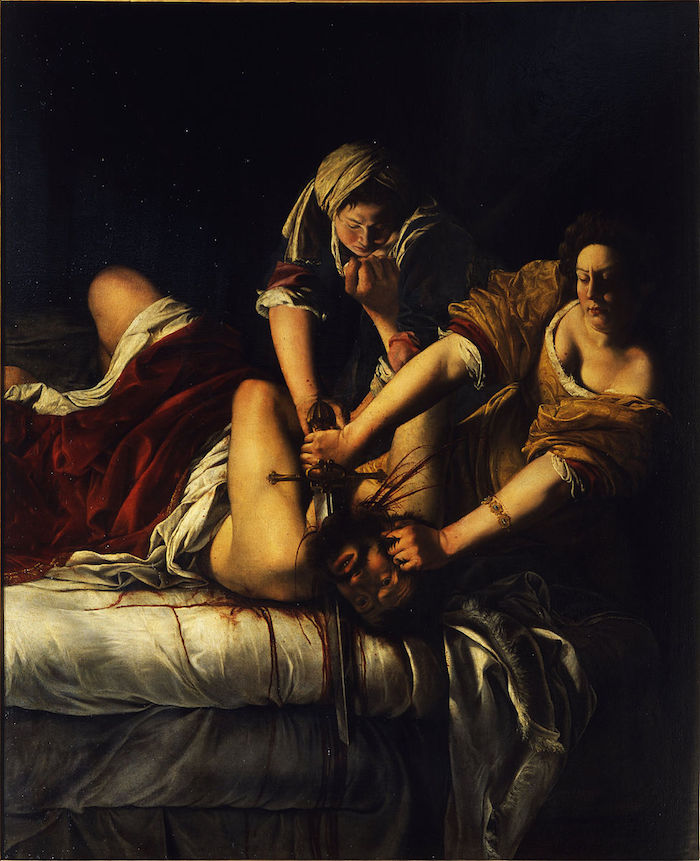
Artemisia Gentileschi: Judith Slaying Holofernes (1614-20) Oil on canvas, 199 x 162 cm Galleria degli Uffizi, Florence.
Locations
People
Groups
Topics
Subjects
Regions
Subregions
Related Events
Showing 10 events out of 33264 total
Years: 1613 - 1613
Artemisia Gentileschi: Judith Slaying Holofernes (1614-20) Oil on canvas, 199 x 162 cm Galleria degli Uffizi, Florence.
Locations
People
Groups
Topics
Subjects
Regions
Subregions