
Objects of copper combined with lead are …
Years: 650 - 650
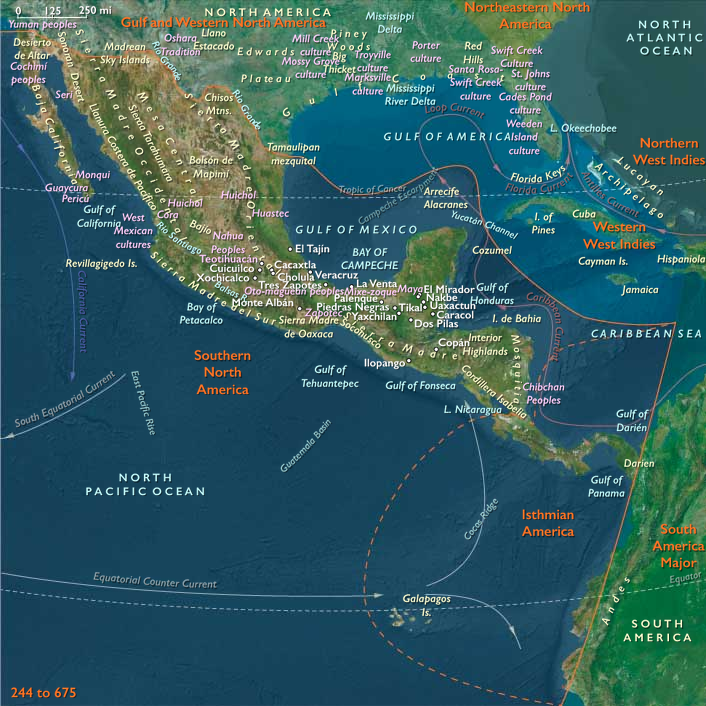
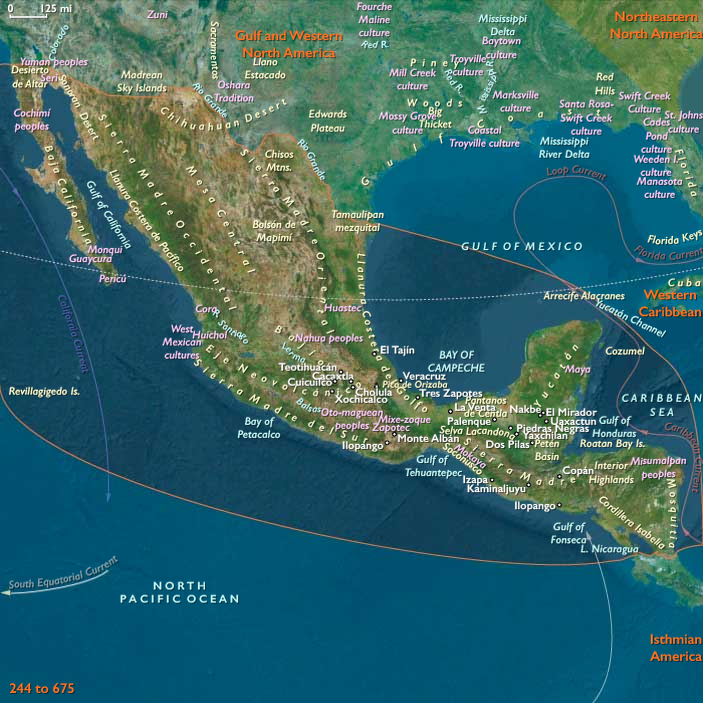
The growing opulence of the Mesoamerican urban religious centers engenders envy and then resentment in the rural villages, whose labor supplies the surplus necessary to support the magnificence of the city-states of central and southern Mexico.
The larger highland communities, in a ruthless quest for food and security, loot and annex the smaller settlements on the coast or periphery, where vigorous hunting cultures still obtain.
A spreading revolt interrupts commerce, disrupting the food supply and causing the abandonment of the great ceremonial centers.
The aggressive competition between the city-states of central and southern Mexico ends in about 650, when famine and overpopulation generate increasingly frequent wars of conquest that deteriorate into chronic slaughter.
Warlike peoples begin in about 650 to invade, burn, and plunder Teotihuacán, which has lost its dominance of the region.
The mainland ceremonial centers of both the Mayans and the Teotihuacáns abruptly begin to fall into disuse (a process that is to continue for three centuries).
Groups
Topics
Commodoties
Subjects
Regions
Subregions
Years: 650 - 650
Groups
Topics
Commodoties
Subjects
Regions
Subregions