
Arrian, born of Greek ethnicity in the …
Years: 135 - 135
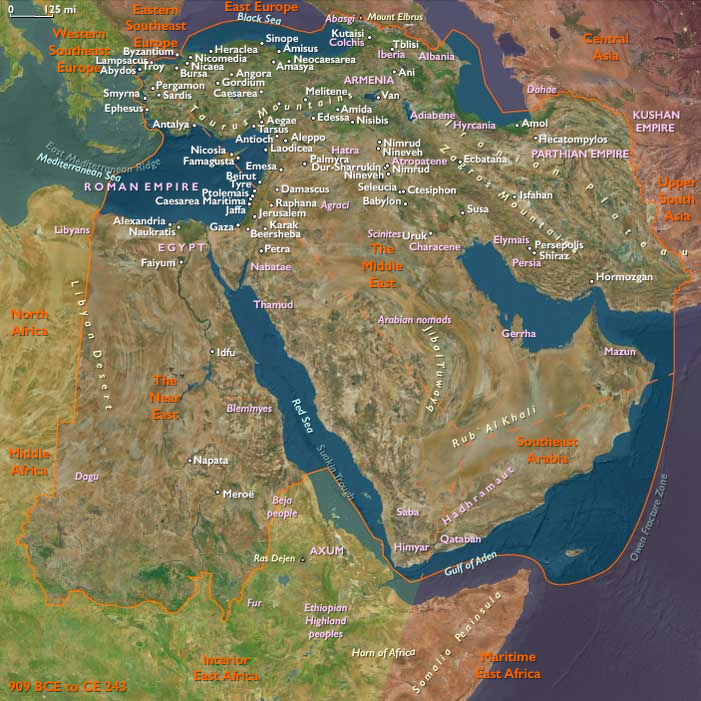
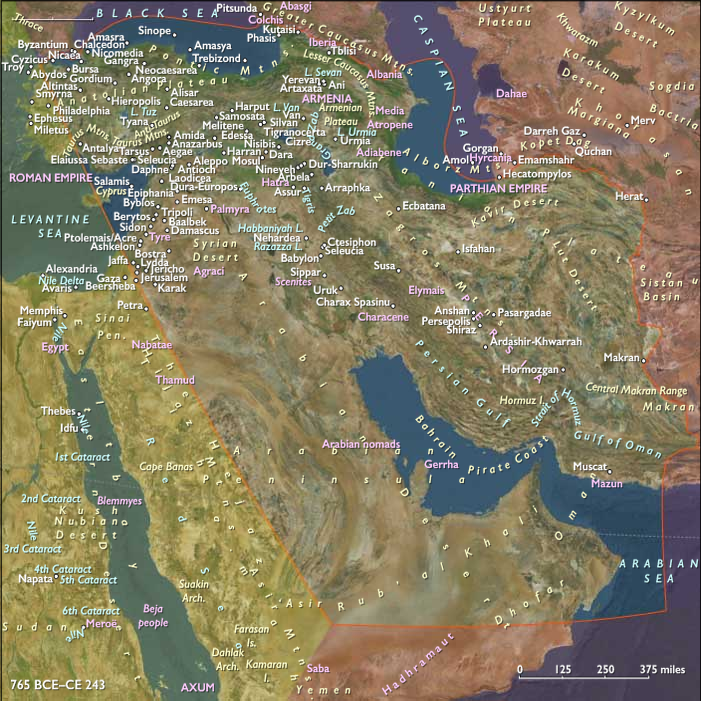
Arrian, born of Greek ethnicity in the coastal town of Nicomedia (present-day Izmit), the capital of the Roman province of Bithynia, in what is now northwestern Turkey, about seventy kilometers from Byzantium (later Constantinople, now Istanbul), had studied philosophy in Nicopolis in Epirus, under the Stoic philosopher Epictetus, and had written two books about the philosopher's teachings.
At the same time he had entered the Imperial service, and served as a junior adviser on the consilium of Gaius Avidius Nigrinus, governor of Achaea and a close friend of the future Emperor Hadrian, around 111-114.
Very little is known about his subsequent career—though it is probable that he served in Gaul and on the Danube frontier, and possible that he was in Baetica and Parthia—until he held the office of Consul in 129 or 130.
In 131, he had been appointed governor of the Black Sea province of Cappadocia and commander of the Roman legions on the frontier with Armenia.
It is unusual at this time for a Greek to hold such high military command.
As the Empire's north-easternmost province, Cappadocia, which also incorporates the regions of Pontus and Armenia Minor, hosts a permanent military garrison of two legions and several Auxiliary troops.
In 135, Cappadocia is threatened by an Alan invasion.
Arrian will later write a military treatise called Ektaxis kata Alanōn, which details the battle against the Alans, and the Technē Taktikē, in which he describes how he would organize the legions and auxiliary troops at his disposal, among which are legions XII Fulminata and XV Apollinaris.
He would deploy the legionaries in depth supported by javelin throwers, archers, and horse archers in the rear ranks to defeat the assault of the Alan cavalry using these combined arms tactics.
However, Arrian's work may have been entirely hypothetical, because there is no historical record of a battle between Romans and Alans in 135.
He also writes a short account of a tour of inspection of the Black Sea coast in the traditional 'periplus' form (in Greek) addressed to the Emperor Hadrian, the Periplus Ponti Euxini or "Circumnavigation of the Black Sea".
Locations
People
Groups
- Alans (Sarmatian tribal grouping)
- Armenia, Kingdom of Greater
- Cappadocia (Roman province)
- Roman Empire (Rome): Nerva-Antonine dynasty
Topics
Commodoties
Subjects
Regions
Subregions
Related Events
Showing 10 events out of 61136 total
Years: 135 - 135
Locations
People
Groups
- Alans (Sarmatian tribal grouping)
- Armenia, Kingdom of Greater
- Cappadocia (Roman province)
- Roman Empire (Rome): Nerva-Antonine dynasty
Topics
Commodoties
Subjects
Regions
Subregions