
The Battle of Leuven (891): Arnulf of …
Years: 891 - 891
The Battle of Leuven (891): Arnulf of Carinthia’s Decisive Victory Over the Vikings
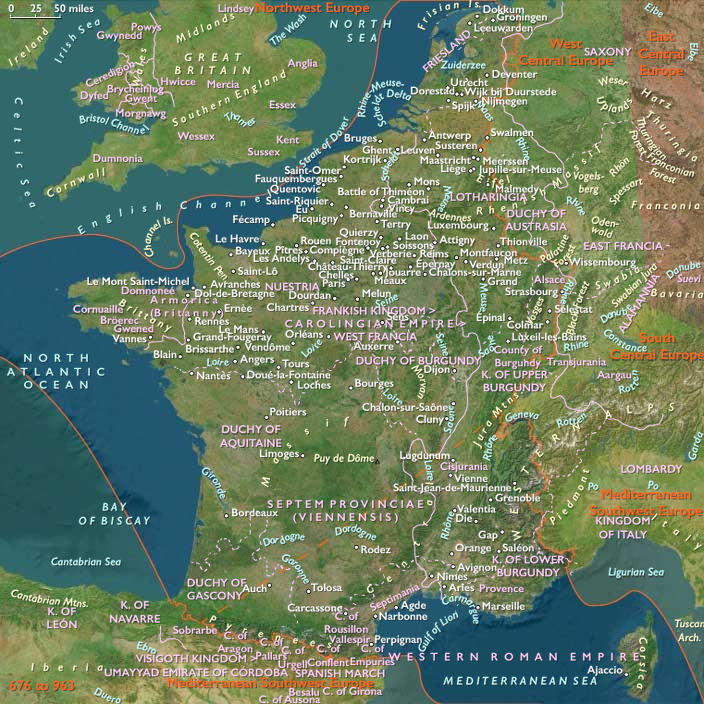
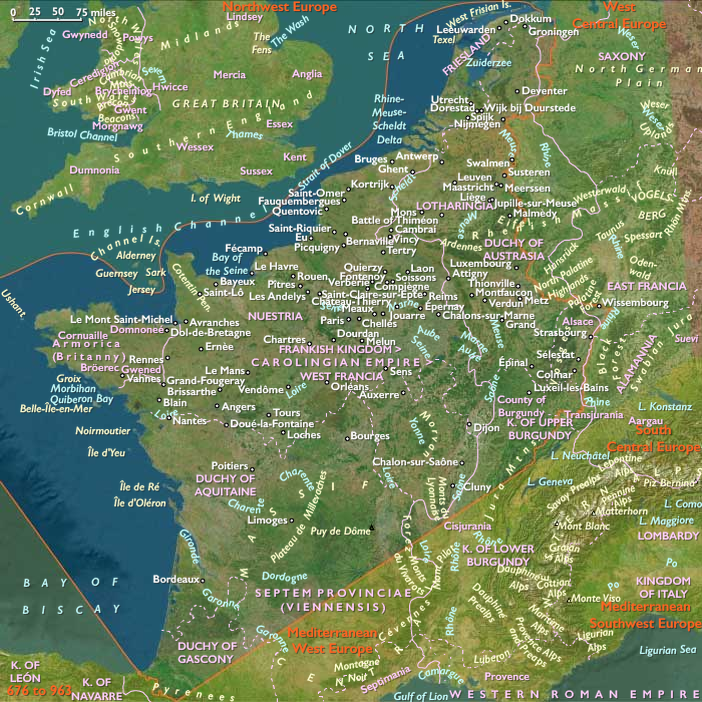
In September 891, Arnulf of Carinthia, King of East Francia, repels a major Viking invasion at the Battle of Leuven, securing one of the most significant Frankish victories against the Norse in the late 9th century. This decisive battle effectively ends large-scale Viking incursions into the Low Countries and Lotharingia.
The Viking Invasion and the Battle of Leuven
- The Vikings had established a strong presence in the Low Countries, using the Scheldt, Meuse, and Rhine rivers to raid deep into Frankish lands.
- In 891, a large Viking force, possibly numbering several thousand warriors, invades Lotharingia, hoping to expand their plundering operations.
- Arnulf of Carinthia, determined to halt the Norse advance, raises an East Frankish army and meets them at Leuven (modern-day Belgium).
- The battle is a Frankish rout, with Arnulf’s forces slaughtering the Viking army, securing an overwhelming victory.
- According to the Annales Fuldenses, the bodies of the dead Northmen blocked the flow of the river, a testament to the scale of Viking losses.
Aftermath and Significance of the Victory
- Arnulf’s victory effectively ends Viking incursions into Lotharingia, as the Norse no longer pose a major military threat in the region.
- To further secure the area, Arnulf builds a new fortress on an island in the Dijle River, reinforcing his hold over Leuven and its surrounding territory.
- The battle strengthens Arnulf’s authority as King of East Francia, demonstrating his military capability and leadership.
- This victory contributes to the gradual decline of Viking activity in the Carolingian world, as Norse forces increasingly shift their focus toward England and Ireland.
Legacy of the Battle of Leuven (891)
- One of the last major Viking defeats on the continent, marking the waning of Viking power in Frankish lands.
- Secured the Low Countries for East Francia, preventing further Norse encroachments.
- Reinforced Arnulf’s legitimacy as ruler, paving the way for his later imperial coronation as Holy Roman Emperor in 896.
Arnulf’s decisive victory at Leuven in 891 stands as one of the greatest Frankish victories against the Vikings, ensuring that Lotharingia and East Francia would remain free from Norse domination for the remainder of the Carolingian period.
Locations
People
Groups
Topics
Commodoties
Subjects
Regions
Subregions
Related Events
Showing 10 events out of 53695 total
Years: 891 - 891
Locations
People
Groups
Topics
Commodoties
Subjects
Regions
Subregions