
Filters:
The Bruges Matins (Brugse Metten) and the …
Years: 1302 - 1302
May
The Bruges Matins (Brugse Metten) and the Flemish Revolt Against France (1302)
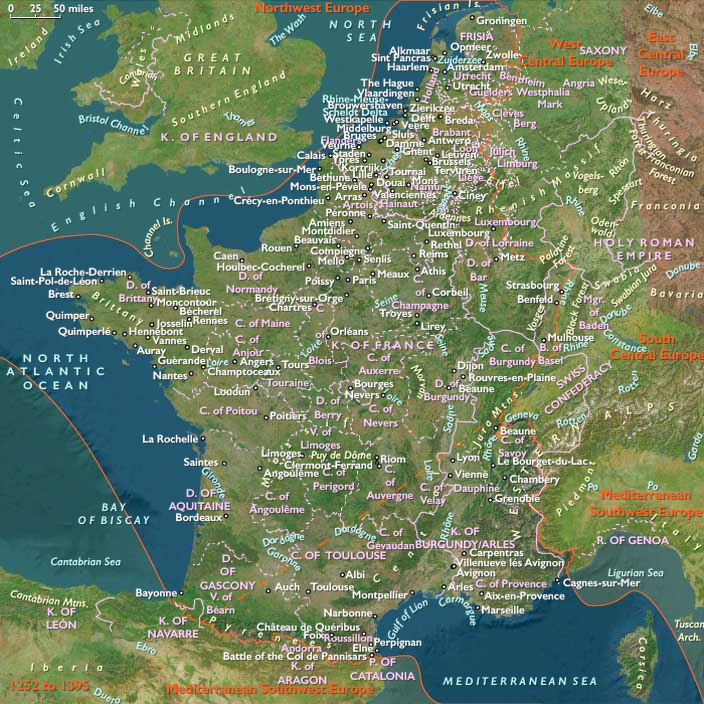
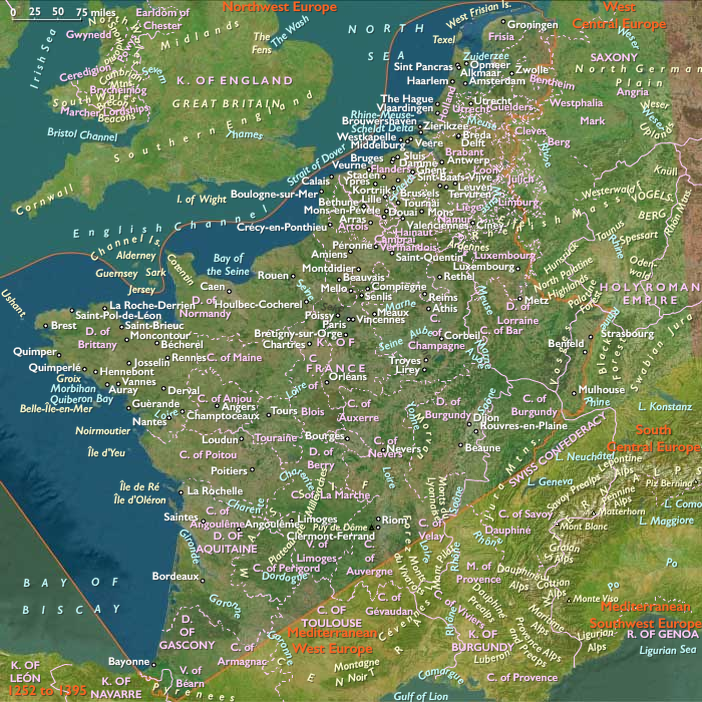
On the night of May 18, 1302, a Flemish insurrection, led by Pieter de Coninck and Jan Breydel, launched a coordinated attack against the French garrison in Bruges. This event, later known as the Bruges Matins (Brugse Metten), marked the beginning of the Flemish Revolt against French rule and played a pivotal role in the events leading to the Battle of the Golden Spurs.
The Attack on the French Garrison
- Under cover of darkness, Flemish rebels stormed houses where French troops were stationed.
- According to tradition, to distinguish between French occupiers and native Flemings, they forced suspected French speakers to pronounce a shibboleth:
- "Schild en vriend" ("Shield and friend")—a phrase difficult for French speakers to pronounce correctly.
- An alternative version suggests the phrase "Des gildens vriend" ("Friend of the guilds").
- French governor Jacques de Châtillon and a few survivors managed to escape, but the majority of the French troops in Bruges were slaughtered.
Aftermath and Flemish Resistance
- The massacre galvanized popular support for the Count of Flanders, Guy of Dampierre, who had been imprisoned by Philip IV of France since 1299.
- In response to the insurrection, Philip IV sent a large army to crush the rebellion, leading to the Battle of the Golden Spurs (July 11, 1302), where the Flemish forces decisively defeated the French knights.
- The Bruges Matins drew comparisons to the Sicilian Vespers (1282), another popular uprising against foreign rule.
Legacy and Commemoration
- Jan Breydel and Pieter de Coninck became celebrated as national heroes in Flanders for their role in the rebellion.
- Their statues, commissioned through the efforts of Julius Sabbe, were erected in the market square of Bruges in 1887, symbolizing Flemish resistance and independence.
- The Bruges Matins remains a defining moment in Flemish history, symbolizing the struggle against foreign domination and the assertion of regional autonomy.
The Bruges Matins of 1302 was not just a violent insurrection but a turning point in Flemish resistance against French rule, laying the groundwork for one of the most significant battles in medieval European history.
Locations
People
Groups
- Flanders, County of
- France, (Capetian) Kingdom of
- Utrecht, Bishopric of
- Hainaut, County of
- Holland, County of
- Brabant, Duchy of
Topics
Commodoties
Subjects
Regions
Subregions
Years: 1302 - 1302
May
Locations
People
Groups
- Flanders, County of
- France, (Capetian) Kingdom of
- Utrecht, Bishopric of
- Hainaut, County of
- Holland, County of
- Brabant, Duchy of
Topics
Commodoties
Subjects
Regions
Subregions