
Filters:
Rudolph’s Response and the Ambush at Fauquembergues …
Years: 924 - 924
Rudolph’s Response and the Ambush at Fauquembergues
-
Recruiting Forces to Confront the Vikings
- Only Herbert II of Vermandois and Rudolph’s ecclesiastical vassals initially support him, revealing the weakness of his noble alliances.
- Hugh the Great, after some persuasion, eventually joins him, ensuring that the king has a larger military force to confront the Norse invaders.
-
Viking Withdrawal and the Battle at Fauquembergues
- The Vikings, seeing the gathering Frankish forces, withdraw from Melun.
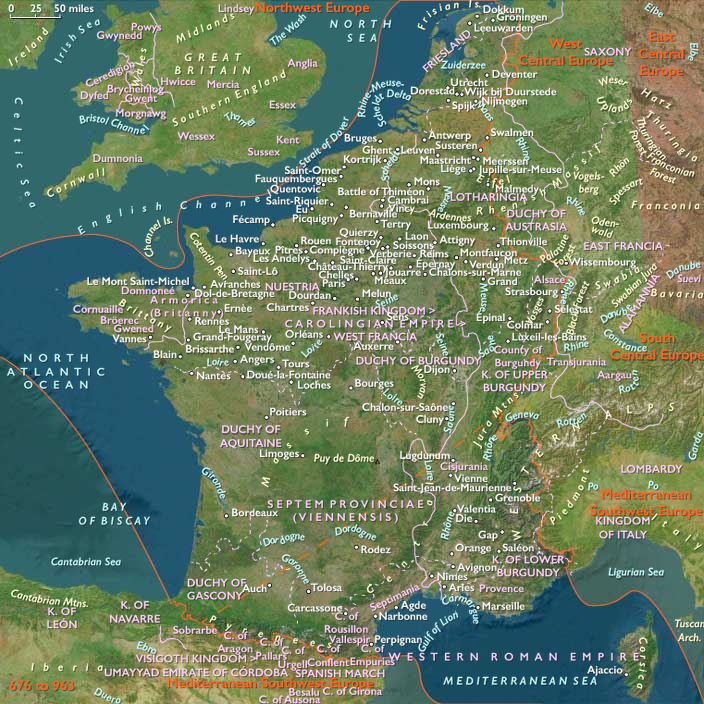
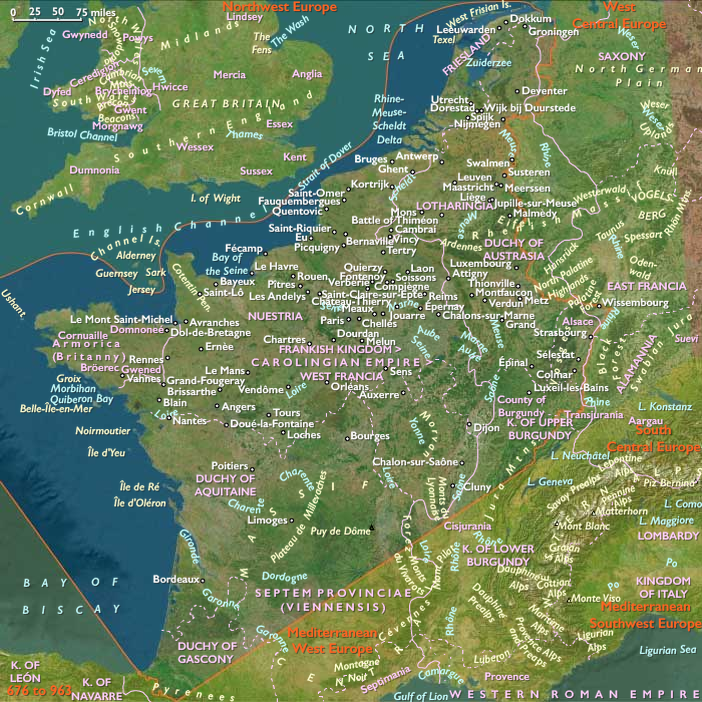
- However, as they retreat, they are ambushed near Fauquembergues (near modern Pas-de-Calais).
- The battle is fierce:
- King Rudolph is wounded in the fighting.
- The Count of Ponthieu is killed.
- Many Normans are left dead on the battlefield, marking one of the few significant Frankish victories against the Vikings.
Rudolph and Louis the Blind Discuss the Magyar Threat (924)
- In the same year, Rudolph meets with Louis the Blind, King of Provence, to discuss the growing menace of the Magyars.
- The Magyars, newly arrived in Europe, pose a serious threat to Italy, Germany, and Burgundy, conducting devastating raids into the heart of the Frankish world.
- This meeting signals that West Francia is beginning to recognize the Magyar threat, though it will take decades before an effective response is mounted.
Consequences of the 924 Viking Raids and the Battle of Fauquembergues
-
Rudolph Proves Militarily Competent but Struggles for Noble Support
- His delayed response to Viking raids, particularly his initial inaction in the Loire Valley, weakens his standing among the nobility.
- However, his leadership in battle and personal injury at Fauquembergues enhance his military reputation.
-
West Francia Remains Politically Weak
- The disunity of the Frankish nobles continues to hinder effective responses to external threats.
- The Viking raids persist, taking advantage of Frankish instability.
-
The Emerging Magyar Threat
- With Viking activity still ongoing, the Magyars present an additional danger to Francia’s eastern and southern borders.
- This foreshadows the future conflicts that will consume East Francia and Italy, leading to major battles against the Magyars in the mid-10th century.
Conclusion: A Fragile Victory and a Kingdom Under Siege
The events of 924 highlight the continuing instability of West Francia under Rudolph’s reign. Though he manages to repulse the Vikings at Fauquembergues, his wounded authority and reliance on hesitant nobles show that royal power is declining. Meanwhile, as the Magyars threaten the borders of Europe, new challenges will soon overshadow the Viking menace, pushing the Carolingian successor states into greater military and political turmoil.
Locations
People
- Arnulf I
- Charles the Simple
- Edward the Elder
- Gilbert
- Henry the Fowler
- Herbert II
- Hugh the Black
- Hugh the Great
- Louis IV, King of Western Francia
- Louis the Blind
- Robert I of France
- Rollo of Normandy
- Rudolph of France
Groups
- Hungarian people
- Wessex, English Kingdom of
- Vikings
- Francia Occidentalis (West Francia, or France), Kingdom of
- Francia Orientalis (East Francia), Kingdom of
- Burgundy, Lower, Kingdom of
- Lotharingia, Duchy of
Topics
Commodoties
Subjects
Regions
Subregions
Related Events
Showing 1 events out of 1 total
Years: 924 - 924
Locations
People
- Arnulf I
- Charles the Simple
- Edward the Elder
- Gilbert
- Henry the Fowler
- Herbert II
- Hugh the Black
- Hugh the Great
- Louis IV, King of Western Francia
- Louis the Blind
- Robert I of France
- Rollo of Normandy
- Rudolph of France
Groups
- Hungarian people
- Wessex, English Kingdom of
- Vikings
- Francia Occidentalis (West Francia, or France), Kingdom of
- Francia Orientalis (East Francia), Kingdom of
- Burgundy, Lower, Kingdom of
- Lotharingia, Duchy of
Topics
Commodoties
Subjects
Regions
Subregions