
Archaeological evidence suggests that Nri hegemony in …
Years: 948 - 948
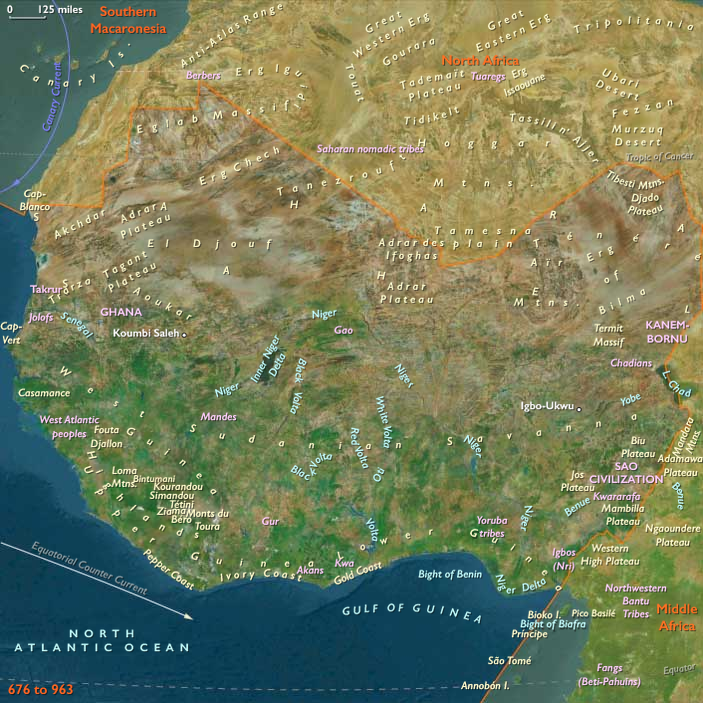
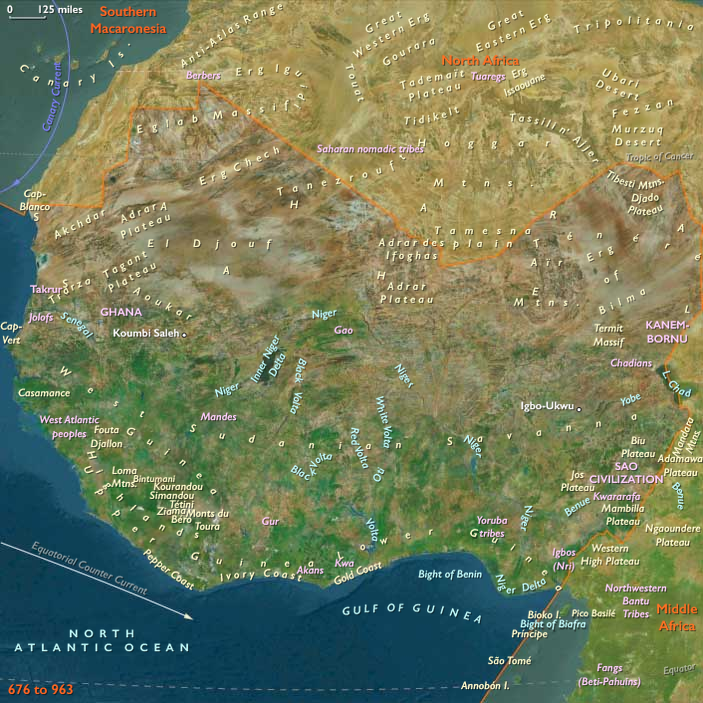
Archaeological evidence suggests that Nri hegemony in Igboland may go back as far as the ninth century, and royal burials have been unearthed dating to at least the tenth century.
Eri, the god-like founder of Nri, is believed to have settled the region around 948.
Igbo-Ukwu is notable for three archaeological sites, where excavations have found bronze artifacts from a highly sophisticated bronze metalworking culture dating perhaps to the ninth or tenth century, centuries before other known bronzes of the region.
Alice Apley writes about the work: "The inhabitants of Igbo-Ukwu had a metalworking art that flourished as early as the ninth century.
Three sites have been excavated, revealing hundreds of ritual vessels and regalia castings of bronze or leaded bronze that are among the most inventive and technically accomplished bronzes ever made.
The people of Igbo-Ukwu, ancestors of present-day Igbo, were the earliest smithers of copper and its alloys in West Africa, working the metal through hammering, bending, twisting, and incising.
They are likely among the earliest groups of West Africans to employ the lost-wax casting techniques in the production of bronze sculptures.
Oddly, evidence suggests that their metalworking repertory was limited and Igbo smiths were not familiar with techniques such as raising, soldering, riveting, and wire making, though these techniques were used elsewhere on the continent." (Apley, Alice (October 2001). "Igbo-Ukwu (ca. ninth century)". Heilbrunn Timeline of Art History. New York: Metropolitan Museum of Art, 2000.)
Locations
Groups
Topics
Commodoties
Subjects
Regions
Subregions
Years: 948 - 948
Locations
Groups
Topics
Commodoties
Subjects
Regions
Subregions