
The earliest known site in the region …
Years: 333BCE - 190BCE
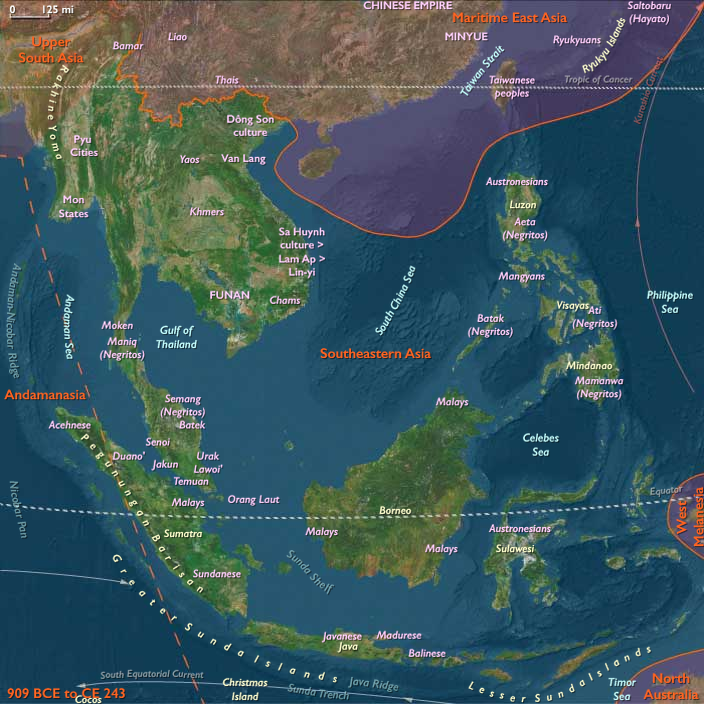
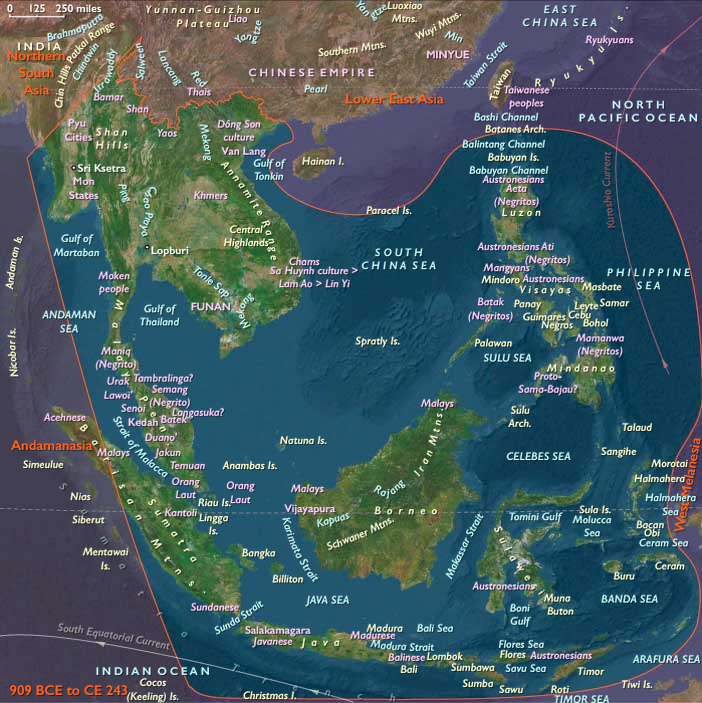
The earliest known site in the region now called Cambodia is Laang Spean cave in the northwest, first occupied beginning in 7000 BCE.
Also significant is the site Samrong Sen, which was occupied circa 230 to 500 BCE.
Cambodians began to domesticate animals and grow rice from 2000 BCE.
Recent research has discovered so-called ‘red soil’ artificial circular earthworks dating to the Neolithic era in the regions of present Cambodia and Vietnam.
Some historians speculate that the Khmer people arrived before their present Vietnamese, Thai, and Lao neighbors.
Austroasiatic in origin and related to the ancestors of the groups who now inhabit insular Southeast Asia and many of the islands of the Pacific Ocean, they work metals, including iron and bronze, and possess navigational skills.
Most scholars believe the Khmer arrived in Southeast Asia at least three thousand years ago, much earlier than the Tai people who now inhabit many parts of what was originally Austroasiatic territory.
The Khmer are linguistic relatives to the Mon, who settled further to the west.
The reason they migrated into Southeast Asia is generally debated, but scholars believe that speakers of the Mon–Khmer language family were pushed down by invading Sino-Tibetans from the north, as evinced by Austroasiatic vocabulary in Chinese, or for agricultural purposes, as evinced by their migration routes along major rivers.
The history of the Khmer people after their establishment in Southeast Asia parallels the history of Cambodia.
Groups
Topics
Commodoties
Subjects
- Origins
- Commerce
- Language
- Engineering
- Labor and Service
- Conflict
- Faith
- Government
- Technology
- Metallurgy
- Anthropology
- Archaeology
- Movements
- Linguistics
Regions
Subregions
Years: 333BCE - 190BCE
Groups
Topics
Commodoties
Subjects
- Origins
- Commerce
- Language
- Engineering
- Labor and Service
- Conflict
- Faith
- Government
- Technology
- Metallurgy
- Anthropology
- Archaeology
- Movements
- Linguistics
Regions
Subregions