
Hasan ibn Hani, the Arabic poet famous …
Years: 814 - 814
November
Hasan ibn Hani, the Arabic poet famous as Abu Nuwas, the “Father of the Forelocks,” for the two locks of hair that reach to his shoulders, composes various poems in traditional style—panegyrics, satires, hunting verses, elegies, and religious poems‚—but uses the Arabic language with a new freedom and imagination.
He gains particular renown for his love poems, which he addresses, in the Persian manner, to young boys, and his wine (khamr) poetry.
Abu Nuwas was forced to flee to Egypt for a time, after he wrote an elegiac poem praising the elite Persian political family of the Barmakis, the powerful family which had been toppled and massacred by the caliph, Harun al-Rashid.
He had returned to Baghdad in 809 upon the death of Harun al-Rashid.
The subsequent ascension of Muhammad al-Amin, Harun al-Rashid's twenty-two-year-old libertine son (and former student of Abu Nuwas) has been a mighty stroke of luck for Abu Nuwas.
In fact, most scholars believe that Abu Nuwas wrote most of his poems during the reign of al-Amin (809-813).
His most famous royal commission is a poem (a 'Kasida') that he composed in praise of al-Amin.
He dies in 814.
Abu Nuwas is considered one of the great poets of classical Arabic literature.
He influenced many later writers, to mention only Omar Khayyám, and Hafiz—both of them Persian poets.
A hedonistic caricature of Abu Nuwas appears in several of the Thousand and One Nights tales.
Among his best known poems are the ones ridiculing the "Olde Arabia" nostalgia for the life of the Bedouin, and enthusiastically praising the up-to-date life in Baghdad as a vivid contrast.
His freedom of expression especially on matters forbidden by Islamic norms continue to excite the animus of censors.
While his works were freely in circulation until the early years of the twentieth century, in 1932 the first modern censored edition of his works appeared in Cairo.
Locations
People
Groups
- Iranian peoples
- Arab people
- Persian people
- Bedouin
- Islam
- Egypt in the Middle Ages
- Abbasid Caliphate (Baghdad)
Topics
Commodoties
Subjects
Regions
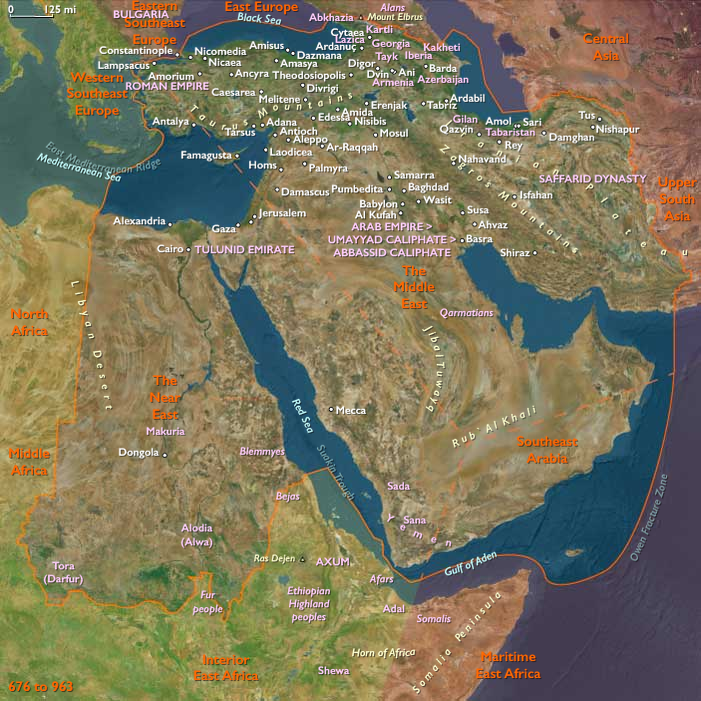
Subregions
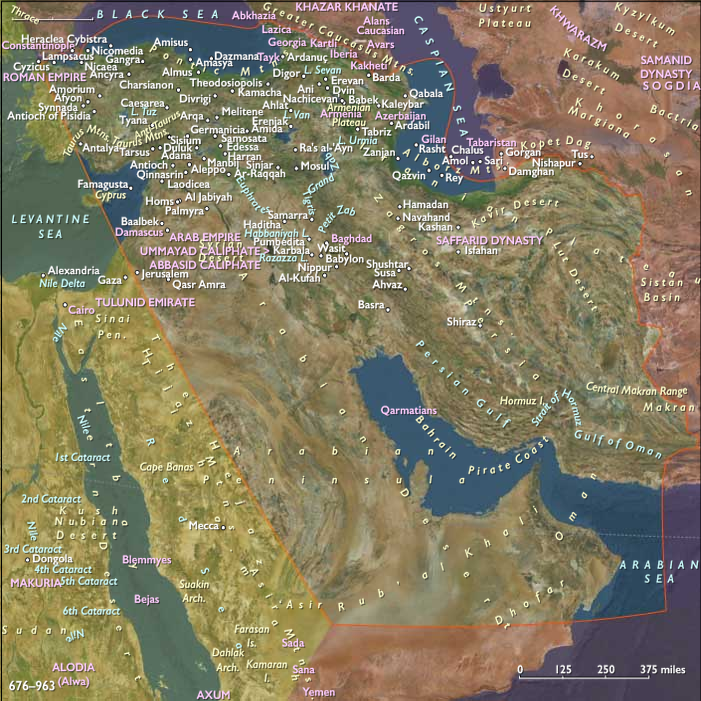
Related Events
Showing 10 events out of 54715 total
Years: 814 - 814
November
Locations
People
Groups
- Iranian peoples
- Arab people
- Persian people
- Bedouin
- Islam
- Egypt in the Middle Ages
- Abbasid Caliphate (Baghdad)
Topics
Commodoties
Subjects
Regions
Subregions